WebMag IEN Europe December 2025Issue #194 - 10/12/2025
IEN Europe presents Industry News, Products and Solutions for industrial decision makers in the pan-European B2B market.
Quick access
Table of Content2 Industry News: LAPP | SPS 20253 Industry News: Sensirion | GN & mikrodust4 Industry News: Phoenix Contact | Linde Material Handling5 Fandis (Advertisement)6 On the Way to Becoming Energy Self-Sufficient7 Automation: ifm | Inovance8 Automation: Pepperl+Fuchs | Kontron | Phoenix Contact9 Automation: JUMO | TURCK10 Electronics & Electricity: Delta Electronics | TKD Kabel11 Electronics & Electricity: Panasonic | Schurter | Sensata12 Electronics & Electricity: Display Visions | IDS13 Motors & Drives: igus | Elmo Motion14 Motors & Drives: AMK Motion | Kollmorgen15 Energy Efficient Industry: Exclusive Interview Georg Stawowy16 Energy Efficient Industry: VPInstruments | AERZEN17 Energy Efficiency Industry: Smart Cooling Control Cuts Consumption of Energy18 Energy Efficient Industry: Sliding Gate Valves Help to Reduce Operating Costs and CO₂ Emissions19 Index20 TIM Global Media Contacts21Companies in this issue
Fandis S.p.A.6 Hans Turck GmbH & Co. KG10 Inovance Technology Europe GmbH8 JUMO GmbH & Co. KG10 SCHURTER AG12 VPInstruments17Aerzener Maschinenfabrik GmbH17 AMKmotion GmbH & Co. KG15 Bürkert Fluid Control Systems16 Delta Electronics (Netherlands) B.V.11 Display VISIONS GmbH13 Elmo Motion Control Ltd.14 Factor4Solutions GmbH18 Fandis S.p.A.6 Greenflash GmbH7 Hans Turck GmbH & Co. KG10 HMS Industrial Networks AB8 IDS Imaging Development Systems GmbH13 igus SE & Co. KG14 Inovance Technology Europe GmbH8


#2 Table of Content
#3 Industry News: LAPP | SPS 2025
#4 Industry News: Sensirion | GN & mikrodust
#5 Industry News: Phoenix Contact | Linde Material Handling
#6 Fandis (Advertisement)
#7 On the Way to Becoming Energy Self-Sufficient
#8 Automation: ifm | Inovance
#9 Automation: Pepperl+Fuchs | Kontron | Phoenix Contact
#10 Automation: JUMO | TURCK
#11 Electronics & Electricity: Delta Electronics | TKD Kabel
#12 Electronics & Electricity: Panasonic | Schurter | Sensata
#13 Electronics & Electricity: Display Visions | IDS
#14 Motors & Drives: igus | Elmo Motion
#15 Motors & Drives: AMK Motion | Kollmorgen
#16 Energy Efficient Industry: Exclusive Interview Georg Stawowy
#17 Energy Efficient Industry: VPInstruments | AERZEN
#18 Energy Efficiency Industry: Smart Cooling Control Cuts Consumption of Energy
#19 Energy Efficient Industry: Sliding Gate Valves Help to Reduce Operating Costs and CO₂ Emissions
#20 Index
#21 TIM Global Media Contacts
Allianz Industrie 4.0 Award 2025 for eKanban solution
LAPP is among the winners of the Allianz Industry 4.0 Award with a digital cable inventory management solution. The LAPP eKanban was developed under the leadership of Dominik Schmalzried, Global Business Process Owner Digital Innovation, and his team.

The Allianz Industry 4.0 Award is a prize that recognises companies that demonstrate outstanding achievements in the digital transformation of industry. The prestigious award focuses on promoting innovation and progress in the digitalisation and automation of industrial manufacturing, with a focus on intelligent technologies and transformative business models.
Dominik Schmalzried, developer of LAPP eKanban states: “I am delighted that our solution has not only impressed our customers, but also the high-ranking jury of the Industry 4.0 Award. Our eKanban solution addresses a problem that seems simple at first glance, but requires an intelligent solution to ensure a smooth process.”
Dr Nicole Hoffmeister-Kraut, Minister of Economic Affairs for Baden-Württemberg, presented the award and emphasised: “This year, it is very clear that it is not only the large and well-known players who are achieving outstanding success with cross-divisional digitalisation solutions. Small and medium-sized enterprises are also steering a course for success with just as much innovative strength and agility. These “hidden champions” and the global players are the pillars of our economy.”
Intelligent cable inventory management
In discussions with numerous customers, LAPP recognised that there is often a lack of overview of cable and connection parts – for example, what stock is still available, when the drums will be empty, and when material needs to be reordered. However, this information is essential for the manufacturing industry in particular, so that production does not come to a standstill due to missing components. This is where LAPP eKanban comes in. The system revolutionises cable inventory management through digital transformation and IoT integration.
The cable drum is equipped with an inertia sensor that records the drum's rotations – both forwards and backwards – and calculates the length of cable removed. A dashboard then displays the cable inventory via real-time monitoring. If the quantity falls below a predefined minimum, the system can automatically trigger an order, taking into account consumption and delivery forecasts. In use, the system achieves a deviation of approximately +- 2 % in inventory. This virtually eliminates the probability of unexpected shortages, actively preventing production stoppages.
Industry 4.0 concept support
"Companies today are operating in highly competitive markets and must therefore focus on maximum efficiency. They also depend on maximum process reliability. Networking and automation offer great potential here because they reduce inefficient manual – and therefore error-prone – processes. This creates greater transparency, which improves planning," says Dominik Schmalzried about the eKanban system in connection with the requirements of industry.
Highlights at the End of the Automation Year 2025
The SPS in Nuremberg from 25 to 27 November 2025 once again demonstrated its appeal to the international automation community with 1,175 exhibitors presenting their solutions for smart and digital automation in 15 exhibition halls.

With around 56,000 trade visitors, the fair recorded significant increase compared to the previous year – a clear sign of the relevance of the event and the hunger for innovation in the community, sending a clear and positive signal for the future development of the automation industry.
The SPS is much more than just a space for product presentations, as this year’s event made evident once more. For three days, it offered an ideal setting for sharing ideas, obtaining practical insights, and engaging directly with innovative technologies. Visitors experienced how to combine theory and practice in meaningful ways, including through clear live demonstrations, in-depth specialist presentations, and personal discussions.
"The SPS offers the automation industry a platform not just for innovations, but especially for direct interaction. Experts came together again this year to work on solutions, discuss trends, and strengthen their networks. As in years past, the expo created a framework in which the community could continue growing on equal footing with a focus on real-world applications," Vice President SPS Sylke Schulz-Metzner offered in summary after three days at the trade fair.
Artificial intelligence a driving force
A key topic at the SPS 2025 was the increasing integration of artificial intelligence into industrial processes. Numerous exhibitors presented specific applications, from AI-supported quality inspection and adaptive control systems to intelligent maintenance solutions based on real-time data. Visitors were able to experience how AI can not only optimize individual processes, but rethink entire production systems, as well. On site, it became clear how important personal interaction will be in the further development of industrial AI.
“AI is already an integral part of many applications, and it’s also opening up countless possibilities for the future. Today, we’re seeing it used in all kinds of applications that have long since become normal in everyday life. At the same time, AI presents tremendous potential in new concepts that are currently still in the proof-of-concept phase – it’s an exciting glimpse of what’s coming” emphasizes Marcus Bliesze, Vice President Marketing for Automation, Siemens AG.
The 35th edition of the trade fair will take place in Nuremberg from 24 – 26 November 2026.
Groundbreaking Ceremony for New Sensirion Production Building
The modern production facility in Stäfa, featuring highly classified cleanrooms for the semiconductor industry, will be built over the next two and a half years and accompanied by the acquisition of land for an additional office building.

The existing production building C on the company’s headquarter at Laubisrütistrasse in Stäfa is at full capacity and cannot accommodate any additional production facilities. To ensure reliable and on-time delivery in the future, Sensirion is creating the capacity it needs for further growth, technological development and greater production reliability with the new building F. As a systemically important supplier with long-term customer contracts, Sensirion has an obligation to guarantee maximum security of supply. Some key customers also require a redundant production site.
The new production building will also require the construction of a new office building for workstations, as additional engineers will be needed to handle the gradual expansion of production facilitated by the new building. This is why the property at Moritzberg was purchased. It will provide the space for the high-tech core processes, including their development and production, at the headquarters in Stäfa.
Sustainable building technology
The new production building F will be integrated into the site map of all Sensirion buildings at the Stäfa site. Covering an area of 11,000 m², it will house, in addition to high-tech cleanrooms, a logistics area with delivery facilities, technical rooms and parking spaces on two underground levels. It is right by and connected via walkway to the main building A at Laubisrütistrasse 50, which houses the reception, office and laboratory spaces.
The building will meet the Minergie P sustainability standard. The materials used in the building and its construction will also comply with the DGNB (German Sustainable Building Council) Gold certification standard. The surrounding area, including by the bus stop, will be upgraded with a tree-lined avenue along Laubsrütistrasse and a fountain.
Global success — local roots
Sensirion develops and manufactures sensors and sensor solutions for the automotive industry, medical technology and industrial applications. Today, for example, Sensirion sensors are installed in one out of every three cars worldwide, and 10 million patients rely on ventilators from the sensor manufacturer—impressive proof of the innovative strength and global reach of the company headquartered in Stäfa, on the right bank of Lake Zurich.
GN partners up with Mikrodust for their next Generation of Enterprise Test Systems
Through a unique partnership GN is launching a new production test & measurement platform that delivers increased efficiency, flexibility and a reduced environmental impact.

Mikrodust and GN have developed an enhanced version of the AtoMik® test and measurement platform. Designed to meet the high standards and needs of mass-production of electronics, it offers extended functionality. By incorporating the core of the AtoMik® technology into the GN software ecosystem and existing mechanical fixture kits, a system was created that reduces test cycle times by over 80%, greatly improving the number of units produced per hour while reducing energy consumption. The instrumentation's small form factor has led to a 85% reduction in size and footprint, saving space in factories, simplifying logistics and enabling faster changeover times when setting up a new production line. Using the AtoMik® development kit in a laboratory environment will enable faster time to market and the possibility of verifying prototypes at an early stage anywhere.
“Working with Mikrodust has enabled us to push the boundaries of what’s possible in test and measurement. The enhanced AtoMik® platform is a testament to how collaboration drives innovation.” said Ole Happle Sørensen, Director of Global Industrialization at GN.
“Integrating AtoMik® into GN’s production environment has allowed us to push the boundaries of test and measurement. We’ve not only achieved significant performance gains but also delivered a solution that reduces energy consumption and factory footprint, advancing both technology and sustainability,” said Ola Thernström, CTO at Mikrodust.
About the Companies:
Mikrodust is a leading innovator in test and measurement technologies. The company is dedicated to delivering scalable, sustainable and high-performance solutions for the electronics manufacturing industry. With a strong focus on modular design and engineering excellence, Mikrodust enables its customers to speed up development and production while minimising their environmental impact.
GN has a history spanning more than 150 years and today offers a broad portfolio of intelligent hearing, audio, video and gaming solutions that enhance hearing and sight. These products help people with hearing loss overcome real-life challenges, improve communication and collaboration in business, and provide great experiences for audio and gaming enthusiasts. Founded in 1869, the GN Group employs over 7,000 people.
Phoenix Contact Aligns Its Structures to Bring Its Value Creation Closer to the Sales Markets
At the press conference for the international trade press at SPS in Nuremberg, Ulrich Leidecker announced changes to company policy to ensure continued innovation and competitiveness in the market.

Ulrich Leidecker, Chief Operating Officer/Spokesman of the Group Executive Board of Phoenix Contact, spoke about the ongoing economic tensions in Germany at this year's Phoenix Contact press conference held at the SPS automation trade fair in Nuremberg, Germany, from November 25 to 27. “We are seeing that companies in Germany are having to adapt their structures in order to remain competitive. We at Phoenix Contact are also being forced to adapt our corporate structures to the circumstances in order to ensure resilience and value creation. We are bringing our value creation closer to the sales markets and aligning our structures internationally”, explained Leidecker. "There is no spirit of optimism in industrial policy yet, and over-regulation is inhibiting innovation. Even on topics that have been discussed for a long time, such as the Supply Chain Obligations Act and CSRD reporting, there has been no noticeable alleviation. This is necessary to give the industry the security to concentrate on innovations again."
The market has developed in ways that are significantly different from those we expected in recent years due to the changing framework conditions. The current economic development in Germany is not a classic economic crisis, but rather a fundamental change in geopolitical structures. “We must learn to work together more strongly in order to remain competitive internationally”, said Leidecker, describing the situation. “The fragmentation of our industry and the multitude of individual interests make it difficult to set common standards and drive innovation”. As a positive example to counter this he names the collaboration with Festo and Yaskawa in the field of the development of PLCnext technology.
Global challenges, such as tariffs and geopolitical uncertainties, are also influencing the decisions made by Phoenix Contact. “The political framework conditions are volatile, and we as a company must remain flexible and adaptable”, explained Leidecker. The company is positioning itself for the future, aiming to accommodate the global growth that is being witnessed in particular in the core regions of China, India, and the USA. As part of this, Phoenix Contact is further expanding its local value added chains in these countries.
International developments
Developments in China remain positive for Phoenix Contact. “We are known there as a ‘Chinese-German company’ and we benefit from our long-standing presence and good reputation”, said Leidecker, describing the situation. The markets are also developing stably in other regions, including the USA and Mexico. The company is relying on a balanced international presence in order to spread risks and seize opportunities.
Investments
Global supply chains depend on capacity, technology, and speed. For this reason, Phoenix Contact is investing in Mexico, in the Querétaro region. This 20,000 square meter location, of which 10,000 square meters is for production, will play a central role in the global production network in the future. The Querétaro region is located in central Mexico between the central ports of Veracruz and Manzanillo, and is logistically well-connected to the US.
Phoenix Contact opened a new location in Vietnam at the beginning of November. This is a strategic milestone for Phoenix Contact in Southeast Asia. The plant near Ho Chi Minh City combines production and logistics for the core businesses of Power Reliability and Automation. This location, with around 100 employees and state-of-the-art manufacturing processes, will serve regional and global markets.
Phoenix Contact is also clearly committed to Germany as a location, as demonstrated by its extension to the existing logistics building in Blomberg. This building is scheduled for completion in 2028. The fully automated logistics building will provide 200,000 m³ of additional storage volume. At more than 100 million euros, this is the company's largest single investment. The decision for the logistics building is a future-oriented investment.
Economic situation
“This year, Phoenix Contact is experiencing a moderate market recovery in the upper single-digit range. This is a positive development compared to 2024. Nevertheless, we have not yet recovered the decline in sales witnessed in 2023. We will continue to focus on our core business as well as on the sustainable alignment of our structures. Phoenix Contact is expected to close the fiscal year 2025 with a turnover of 3.3 billion euros.
Innovation and sustainability
Despite all the challenges, we are convinced that technology is the key to a sustainable future”, stated Leidecker. Therefore, Phoenix Contact also focused on innovation, cooperation, digitalization, artificial intelligence, cybersecurity, and energy resilience at this year’s trade fair appearance. These topics are the levers for the future. Phoenix Contact also demonstrated practical applications that offer real added value to its customers.
Sustainability also remains a central issue for Phoenix Contact. The company is working in a targeted and continuous manner to design its processes and products more sustainably, from development, through production, right through to logistics. “The current regulatory density makes it difficult for companies to implement sustainable solutions quickly and efficiently. “That said, sustainable business practices and economic success are not mutually exclusive”, stated Leidecker.
A Glimpse Into the Future of Intralogistics
At the first Linde Automation Summit, which took place in Aschaffenburg, on 12 and 13 November, the company and its partners shared insights on the transformation of the intralogistics sector with pan-European customers, consultants, & trade press

“There has never been a better time to invest in the automation of material flow processes,” says Ulrike Just, Executive Vice President Sales & Services Linde MH EMEA and the event’s host. “The systems have become much easier to use and more cost-effective, while project planning and implementation times have been significantly reduced. This facilitates getting started with automation and generates opportunities for enhanced competitiveness. For companies with existing experience in automation, it also offers the opportunity to actively participate in the development of new technologies with Linde MH as a partner,” she explains.
“Our teams provide comprehensive support to companies every step of the way – from initial consultation to project planning and implementation, and even after commissioning during ongoing operations.”
A holistic portfolio approach
Linde MH has redesigned key products in its portfolio over the past two years. This includes (counterbalanced) pallet stackers, reach truck and VNA truck models, all of which have been upgraded to an industrial series standard. In conjunction with AMRs, shuttle solutions, stationary automation, and racking systems, this provides a comprehensive, modular toolkit that can be used to plan and implement a wide variety of customer projects with pinpoint precision. At the same time, it is possible to produce tailor-made products to meet specific customer requirements.
New vehicle developments are already underway. A notable highlight of the Linde Automation Summit was the innovative Linde RoCaP, which marks a breakthrough in automated order picking in warehouses. Representatives from Linde MH and the drugstore chain ROSSMANN introduced the vehicle together. Based on the automated pallet stacker Linde L-MATIC HD k, the vehicle additionally features an intelligent robotic arm that is permanently attached to the fork carriage. It lifts packages from the rack and places them on the load carrier. Customized load-bearing equipment for use with roll containers was developed specifically for applications at ROSSMANN. Since the Linde RoCaP can work side by side with manually operated industrial trucks, it is ideal for use in inventory warehouses. At ROSSMANN, it eases the workload on warehouse employees, especially when it comes to picking heavy containers. But what is shown in this project also is that challenges sometimes come from unexpected directions. While the RoCaP is able to choose the best box to pick from a pallet and also to choose from different grippers for a task it still needs human assistance to handle and extract the slip sheets on a pallet dividing the different product layers.
Another highlight of the event was a preview of the company’s first automated counterbalanced forklift truck. The Linde E-MATIC, designed for outdoor use, is scheduled to be released in 2027. The robust vehicle offers a load capacity of 2.3 tons, side shifting capabilities, a lithium-ion battery, and extensive navigation and safety technologies. It will initially be used for horizontal transport between drop-off points on the ground or stationary conveyor systems. As early as 2026, pre-series projects will commence with a select group of customers, whose experiences will contribute directly to further development and series maturity. As the Linde E-MATIC progresses through its development stages, it will be equipped to handle an expanded range of tasks, including navigation between indoor and outdoor environments, traversing larger inclines, and managing the storage and retrieval of goods from racks or block warehouses. Additionally, it will be capable of performing lateral loading and unloading operations for trucks.
“With the introduction of the first counterbalanced forklift, we have successfully automated the core product of our Linde brand,” stated Ulrike Just “Our objective is to be the first major industrial truck manufacturer to put the vehicle into series production. This comes as a direct response to the numerous requests we have received from our customers, and it further solidifies our claim to be the technology leader in our industry.”
AI as an automation accelerator
Linde MH is advancing automation not only with regard to vehicle development. The company also showcased the next steps in implementing physical AI and digital twins based on MEGA, the NVIDIA Omniverse for industrial applications. This included the real-time integration of a digital twin in the NVIDIA Omniverse, which connects a company's AGV fleet manager with a physical AGV. Participants at the event could see on screen how every action of the AGV – navigation, load handling, etc. – is mirrored simultaneously in the Omniverse environment, enabling real-time monitoring, simulation and optimization of logistics processes.
In addition, it is now possible to generate high-resolution 360° images using 3D laser scans, thereby creating a digital, three-dimensional map of factory or warehouse layouts. Similar to Google Street View (driving through streets in a car), an operator walks through the facility, wearing a shoulder-mounted frame equipped with high-speed LiDAR scanners using SLAM (Simultaneous Localization and Mapping) technology. The device precisely captures the environment, creating a three-dimensional image of reality. The entire process takes no longer than 40 to 60 minutes.
In NVIDIA Omniverse, a digital twin of the site is created with the help of the 3D scan. The 3D visualization provides precise measurements, including distances between shelves, distances between two points, and the floor slope along designated routes. This reliable basis for planning eliminates the need for further on-site visits. All project participants can then work together on the modeled, realistic image and share information, such as marking critical areas in the warehouse, adding comments, and noting suggested solutions. In recent months, the portable laser has already been used to create a dozen scans at various locations throughout Europe.
Software ensures flexibility
MATIC:move the Linde MK software suite, enables faster, cost-effective automation with intuitive operation and visual workflow design based on the low-code principle, cutting commissioning time from weeks to days. For complex needs, MATIC:move+ adds interfaces, advanced functions, and intelligent traffic control, ensuring flexibility and scalability from single vehicles to large mixed fleets. Integration with third-party vehicles and systems is possible via Linde Warehouse Manager and the integrated VDA-5050 standard, delivering transparency and full control.
All Linde MH automation solutions prioritize safety with redundant systems, advanced sensors, and features like side-mounted red warning lights. This ensures smooth interaction between manual and automated processes while maintaining high throughput.

On the Way to Becoming Energy Self-Sufficient
The Essen-based company Greenflash, in collaboration with STABL Energy, has implemented an intelligent energy system for their joint customer, the duo Giga Coating and System Trailers in the Emsland region. The combination of photovoltaics and energy storage using recycled electric car batteries is controlled by the new AI-based software Greencore AI from Greenflash. This offers advantages to energy-intensive industrial enterprises such as Giga Coating and System Trailers that were hardly viable on this scale in the past.
Automation, Energy Efficiency

The energy transition has meanwhile arrived in industry, albeit with varying degrees of pressure for the different sectors to take action. However, issues such as rising energy prices and the necessity of orientation toward renewable energies are here to stay. Companies who fail to face these challenges and find answers and solutions in the short term risk nothing less than economic ruin.
Solar power yes, but only if it is intelligent!
Many companies have already decided to install systems that allow them to cover at least part of their energy demand self-sufficiently, for example with photovoltaics. In principle, this is a good first step, but for the experts at Greenflash, the PV installation on the roof alone is inadequate. “Without intelligent control and a comprehensive concept, a simple PV installation not only leaves huge potential unused, but also costs the owner money,” explains Lennart Oklitz, Project Manager at Greenflash. “That happens on days when there is an oversupply of electricity at certain times. The feeding of self-generated, ‘excess’ power to the grid costs up to 1,000 euros or more in just one day.” More about this below.
For Giga Coating GmbH and the vehicle manufacturer System Trailers just next door – the two companies are affiliated, with headquarters in Twist, near the city of Meppen in the German Emsland region – the joint management decided to use an intelligent energy system such as that developed and implemented by Greenflash. Giga Coating is the site of Europe’s most modern surface coating plant for cathodic dip coating and powder coating, which is also utilized for fully automated coating of large workpieces for use in industry. The high power consumption of the stoving ovens forced the company to find alternatives to fossil fuels.
Energy requirements at System Trailers are likewise high, in this case for the welding robots used for the timely production of large quantities of trailers and semi-trailers in a wide variety of versions. In 2022, the two companies contacted Greenflash with the request to develop a sustainable solution for the power supply.
Comprehensive solution with more than 2 MWp – and an innovative storage system
“There are several reasons why Giga Coating and System Trailers are special customers for us,” explains Lennart Oklitz. “For example, we combined the two connecting points for the power grid to create a single system. The PV systems of both companies were initially installed separately, with 390 kWp at System Trailers and 749 kWp at Giga Coating. They were likewise combined in this process.” Another simultaneously installed PV system with 1.2 MWp was certified and commissioned by Greenflash. Oklitz continues: “Since we are the general contractor for this project, we were able to set the course early on for a comprehensive, intelligent solution, including connection to the energy exchange. Another important milestone was the seamless integration of a power storage system for the solar power generated. This system was built by our partner STABL Energy, delivered in a 20-foot container in June 2025, and commissioned jointly.”
The special feature of the STABL solution is the modular concept, as explained by Nam Truong, CEO and co-founder of the company with headquarters in Munich and a branch in Berlin: “While the market for storage solutions generally relies on long battery chains and high-voltage batteries, our architecture with battery modules provides for increased durability, reliability, and efficiency. This even allows the use of recycled batteries from electric cars, with no compromises in performance and service life. This is an important aspect with a view toward resource efficiency and recycling.”
Modular concept with multi-level inverter
The STABL battery system for the two companies in Emsland comprises a total of 288 second-chance battery modules. Originally intended for installation in electric vehicles, they ended up on the shelf before getting a second chance. The usable storage capacity is 1,233 kWh, with an output of 405 kW. The purpose of the storage system is to smooth out peak loads and minimize grid charges due to atypical grid use. The modular design allows fast and versatile replacement of single battery modules throughout the service life of the system.
Storage capability overcomes disadvantages
The commercial storage unit is very important in that it offers independence from the daily changing dynamics of the electricity market. This eliminates the necessity of immediately feeding unneeded electricity into the grid – with the aforementioned costly consequence of a negative electricity rate due to the surplus. Conversely, a company can purchase electricity at favorable times and keep it in the storage system until it is needed. Project manager Lennart Oklitz: “A comprehensive system like the one we have implemented here at Giga Coating and System Trailers offers companies so many more possibilities to reduce their energy costs than would be possible with a simple PV system on the roof.”
But the storage system is not the final development in the energy system at the affiliated companies in Twist: Giga Coating and System Trailers are meanwhile partners for a pilot project at Greenflash that demonstrates the capabilities of the AI-based energy management system – Greencore AI – in practice. “Simply put, Greencore AI controls an energy system in such a way that the customer always gets the best electricity rate in the end,” says Lennart Oklitz. “As soon as it becomes apparent that the electricity rate will be negative, our AI-based software intervenes to prevent electricity from flowing into the grid, thus eliminating the associated costs. We already have examples from the field that have enabled savings in the five-figure range thanks to Greencore AI.
Greencore AI unlocks the full potential
But the system is capable of much more, and Greenflash provides its customers with software tools that allow them to see in detail how the intelligently controlled energy system works. For example, how it responds to peak loads, how it accesses the storage, and what happens in the case of atypical grid use. “One recent example: Giga Coating wanted to find out from the power utility whether better rates would be possible if they unloaded their stored energy from afternoon to evening in order to lower their consumption,” says Oklitz. “Our task was to implement this request in the system control. In cooperation with the power utility, which had to implement several conversions, we quickly achieved that goal with Greencore AI.”
The handling of atypical grid use is already fully integrated in Greencore AI, including the visualization of mixed operation with the storage system. Numerous additional functions of the new software are still under development, some of which have already proven their potential in the field with pilot customers like Giga Coating and System Trailers. For example, the learning system reliably predicts consumption, and also displays all relevant data such as production, consumption, delivery, and procurement. “The forecast data for production and consumption allows us to control all processes so that the energy costs for our customers are always within the optimum range,” sums up Lennart Oklitz.
Further expansion planned
The two companies in the Emsland region are already well on their way to a greener power supply. Giga Coating and System Trailers are planning to install further energy storage systems, to become even more self-sufficient, and to increase electrification, for example by using high-temperature heat pumps. Lennart Oklitz is convinced that companies with energy-intensive production processes can benefit tremendously from the transformation to renewable energies by using an intelligent, comprehensive energy system: “That it works and provides tangible benefits is apparent in the case of our pilot customers for Greencore AI in a way that sometimes even surprises us. The potential is enormous.”
Unmanaged Industrial Ethernet Switches for Rugged Environments
Reliable switches for mission-critical operations in harsh environments
Automation

HMS Networks announced the launch of the N-Tron NT110-FX2, an unmanaged Ethernet switch with 2 fiber ports, the NT111-FX3, an unmanaged Ethernet switch with 3 fiber ports, and the NT112- FX4, an unmanaged Ethernet switch with 4 fiber ports, designed for industrial applications needing dependable performance for mission-critical applications under harsh conditions. The new NT100 unmanaged series offers exceptional reliability and performance for data acquisition, Ethernet I/O and process control.
Designed for harsh environments
Compact in size with eight high performance copper ports (10/100BaseTX RJ45) and 2, 3 or 4 100BaseFX fiber ports, the switches are housed in rugged industrial metal enclosures. The new switches offer high shock and vibration tolerance. The RJ45 ports have built in ESD and surge protection. Fiber ports are available with SC or ST connectors in multimode or single mode configurations. Users benefit from an exceptional 1.2M hour MTBF rating, in slim, space-saving designs that operate in temperatures from -40°C to 85°C.
For robust network support, the NT110-FX2, NT111-FX3 and NT112-FX4 unmanaged switches support full wire speed communication. Each model employs store-and-forward technology with support for full and half duplex operation. Two 10-49 VDC power inputs are provided for redundancy. The new switches carry UL Ordinary and Hazardous locations as well as ATEX and IECEx certification in addition to IEEE 802.3 compliance and marine, railway and rolling stock certifications.
Easier data gathering
The N-Tron NT100 series from HMS Networks makes critical performance data easier to gather. Their rugged and hardened designs provide the durability and reliability needed to withstand the extreme conditions found on factory floor control networks and in oil and gas, utilities, water/wastewater treatment, alternative energy, rail, intelligent traffic control and transportation applications.
Motion Control Doubles Speed of Pick-and-Place Machines
Automated packaging, which increases machine speed, helps to address labour shortages in packaging lines.
Automation, Motors & Drives

UK packaging machinery OEM Spiraltech has doubled the speed of its pick-and-place machines from 70 to 140 pieces-per-minute using servo drives, motors, and PLCs from global industrial automation company Inovance. With over 40 years of experience Spiraltech offers paper converting and cardboard tube cutting machinery for the production of paper tubes, paper profiles and composite cans. The solution was delivered by CAPSS, a UK-based distributor of industrial automation products. CAPSS’s high level of technical support and product availability meant the solution was up and running very quickly. Additionally, the solution has solved the labour shortage problem faced by many of Spiraltech’s customers because the need for manual packing has been eliminated.
Faster change-over for smaller batches
The machines pick up tubes and put them in formation with a strap around them so they can be easily loaded onto pallets. Standard pneumatics couldn’t deliver the required speeds, which is why Spiraltech opted for a servo motion solution. The Inovance products used in the machines are: SV660N servo drives, MS1 servo motors, AM600 motion controllers, and GL10 and GL20 I/O modules. Spiraltech differentiates itself through innovative machine design, and its focus is machines that can be changed over two to three times per day to enable small batch work. To achieve this, the machines have double the number of servos compared to leading competitors.
Component size and performance, as well as value and the ability to work on IEC software standards, were key considerations when selecting the Inovance solution. The new machine speed of 140 tubesper-minute (depending on tube size) means that the machines are operating at double the speed of most leading competitor machines. Meanwhile, previously two to three people would be required to pack at a rate of 140 pieces per minute, but the new machines from Spiraltech eliminate the need for manual packing entirely.
Steven Belwood, Managing Director of Spiraltech, says: “The Inovance kit is very high-spec and is suitable for food grade applications. Coupled with good value, rapid availability, and a compact size, going with Inovance was an obvious choice for us. The labour-saving element of our machines is a critical consideration for our customers as well, and it’s not about eliminating jobs: the problem is that our European and US customers find it very difficult to find people willing to do packing work. Finally, I loved that CAPSS had the product available immediately and were always on hand with quality technical support.”
Paul Seale, Director of CAPSS, adds: “It’s been really exciting to be involved with a project that has delivered such obvious efficiency benefits. Taking pick-and-place machines from 70 to 140 pieces-per-minute is not something you see often. We’re really keen to keep working with Spiraltech in the future.”
3D-Stereo Sensor for Precise 3-D Measurement of Objects
Detection of volume, dimensions and position with one picture
Automation, Sensor Technology, Vision & Identification

The Pepperl+Fuchs SmartRunner 3-D Stereo sensor based on stereo-vision technology records 3-D information of objects with a single image and calculates their volume, dimensions, rotation, and position directly in the sensor. The technology enables precise detection in both static and dynamic applications up to 2.5 m/s. The three-dimensional measurement of objects with a resolution of 1.4 MP is possible for various object shapes. In addition, object measurement can be performed regardless of object color, orientation, or speed, even if these change during the process.
Different detection ranges available
The integration of the algorithm into the sensor technology eliminates the cost and effort of external image processing and a separate evaluation unit. The sensor technology is particularly suitable for use in logistics processes such as sorting parcels by size, optimized palletizing of objects by measuring the dimensions, and adjusting the object orientation. Depending on the application requirements, three sensor variants with different detection ranges are available, This means that the sensor technology can be used flexibly and provides precise information on objects.
Compact Industrial PC for Smart Automation
Linux power for demanding industrial applications
Automation

Kontron introduces the AL Pi-Tron CM5, a powerful, Linux-based industrial PC designed for DIN rail mounting. Based on the proven BL Pi-Tron CM5 single board computer with an integrated Compute Module 5 from Raspberry Pi, the device features a wide range of industrial-grade communication interfaces and non-volatile memory (FRAM). Its robust stainless-steel housing is designed for mounting on a 35 mm DIN rail, enabling easy integration into existing control systems. In addition to its compact design, the AL Pi-Tron CM5 offers a wide range of industrial-grade communication interfaces. Ethernet, USB and serial interfaces, including RS232, RS485, and CAN FD, are available as standard. Users can opt for WLAN and Bluetooth connectivity to adapt to their specific needs.
No data loss without power
A key feature is the integrated FRAM memory, which retains stored data even when there is no power. FRAM enables writing times of less than 100 ns and supports up to 10¹⁴ write/read cycles, providing virtually unlimited service life. When used with CODESYS control applications, FRAM acts as remanent memory, that reliably backs up important process data during power failures and restores it after the controller is restarted. The CM5 can be flexibly expanded with optional multifunction I/O modules that provide digital and analog inputs/outputs, temperature channels, fast counters, and PWM channels. These modules allow the device to be adapted to specific requirements. Its compact design minimizes space requirements in the control cabinet without compromising performance or functionality. With the AL Pi-Tron CM5 Kontron provides a future-proof and powerful platform for Industry 4.0 applications, meeting the growing need for control, automation, and reliable data storage.
Scalable Software-Based Controller
Enabling flexible automation functions in virtualized IT environments
Automation

The Phoenix Contact Virtual PLCnext Control solution is fully integrated into the PLCnext Technology ecosystem and opens up new possibilities for state-of-the-art, scalable, and resource-saving automation concepts without any physical controller hardware.
Container solution for fast deployment
It’s hardware-independent and based on the Open Container Initiative (OCI). This means that the controller software can be run as a container application in state-of-the-art IT infrastructures such as Docker and Hyper-V – on Windows and Linux systems, locally and in the cloud. This architecture enables rapid deployment, simple scaling, and a high degree of flexibility when integrating into existing automation and IT landscapes. The new solution will be presented for the first time at SPS 2025.
Customers benefit from high-level scalability, rapid deployment, and the ability to implement automation projects flexibly, while saving resources at the same time. The new solution supports all of the familiar functions from PLCnext such as programming in IEC 61131-3, high-level language integration, OPC UA, MQTT, and the use of apps from the PLCnext Store. This means that the familiar development environment is retained – it is just that there is no physical controller hardware. Virtual PLCnext Control is ideal for applications in industrial digitalization where classic control technology has reached its limits – whether for simulations, test environments, decentral control concepts, or as part of an edge architecture.
Humidity and Temperature Transmitter for Accelerated Processes and High Levels of Chemical Contamination
For accurate and stable measurements of process temperatures above 100 °C
Sensor Technology

Devices of the JUMO hydroTRANS series are dependable humidity and temperature transmitters with an optional CO2 module. The device series is available with various interfaces. Moreover, it is characterized by easy installation, robustness, and reliable sensor technology.
The new hydroTRANS H50 is a solution even in areas with high levels of moisture or chemical contamination thanks to highly accurate as well as stable temperature and humidity measurements. Its broad application area of -80 to +180 °C and its ability to measure pressures of up to 300 bar not only allows it to handle a wide range of measurement tasks, but also reduces equipment costs due to an integrated data logger.
Measurement for efficient processes
The transmitter is able to cover a wide applicational range that need a high degree of process reliability as the following examples demonstrate:
Dry processes for grain can be monitored very closely and also accelerated, thanks to the JUMO hydroTRANS H50 robustness and precision despite the extremely high temperatures.
PEM fuel cells are another application area. PEM stands for “Proton Exchange Membrane” or “Polymer Electrolyte Membrane”. 2 types of PEM fuel cells are being developed: low-temperature cells (up to about 90 °C) and high-temperature cells (up to about 180 °C). In the fuel cell, the JUMO hydroTRANS H50 is used to measure the humidity in the supply lines for hydrogen and oxygen. This ensures that the membrane is always properly moistened and, as a result, the operating life and effectiveness of the fuel cell are maximized.
Self-Learning AI Camera
Powerful AI tools bring artificial intelligence directly to the line – robust, flexible, and fast
Vision & Identification

With its new AI camera TIV, TURCK promises a paradigm shift in industrial image processing: instead of complex programming, all you need to do is train the intelligent camera with a few sample images. TIV (TURCK Intelligent Vision) learns patterns and differences independently and reliably recognizes good and bad parts or different classes. The training and execution of the neural networks takes place directly on the camera, supported by a powerful 12-megapixel global shutter sensor (Sony Pregius S, 4th generation) and an NVIDIA Jetson Nano GPU with 4 GB RAM. Image processing runs in real time on the device.
Apps cover key tasks
With four pre-installed AI apps – Difference Check, Classifier, Detector, and Code Scan – the TIV12MG-Q110N covers key industrial image processing tasks: from completeness checks and classification to object detection and 1D/2D code recognition. The camera recognizes and evaluates test areas separately, delivering coordinates, confidence scores, and IO/NIO signals directly to PLCs or IT systems. Thanks to the C-mount connection, standard lenses can be used flexibly; an optional protective tube brings the system up to IP67 protection class. The entire control system, lighting technology, sensors, and power supply are decentralized and robust – ideal for use directly on the line.
Operation is intuitive via the web browser. Integration into the TURCK Automation Suite (TAS) facilitates device management and integration into digital maintenance and monitoring processes. M12 connections for power, network, trigger, and I/O allow the camera to be flexibly integrated into existing systems. On-premise operation, transferable data sets, and neural networks enable scalable rollouts without additional edge hardware or licensing costs.
All-In-One Energy Storage Solution for Commercial & Industrial Applications
Compact footprint with full liquid cooling and integration option to third-party EMS
Electronics & Electricity, Industrial Equipment & Supplies

Delta Electronics has launched its C-Series All-In-One Energy Storage Solution for commercial and industrial (C&I) applications. This innovative solution integrates LFP battery packs, a Power Conditioning System (PCS), a liquid cooling system, and a unit controller. Offering a single-cabinet capacity of 125 kW / 261 kWh the package comes with a compact footprint of less than 1.5 square meters. The solution can integrate up to ten cabinets in on-grid operation for MW-scale energy storage. Its forklift-ready skid design eliminates the need for complex hoisting and underground trenching for cabling, significantly reducing on-site construction time and labor costs.
The C-Series ESS is equipped with a full liquid-cooled system, and benefits from gas-venting valves (inlet and outlet), the use of LFP 314 Ah cells, built-in heat, smoke, and flammable gas detectors, and fire aerosol protection.
Routine controls on device level for EMS relief
At the core of the C-Series ESS is the PCS, seamlessly integrated alongside five battery packs, a liquid cooling system, and a control unit – all within a compact footprint of less than 1.5 m². This space-efficient design significantly reduces installation area requirements, making it ideal for sites where space is at a premium. By managing routine control functions at the cabinet level, it frees up the central energy management system (EMS) to focus on strategic decision-making and AI-driven optimization. The system also supports multiple application modes and allows for seamless integration with third-party EMS platforms. Built with high-performance LFP 314 Ah cells, the C Series is designed as a long-term investment. It combines a long cycle life with high energy density and complies with the UL 9540A testing method, ensuring it meets rigorous fire safety and building code standards for battery energy storage systems.
Drag Chain Cables for a Wide Application Range
Precisely tailored to the requirements of automated industrial processes
Electronics & Electricity

In industrial automation, the demands on dynamics and networking are constantly increasing. Drag chain cables play a central role, especially in the area of moving applications – such as gripper arms, linear axes, or transport systems – where they ensure the trouble-free supply of energy and the transmission of control and communication signals. The KAWEFLEX® series from TKD Kabel was developed specifically for these requirements.
Highly flexible & flame-retardant
One example of the resilience of these products is the KAWEFLEX® 6130 SK-PUR UL/CSA control and connection cable. Its design is highly flexible and allows bending radii of 7.5 x d. It enables travel distances of up to 50 m. In drag chains, it operates at speeds of up to 10 m/s with acceleration of up to 20 m/s² without damaging the cable or impairing its performance. Thanks to the special PUR outer sheath material, it also offers excellent resistance to oils and lubricants. It is UV-resistant, halogen-free, and flame-retardant. KAWEFLEX® 6130 SK-PUR has UL/CSA approval for use in North America. As a shielded version, KAWEFLEX® 6230 SK-C-PUR UL/CSA offers the highest possible EMC protection during movement. With a permissible rated voltage of 600 V/1000 V, both cables can also be used as motor and connection cables.
The KAWEFLEX® Allround 7240 SK-C-TPE UL/CSA control and connection cable for a particularly wide range of applications. Depending on requirements, its cores are stranded in layers (up to 11 cores) or in bundles around a tensile core (12 cores or more). This design gives TKD Kabel’s products a high degree of robustness, enabling travel distances of up to 400 m at speeds of up to 10 m/s and acceleration of up to 100 m/s². The bending radius during movement is 5 x d. The durable TPE sheath provides protection against UV radiation, ozone, and weathering, as well as against coolants, microbes, fresh and salt water, and diluted sulfuric acid. This makes the “all-rounder” from KAWEFLEX® equally suitable for use in mechanical engineering, food and beverage processing, and the chemical industry.
Robust lightweights
All cables in the KAWEFLEX® series are designed for several million bending cycles. Their special stranding technology and compact design keep them lightweight and durable. The series includes data and control cables as well as power supply cables, shielded and unshielded, hybrid and halogen-free products.
Tactile Switch with 3N Operation Force
Operational life of up to 500k cycles and IP67 protection
Electronics & Electricity

Panasonic Industry Europe has launched a new tiny tactile switch which provides a unique tactile feeling and a new operation force of 3 N. The switch’s very small footprint is perfect for applications where space is scarce on PCBs.
Low footprint, high operation force
Despite this small footprint, the EVPBB5AHE00 is highly reliable with a long operational life of up to 500k cycles. An IP 67 rating enables the switch to easily withstand harsh environments, suiting it to a broad variety of applications. Equipped with an actuator (push plate), the new miniature tactile switch pairs a short push travel distance with a high operation force of 3N, resulting in a unique, sharp and crisp tactile click feeling. External dimensions of just 2.6 mm × 1.6 mm and a low profile of 0.5 to 0.57 mm make this device one of the tiniest tactile switches currently available, especially with the high 3N operation force.
The EVPBB5AHE00 targets applications including medical devices, wearables, smart watches, hearing aids, headsets and smartphones. Panasonic's EVP-BB Series tactile switches are one of the smallest in the world with an IP67 rating. Featuring a laser-welded design, Panasonic Industry has been able to provide a high level of ingress protection while maintaining the sharp tactile feel necessary for enhanced user experience. The laser-welded design of these Tactile Switches also helps to prevent actuator peel-off in the case of side-load or impact.
Sealed Appliance Inlet
High protection against dust and humidity in industrial applications
Electronics & Electricity

Protection against dirt particles and moisture is becoming increasingly important. With product type 5180 and the associated V-Lock power cord, SCHURTER is launching an IP54 device connection that meets even the most demanding requirements. The newly developed SCHURTER 5180 is an appliance inlet with filter in accordance with IEC 60320 and IEC 60529. Thanks to several seals, the built-in device plug provides IP67 protection for the housing. In combination with the corresponding V-Lock power cord, a protection rating of IP54 is achieved when plugged in. This rating offers excellent protection against dust particles and is splash-proof.
Special sealing gaskets
The blue colour of the V-Lock cable socket alone indicates that something is different here. Both the device plug and the power cord have been equipped with special sealing elements to achieve a high IP protection rating. The new blue V-Lock cable ensures reliable pull-out protection and tightness. Standard and high-performance versions are available. The latter are equipped with nanocrystalline cores in the chokes. The new 5180 device connector filter is also available in a version made from plant-based plastic. This significantly reduces the component's CO₂ emissions.
Application fields
Wherever dirt, dust particles, or splashing water may occur, the new SCHURTER technology is the perfect choice. This can be the case in harsh working environments in industry. In the medical field, a higher IP protection class is required. This is because medical devices must be cleaned, disinfected, and even sterilized regularly if necessary. Similar requirements apply in the food industry.
Insulation Monitoring Module
For advanced safety monitoring in high voltage systems
Electronics & Electricity
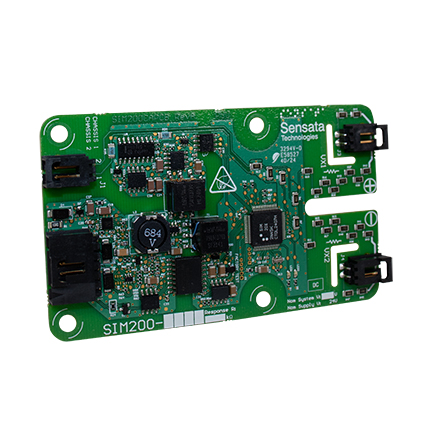
Sensata Technologies announced the launch of the SIM200 Insulation Monitoring Device (IMD), designed to enhance safety in the next generation of the electric vehicle ecosystem. The SIM200 (IMD) is designed for continuous active monitoring of unearthed (Isolated Terra) DC systems including charging stations, electric vehicles, and other systems operating above 60 VDC.
Continuous “always on” monitoring
In a high voltage system, electrical isolation is accomplished by using non-conducting barriers such as insulation on cables, plastic housings on components, and physical distance. IMDs are needed to monitor these systems for failures, which could allow excess current to flow where it should not and pose an electrocution risk. Using its patented signal injection algorithm and processing capabilities, the SIM200 is designed to provide continuous “always on” monitoring – even when the system is turned off or experiencing large changes in voltage. This IMD solution is also able to provide monitoring of the total stored capacitance in the system – functionality which is critical for safety in tomorrow's high-powered megawatt charging applications and meeting future insulation monitoring specifications.
Standard Modules from 60 to 1500V
Leveraging technology from Sensata’s 2021 acquisition of Sendyne Corp, the SIM200 monitors the insulation of Isolated Terra systems by injecting a small voltage through isolation resistors onto both the positive and negative high-voltage rails. The injection pulses alternate between the positive and negative rails at set time periods, and the system monitors these pulses against the system voltage to detect any safety concerns with the system and help trigger a shutdown if necessary.
Engineered to work seamlessly across EV charging and other platforms, the SIM200 is available in a variety of standard modules configured for applications from 60 V up to 1500 V. The device is UL 2231-2 recognized and has been tested to IEC 61557-8 requirements. Its communication framework has also been designed with inputs from some of the world’s largest OEMs, with dual dedicated fault state outputs, robust self-diagnosis functionality, as well as a modular CAN 2.0B interface for detailed system information.
Compact Modbus HMIs
Smaller displays with free of charge designer software
Automation, Electronics & Electricity

An ultra-compact design doesn’t have to mean limitations in terms of functionality. DISPLAY VISIONS demonstrates this with its touch operating units in the EA-HMI series. Even at diagonal screen measurements of just 2.8" and 4.3", these displays offer excellent functionality in the smallest space. They therefore represent a robust solution for all industrial applications where compact dimensions are a real issue. The EA-HMI operating devices can be used with more than 20 widely available programmable logic controllers (PLCs), including the models from well-known providers such as Allen Bradley, Beckhoff, Mitsubishi and Siemens. They are configured as slaves and support the standard communication protocols Modbus RTU and Modbus TCP.
In addition to the compact dimensions, another highlight of this series is the ease of integration into existing PLC systems. The displays support all data types, including coil, discrete, input and holding. It is also possible to process 32-bit floating point values for floating point calculations. The data elements, from the text and numbers to the bar graphics and images, can be assigned flexibly to the Modbus registers.
High readability and easy interface design
The EA-HMI series operating units offer a high level of brightness of 1000 cd/m², which means that the displays can be read at all times, in poor light conditions or even outdoors. The devices are intended for wall or front panel assembly. The free of charge software HMI designer is available for customers to develop their own user interfaces quickly and easily. This WYSIWYG tool allows screen pages to be designed intuitively. After the interface is designed, the Modbus registers are logically linked with the display elements, which means that the corresponding data is automatically shown on the display in a form that is always up to date. DISPLAY VISIONS also offers the creation of complete, customer-specific HMI designs as a service on request.
Exhibitor sps 2025: Hall 7, 260
PoE-Daughterboard for Modular Camera Concepts
Power supply and Gigabit Ethernet via a single cable for simplified integration of single-board cameras
Vision & Identification

IDS Imaging Development Systems expands its modular camera concept with a remote GigE PoE board (Daughterboard). It enables power supply and data transfer via a single cable, thereby facilitating the integration of motherboard board-level cameras from the GigE uEye LE and uEye SLE series. The motherboards are based on a flexible interface concept: Instead of a connector block, they feature a compact flat ribbon connector, allowing connection via a flexible cable to a remote interface electronics unit.
This principle allows sensors and optics to be placed in the housing independently of the power supply and data connection, an advantage particularly for individual or space-critical product designs. Power supply and data transmission can now be achieved using a single cable with an RJ45 connector, to make integration more convenient. The new GigE PoE Daughterboard opens up a wide range of possibilities for developers and integrators to create space-saving yet powerful camera systems.
Fighting the Weeds With Ease
The AX-1 robot from Norwegian start-up Kilter applies herbicides to weeds with such precision that the use of chemicals is reduced by up to 95% thanks to AI and sensor technology. To ensure that the autonomous helper is also gentle on the soil, the developers rely on lightweight and lubricationfree linear technology from the igus drylin series.
Motors & Drives

Developing sustainable machines for agriculture is a challenge as alternative components are often required. Kilter provides an example of this: the Norwegian company has developed the AX-1. This fully automated agricultural robot drives autonomously across fields using GPS. It recognises weeds with a vision system and artificial intelligence. Instead of spraying herbicides over large areas, the robot applies tiny drops to the weeds in a targeted manner with the help of a nozzle system - similar to the precision of an inkjet printer. "Thanks to this targeted application, we can increase yields by up to 35% as the crops thrive without weeds and their metabolism is no longer affected by herbicides," says Anders Brevik, CEO of Kilter. At the same time, chemical use is reduced by 95%.
The challenge: protecting the soil with lightweight and lubrication-free components
The solution from Norway also conserves the soil, both through the reduced use of chemicals and the design of the robot itself. "It was important to us that the AX1 also works in the most environmentally friendly way possible," says Trygve Weum, Design Engineer at Kilter. At the same time, the components had to be as light as possible so that the robot only minimally condenses the ground during operation. This was particularly challenging with the adjustment mechanism of the spray module. Most of the linear systems available work with lubricants and are relatively heavy. "We were therefore very relieved when we found a lubrication-free and lightweight solution from igus."
Adapting the spraying system to plant heights
To adjust the height of the spray nozzle module to the current plant height, Kilter's design engineers use a linear module from the drylin SLW25120 series from igus. The system is based on a robust drylin W linear guide made of hard-coated aluminum and a trapezoidal threaded spindle with an electric motor. The rotation of the spindle causes the threaded nut to move along an axis and with it a linear slide connected to the spray nozzle module. The base weight of the SLW25120 is around 5.9kg, plus around 0.9kg per 100mm stroke length. Another special feature: no grease is required for these movements of the nut and the carriage. The carriage's nut and plain bearing are made of a high-performance plastic in which microscopically small solid lubricants are integrated. They allow for low-friction dry operation. "It is equally important that grease can no longer combine with the dust from the field and form a paste that increases friction," adds Weum. "This makes the mechanism far more fail-safe." Farmers also save time as no relubrication work is required.
"The module makes a significant contribution to the robot's reliability"
The Norwegian engineers at Kilter were also impressed by the robustness of the linear module. This is essential as things can get rough on the field in terms of forces. "The torsion-resistant doubleshaft design ensures a high level of stability. The system features a maximum axial load capacity of 2,500N and a permissible radial force of up to 10,000N. This means that it offers a safety reserve that is more than sufficient to reliably move the spray module weighing around 60kg for years," says Michael Hornung, Product Manager drylin Linear and Drive Technology. This leaves enough room for additional loads, for example through impacts on the field. "We really appreciate the robustness of the linear module," says Weum. "The module contributes significantly to the reliability of the robot and thus the satisfaction of the farmers."
Motion Controller with Advanced Multi-Axis Management
Up to 100 µs cycle times for 16 axes
Motors & Drives

Elmo Motion Control has announced the launch of the Titanium Maestro, a next-generation motion controller. The Titanium Maestro meets the demands of machine builders who require high performance, speed, accuracy, and robustness. Designed for the most demanding applications, it offers cutting-edge, real-time EtherCAT communication and advanced multi-axis management capabilities.
High Performance for up to 96 axes
The new controller enhances the performance and flexibility of systems, helping designers and integrators of high-performance motion machines across various industries to develop more efficient and competitive motion solutions. Powered by a quad-core CPU, the Titanium Maestro is housed in a fanless, passively cooled unit with extensive memory of up to 16 GB of RAM and 64 GB of FLASH. The motion controller achieves an industry-leading EtherCAT cycle time of 100 µs for 16 axes, setting a new performance standard. Alternatively, it can control a total of up to 96 axes. With its graphical capabilities, advanced C++ and Python programming and real-time programming support, the Titanium Maestro is designed to empower the next generation of motion control solutions. 'Software in the Loop' (SIL) support further streamlines the development process and accelerates the validation of complex automation systems.
Flexible Decentralized Servo Inverter
Dynamic drive solutions for machinery and systems
Motors & Drives

AMKmotion’s ihD servo inverter, designed for decentralised installation, stands out thanks to its minimal space requirements and well-designed cabling. Power, STO (Safe Torque Off), 24 V and fieldbus communication are all transmitted via a single cable. Thanks to the daisy-chain method, multiple servo inverters can be easily connected in series, reducing cabling costs by up to 70% compared to centralised drive systems.
Another advantage of the ihD-DT5 version is that the inverter is mounted directly on the motor series with integrated control electronics. This eliminates the need for external cabling and significantly simplifies installation.
High-performance electronics in a smart design
The ihD delivers powerful, dynamic performance even under demanding conditions. With a rated current of eight amps, it can provide triple overload for one second – ideal for applications involving dynamic load peaks and high cycle rates.
A standout feature of the ihD is its flexible connection concept. Depending on the installation setup, the hybrid input connector can face either backwards or upwards. The stand-alone version of the ihD also features a plug that can rotate through 300 degrees for motor and encoder connections. This makes integration into existing machine concepts much easier, saving space and cabling.
The ihD also impresses with its intelligent energy management: excess energy is distributed to all connected servo inverters via a shared DC bus, reducing losses and increasing overall system efficiency. With IP65 protection, the ihD is ideally suited to demanding industrial environments, remaining unaffected by dust, moisture or vibrations. At just 165 × 100 × 60 millimeters, the ihD is extremely compact for its power class. This enables even more space-saving decentralized drive solutions – a major advantage where installation space is limited. The ihD is entirely plug-in compatible. There is no need to open the inverter for connection, and when the system is de-energized, installation can be carried out without requiring specialized personnel.
What to Look for in Your Motion Control Feedback Device
When it comes to the world of motion control, it’s easy to take your feedback device for granted. After all, it’s a small part of the system and is typically tucked inside the motor housing, out of sight and out of mind. However, the impact this seemingly minor component has on a system’s accuracy, performance, reliability, and ease of integration is hard to overstate.
Motors & Drives, Sensor Technology

Today’s servo systems depend on accurate, consistent feedback to maintain position, control speed, and execute complex motion profiles. But not all feedback devices you can specify are created equal. Traditional encoders or resolvers still do the job in many applications, but application requirements increasingly need devices that go beyond the basics. Design engineers also want faster integration and less testing time. Modernizing your feedback device can mean reducing wiring, simplifying setup, or eliminating longstanding compromises on resolution, accuracy, and smoothness of motion.
Whether you’re specifying a new servo system or looking to simplify an existing design, it’s worth asking: what do you need your feedback device to do, and what’s now possible?
What are you really looking for?
At the most basic level, your feedback device needs to deliver the resolution and accuracy required to drive the motion loop effectively. Too little, and you’ll see ripples in motion, jitter in position holds, vibration in the machine, or just plain inaccurate positioning. Too much, and you might be paying for more capability than needed. Mechanics connecting to a motor shaft can only so accurately connect to the part of the machine doing the work which is where the motion really matters.
But modern feedback devices also bring in another category of features that extend beyond the basic specs and simplify the machine as a whole. This is where many of today’s biggest gains are being made.
They include:
Simple cabling: Servo systems used to rely on dedicated feedback cables, sometimes requiring 13 or more wires just for feedback. That meant bigger cabinets, more connectors, tighter bends through cable trays, and more hands-on work during installation.
Modern single-cable feedback systems simplify all of that. By taking the motor power cable and just adding two wires for feedback data to fit everything into a single cable, they reduce effort and cut install time. Single-cable can make a major difference on compact machines where space is tight and reduce machine build time Built-in motor ID: Many modern feedback devices now include onboard memory that stores the motor’s ID, specs, and even tuning parameters. When connected to a compatible drive, the system can automatically recognize what it’s working with.
That means setup becomes faster, more consistent, and less prone to human error. In systems where motors are easy to mix up – say, a highspeed and low-speed variant sharing identical housing – this auto-recognition helps prevent costly mismatches. It also supports smoother global deployment, especially when machines are shipped across regions with different voltage standards.
Thermal monitoring: Temperature sensors are vital for protecting motors, but traditionally they’ve required their own wiring back to the drive. With smarter feedback systems, temperature data can now be sent over the same digital link used for position data.
This combination streamlines wiring even further and makes it easier to monitor winding temperatures in real time. The result is better protection against overheating, more consistent performance, and fewer points of failure.
Functional safety support: In applications where people work close to moving machinery, safety is vital. Some modern feedback devices now support functional safety features directly through the encoder.
These certified encoders allow safety systems to reliably monitor motor position and intervene if motion goes outside expected bounds. Integrating safety at the feedback level reduces the need for extra sensors or relays, simplifies system design, and helps meet compliance requirements without overcomplicating the machine.
The new standard
One feature that’s quickly becoming an expectation rather than a simple nice-to-have is multiturn absolute feedback. This allows a system to know not just the shaft angle within a single revolution, but how many full turns have occurred, even when the system is powered off. Without multiturn tracking, the system has no idea where it is on that axis after a power cycle. The common workaround is a homing routine: the machine slowly moves to a reference point and resets itself. While this works, it’s inefficient and vulnerable to mechanical faults.
Multiturn absolute feedback lets machines skip the homing process entirely. Power up, and they’re ready to go. That means shorter startup times, fewer moving parts (no home switches), and fewer chances for something to go wrong.
There are several ways to achieve this. Some devices use small internal gearboxes to track turns, but this adds cost, complexity, and physical length to the encoder. These gears also limit usable multiturn range, usually to 12 bits. Other feedback devices use battery backups, which are compact and straightforward, but can potentially create maintenance issues down the line and reliability issues with unscheduled battery failures.
Energy-harvesting feedback devices offer a modern alternative to both. These generate just enough power from shaft rotation to store turn counts in non-volatile memory. The result is a compact, battery-free, maintenancefree solution that fits into the same footprint as a basic encoder.
Choosing the right feedback device for the job
So, how do you decide what to specify? For most applications, a modern digital feedback device with multiturn absolute capability via energy harvesting, single-cable support, provides motor thermal data, and has motor catalog data is a safe and future-ready choice.
Devices like Kollmorgen’s SFD-M are designed to meet the demands of general-purpose motion systems, delivering high performance, low cost, and reduced system complexity.
And if you’re building systems at scale, it’s worth thinking in terms of pre-matched components, such as those supplied by Kollmorgen. Drives, motors, and feedback devices that are designed to work together out of the box reduce integration complexity and speed up development.
Whether you approach feedback at the component level or the system level, the key is to pick devices that reduce the number of compromises your machine has to make.
It’s time to expect more
Feedback devices used to be simple. You picked a motor and got the feedback device it came with. You wired it up and tested whether the included feedback had the resolution and performance you needed. But today’s systems demand more – and deliver more in return. Features like single-cable installation, energy-harvesting multi-turn feedback, plugand-play configuration, and built-in safety and diagnostics are fast becoming standard in well-designed motion platforms.
You’re not just choosing a sensor, you’re choosing a system that needs to work, reliably and efficiently, every day. That’s why it makes sense to look beyond the component spec sheet and consider how the feedback device supports the system as a whole.
Beyond Sustainability
At the Bürkert Trade Press Days we spoke with Georg Stawowy, CEO of Bürkert Fluid Control Systems about the concept of a regenerative economy.
Automation, Industry 4.0

IEN Europe: Bürkert is deeply involved in the topic of the 'regenerative economy'. How did Bürkert come to focus on this topic? Could you also briefly define the term for our readers?
Georg Stawowy: Perhaps we should start with the background. While developing our new Bürkert strategy, we realised that we wanted to prioritise sustainability, so we considered what needed to be done to achieve this. As part of the strategy, we then came to the conclusion that we needed to formulate a vision.
We believe it is important for a company to set itself overarching goals – a North Star that provides enduring direction. However, the more we researched sustainability, the more we realised that sustainability goals alone are insufficient. Focusing purely on sustainability activities means doing less harm than with the previous, conventional approach, but the clock is still ticking.
At some point, we came across the concept of regenerative economics. As we explored it further, we realised that regenerative economics is about changing the rules of the game. It's about rewarding different things and having a vision of how resources can be restored.
And if I had to define it, I would say that yes, a regenerative economy is the vision of considering, in everything I do, whether I can renew the resources I need. In simple terms, can I give back more than I take in order to improve the overall situation? At first glance, this sounds like a contradiction, especially for a private company. And of course, it is a major challenge when you start to think differently and say that it's not just about Scope 1 and 2 in terms of carbon footprint and photovoltaics. It's about how we can truly regenerate. What are resources anyway? Are we only talking about plastic and steel, or what other resources are there? And then I come to the topic of, well, employees are also resources, and I have to think about regeneration there too.
That's where we are right now, thinking about what that means in concrete terms in terms of implementation.
IEN Europe: That sounds unusual for a private company at first. But what does it mean for Bürkert? What measures need to be taken to move the company in this direction, but also to get its customers on board?
Georg Stawowy: Well, in my presentation, I showed the different levels at which action can and must be taken. The first key issue is responsible ownership: what do we do with the profits? This has already been regulated at Bürkert through the existing foundation structure, which is non-profit. And, of course, there is also the area of employees. What can I do for them to make them feel secure and appreciated in the company during difficult economic times? But, of course, the area of customers is central: what services do I offer and how must the company be positioned for this?
The first thing we did was to define four key areas from all the applications and customer groups we serve. Of course, we want to continue serving the other areas and also gain new ones, no question about it. These four focus areas are pharma and biotech, food and beverage, lab and analytical, and energy. What do they have in common? Put simply, they can contribute to creating a better world. Improvements in these areas can have an enormous leverage effect. We are also aligning the organisation of the company with these four sectors. The national subsidiaries have organised their sales departments accordingly, with internal and external sales forces. Behind this, we have business development, structured precisely according to the application and product managers, and behind that, development. It should be clearly recognisable everywhere what we stand for and what we offer.
If we can support our customers in improving their processes, for example in reducing CO2 emissions, we can achieve much more together than if our developers only improve our products, which of course they also do.
IEN Europe: Will this also have a positive financial impact?
Georg Stawowy: At present, perhaps one per cent of customers set this as a hard criterion. These are companies that say they will not buy from a supplier that does not invest in sustainability. However, for many buyers, sustainability does play a role, even if it is not defined as a hard criterion. And the number is sure to rise in both areas. It is a strategic risk for the moment, of course, but it will certainly pay off in the long term. Regenerative management is becoming part of our existing quality promise, because selling solely on the basis of the cheapest price is not an option for us.
The basic prerequisite is that I can demonstrate a positive effect and improve efficiency for the customer with my products; the rest comes on top of that. It is certain that the share of material costs in the bill of materials will increase. Therefore, it is sensible to address resource costs and efficiency as soon as possible.
IEN Europe: In the four areas mentioned, which applications does Bürkert specialise in? Through products or services?
Georg Stawowy: Basically, a significant part of our business involves simply selling components, including in the aforementioned areas. Bürkert products can be found in a wide variety of applications in the pharmaceutical sector. However, we excel in certain applications, such as fermenters in the pharmaceutical and biotech sectors, as well as in the production of new foods, to mention just two examples. The same applies to microdosing, laboratory equipment, in vitro diagnostics, and working with small sample quantities. Our experience enables us to solve problems quickly. Another of our strengths when it comes to food and beverages is decentralised automation. This is not a component, of course. However, this control area for mixing processes – a classic example of which is the production of fruit yoghurt with various fruit preparations – is also important.
IEN Europe: What effect do you think the changes that have now been initiated will have on Bürkert's business model?
Georg Stawowy: Yes, it will certainly change the way we work with our partners if you think it through to its logical conclusion. We are moving away from a conventional business model and towards a circular and regenerative economy. If you go down that route, it will impact the business model. However, it also requires customers who are interested in developing and trying out new models. This starts with recycling, but also extends to overhauling parts for possible reuse. It also involves leasing or subscription models, right through to pay-per-use. This requires a great deal of flexibility.
For example, we could build systems for end customer orders and co-finance them through our products to enable us to scale up more quickly. But then a way to share the success must be found. As an example: If the system is installed at an end customer's site and the manufacturer receives a certain amount per litre of solvent, then a clearly defined share will also go to Bürkert. These are all things that are just getting started, but if you think regenerative management through to its logical conclusion, it's clear that completely different reward models are needed.
The final topic is our intention to prioritise service. This makes sense from an economic perspective. However, when discussing field service, it is important to clarify what is meant by this. For instance, we may receive an order from the beverage industry for plant maintenance.
This would mean carrying out maintenance on our own products and those of our competitors. This means that I also need to know the part numbers of the competitor’s spare parts. The technician must also have these available on site, such as valve parts, seals and diaphragms. A whole network of information and expertise needs to be built up, including ordering processes and item numbers. This is no trivial matter; it is comparable to the difference between authorised and independent car garages today – you need a broader knowledge base.
We have a lot of work ahead of us, but we are committed to this path, and it will change business models.
IEN Europe: Thank you very much for these insights. We look forward to following the developments.
Ultrasonic Leak Detector
For proactive maintenance of air systems and detection of energy saving potentials
Energy Efficiency, Industrial Equipment & Supplies, Sensor Technology

VPInstruments announces the addition of the VP Leak Detector to its comprehensive product portfolio. This intuitive ultrasonic inspection tool is designed to help maintenance professionals easily detect compressed air, gas, and vacuum leaks and troubleshoot mechanical systems.
A practical tool for preventive maintenance
The VP Leak Detector is a practical and cost-effective solution ideal for both beginners in ultrasonic inspection and seasoned professionals. With its user-friendly design and minimal training requirements, the device empowers technicians to quickly identify leaks. These leaks might otherwise result in wasted energy, increased operational costs, or equipment failure.
Versatile applications
Key benefits and features of the VP Leak Detector are the integrated LED Bar Graph Meter that provides a clear, visual feedback during inspections and the 8-position sensitivity selector to allow professionals precise adjustment for accurate leak detection. The scanning module enables flexible use for various applications and the rubber focusing probe ensures pinpoint accuracy when identifying leaks. The device features a rugged ABS hand-held design and stainless steel sensor enclosures. It operates in the 36–44 kHz frequency range for fast response times and the weight of only 0.3 kg makes it ideal for energy audits or routine facility inspections.
The VP Leak Detector is a powerful tool designed to support a wide range of maintenance and energy management tasks. Its precision and ease of use make it ideal for daily operations as well as long-term efficiency strategies.
2-Stage Oil-Free Air Compressors
For pure compressed air with optimum energy efficiency
Energy Efficiency, Industrial Equipment & Supplies

The new double-stage air compressors of the DS series from AERZEN compress absolutely oil-free in accordance with ISO 8573-1, class 0 and guarantee outstanding performance in almost all application areas at differential pressures between 5.5 and 10.5 bar. Applications in sectors such as the food and beverage industry, chemical and process engineering as well as medical and pharmaceutical technology place the highest requirements on compressed air quality. After all, impurities in the compressed air such as dust, moisture, oils or microorganisms have an impact on product quality and the production process. With its DS series, AERZEN now offers new smart and efficient air compressors for oil-free compression.
Exceptionally high energy efficiency
The new double-stage screw compressors are available in nine sizes from 55 to 315 kW and volume flows from 180 to 2,920 m3/h. They reliably provide 100% oil-free process air (certified according to ISO 8573-1 Class 0) and achieve energy savings of up to 12% compared with the best-performing compressor models currently available on the market. This leap in efficiency is achieved by innovative bare-shaft compressors with new, highly efficient 4+6 rotor profiles in the low and high-pressure stages and motors with energy efficiency class IE4 or IE5. A variable frequency drive is integrated and guarantees optimum operation with a large turndown. The DS series is equipped with a direct drive using a coupling and gear drive for optimum drive efficiency and has stainless steel rotors in both stages to prevent corrosion.
Maximum reliability and durability
The compressed air packages have been designed for maximal reliability and durability, and they achieve outstanding performance even in extreme climatic conditions. An effective sealing concept for the drive shaft and conveying chamber minimises natural seal wear. The smart oil concept with oil cooler, electrical oil pressure switch for a constant oil level check and a mechanical oil pump contribute to the high level of robustness and energy efficiency. The oil-lubricated anti-friction bearings with pressure lubrication achieve a service life of at least 40,000 hours.
Maximum energy efficiency, quality, durability and reliability, paired with minimal maintenance effort/costs and low noise levels - these are the new double-stage, oil-free screw compressors in the DS series. The process air generation is of course PFAS-free, without compromising on performance and durability. Thanks to the extremely compact design, the machine footprint is small. The smart package concept even facilitates side-by-side installation, as maintenance can be carried out from both the operating and the rear sides. The entire package can easily be transported using a pallet truck, forklift truck or crane.
Smart Cooling Control Cuts Consumption of Energy
By leveraging a digital twin and the AI-powered, fully automated software solution from Factor4Solutions, Stadtwerke Karlsruhe were able to reduce the annual energy consumption of the existing refrigeration system at the GartenCarée complex by 20 percent within just the first six months of operation – significantly increasing its efficiency. And the full potential is far from reached: for an entire year of operation, the utility expects energy savings of up to 40 percent.
Energy Efficiency, Industrial Equipment & Supplies

As a municipal utility with around 1,100 employees, Stadtwerke Karlsruhe supplies more than 400,000 people with electricity, natural gas, district heating, and drinking water – including the GartenCarée site in Karlsruhe, whose cooling system is operated by the utility. In addition to residential units and office spaces, the building complex also houses a data center, medical practices, retail shops and restaurants. The GartenCarée cooling system consists of three absorption chillers powered by environmentally friendly district heating such as process waste heat from a nearby refinery, as well as a mechanical compression chiller with two compressors and a cooling tower. "When it came to the energy consumption of our system, we were more or less flying blind," recalls Jürgen Weiß, Head of Construction Management and Technology at Stadtwerke Karlsruhe, describing the situation before the solution was implemented. "At the end of the year, all we could see was how many megawatt-hours of cooling we had produced and how much electricity and district heating we had used to achieve it – nothing more, nothing less."
Project Goal: Greater Transparency and Efficiency in Refrigeration
That was about to change. Stadtwerke Karlsruhe set out to identify and realize potential energy savings. “To that end, we implemented an automated energy system management solution together with the provider, which enables better control of the individual components and provides detailed monitoring and analysis,” explains Weiß. “As a result, all energy flows are now visible in detail, and optimizations can be implemented and analyzed directly. The transparency we’ve gained is a major advantage.” The system measures and analyzes parameters such as the flow rate of chilled and cooling water, orchestrates them to maximize system efficiency and determines whether it is more economical to operate the chillers or use free cooling depending on the outdoor temperature. One example: pumps running constantly at 100 percent flow, even when 60 percent – or less – would be sufficient depending on conditions, present significant potential for improved efficiency and energy savings.
A common challenge in refrigeration systems is that pumps and cooling towers often consume as much electricity as the chillers themselves—without this being detected. Moreover, energy optimization typically occurs only at the component level and is often based on a single operating condition defined during system planning. However, this condition accounts for less than three percent of total operating hours. The result is unnecessary electricity consumption during a large portion of system runtime. Achieving efficiency gains through improved interaction between components is the specialty of Factor4Solutions.
After Six Months: 20 Percent Less annual Electricity Consumption and Five-Figure Cost Savings
The intelligent software from Factor4Solutions analyzes the operation of all components relevant to the cooling system as a whole – including all components’ energy consumption. To do this, the solution uses digital twins of both the individual components and the entire cooling system, allowing it to calculate in real time, or on demand, how each component must behave to support the assembly of components and to maximize overall system efficiency.
As a result, chillers and auxiliary equipment are no longer controlled in a fixed sequence based on base and peak load logic. Instead, they are operated dynamically and efficiency-based, depending on weather conditions and required cooling output, via standardized system management protocols. This ensures the system runs at maximum efficiency under all load conditions.
The Stadtwerke Karlsruhe team was able to confirm the system’s effectiveness right after the test phase ended. “In just those six months alone, we reduced annual electricity consumption for cooling by more than 20 percent, which translates to financial savings in the five-digit range,” says Weiß with satisfaction. And that’s likely just the beginning. Over the course of a full year, there is still significant optimization potential - especially since the efficiency of the colling system’s various components interact differently depending on seasonal temperature changes and cooling demand.
Weiß is confident: “The other six months, the system was still running under our conventional control logic. That means we can save significantly more energy. According to calculations from Factor4Solutions, we’re looking at savings of over 40 percent. And that’s exactly what we’re aiming for.”
100 Percent Operational Reliability
Another major benefit for Stadtwerke Karlsruhe is the fact that the system – both hardware and software – continues to be monitored, maintained, and optimized by the provider after installation. Weiß comments: “Of course, we monitor the system ourselves, but having the expert team at Factor4Solutions operate it via AI-supported remote access is a huge advantage for us. Their in-depth expertise in refrigeration technology ensures that we’re immediately informed if anything isn’t working as it should.”
Thanks to the use of digital twins and real-time data comparison, Factor4Solutions can even notify its customers in advance of anomalies and potential failures, allowing these to be prevented proactively through predictive maintenance.
“Guaranteed operational reliability at all times is absolutely critical for us because we’re obligated to supply cooling,” explains Weiß. “At GartenCarée, we’re not just providing cooling for offices and apartments—but also for a data center, among others.”
When asked about the implementation phase, Weiß notes: “Everything went smoothly. In collaboration with the service provider responsible for our measurement and control systems, we provided the necessary data points that the vendor required to set up the solution. Factor4Solutions, who manage the system remotely from Berlin, had already told us in advance which data points were needed – such as flow rates, temperatures, and energy meters for heating and cooling.” Once that was done, things moved quickly: the software was configured within a single day, and the first analysis was available within four to six weeks. Based on that initial data, it became clear which additional data points would be helpful, and the system was fine-tuned accordingly. This simple, streamlined installation process makes the solution attractive across industries – anywhere cooling systems are used.
Rapid Payback Supports Expansion of the Partnership
It became clear right after the test phase: “All I had to do was compare the annual energy consumption and cooling output to the previous year to see the significant increase in efficiency and the energy savings,” says Weiß. The team leader is also very satisfied with the system’s return on investment: “The annual cost of working with the refrigeration specialists is already offset by the energy savings within the first five months of each year.”
It’s no surprise, then, that Stadtwerke Karlsruhe is considering expanding the partnership. “We’re already having a second system managed by Factor4Solutions,” says Weiß. “And we operate several other cooling systems that could also be suitable candidates.”
Since the solution can be integrated into almost any system, there’s a strong likelihood that the AI-based approach will also deliver valuable insights and savings in those cases.
Sliding Gate Valves Help to Reduce Operating Costs and CO₂ Emissions
Valuable energy is lost in pressure reduction stations, exhaust steam pipes and condensation systems. With Energify system, the company CFT GmbH offers a simple and robust solution for the cost-effective conversion of even slight pressure differences into energy. This saves electricity costs and lowers CO₂ emissions. The system performance is controlled precisely with sliding gate valves from Schubert & Salzer.
Energy Efficiency

"At the start we always have to do some convincing", says Selcuk Aslan, Energify Project Manager at CFT. "Our system is highly developed, but the idea and the basic design are actually very simple. For that reason people are sometimes sceptical. However, once they have seen and understood Energify, they are quickly convinced by the robustness and reliability of the technology – and that 'simple' is therefore also a great advantage."
With Energify, CFT offers a solution to challenges that almost all industrial companies are facing: the reduction of CO₂ emissions and the improvement of energy- and cost-efficiency. The innovative system utilises even slight pressure differences to generate power and feed it into the factory's own grid. Such pressure differences exist in almost all industrial plants. They occur in pressure reduction stations and exhaust steam pipes as well as in condensation and back pressure systems – and in most cases the energy stored in the fluids goes to waste.
Optimal utilisation of the already used energy
"Energify optimises the use of the already existing energy", explains Maximilian Igelbüscher, project engineer at CFT. "In order to guarantee an uninterrupted process, our system is always operated in the bypass. The basic design is as follows: Steam, or a gas of any kind, is expanded to a low pressure level in a rotary piston expander. This generates mechanical energy. This energy is transmitted via a shaft to an asynchronous generator, which then inputs the electricity into the low voltage grid."
Initially, it was difficult to precisely control the expander performance. The globe control valve originally used reacted too slowly to changing process requirements and could not reliably provide the gaseous medium with the desired output pressure. "We spent a lot of time looking for a solution to optimise our system in this respect. Ultimately, we made contact with Marcel Mokosch from Technical Sales at Schubert & Salzer. He visited us immediately to discuss the topic and proposed a solution with the sliding gate valve, which not only met our expectations, but even exceeded them", says Igelbüscher.
Significant improvement through the use of the sliding gate valve
The reason for the excellent control performance is the fundamental design principle of Schubert & Salzer’s sliding gate valve, which is based on two sealing discs that slide over each other. As a result, the maximum stroke between open and closed is a mere 6-9 mm and only very low actuation forces are required. This makes control extremely precise and agile. "The control accuracy has improved considerably through the use of the sliding gate valve. We can now control the output pressure with absolute precision", says Aslan.
A further advantage: The use of the sliding gate valve allowed two other valves to be replaced. For reasons of safety, it must be possible to stop the supply of steam or gas within a maximum of two seconds. For that reason a quick-closing valve was previously installed upstream of the control valve. However, sliding gate valves close within milliseconds and also perform this function. "Reliability and low maintenance costs play a decisive role in the cost-effective operation of a system like Energify. That's why we rely on a simple design and a robust construction", explains Aslan. "The sliding gate valve helps us by reducing the complexity of the system – and with a very compact design, too."
The difference to the previous technology is clear: the DN80 Schubert & Salzer sliding gate valve now used weighs a mere 15 kg, whereas the two globe valves previously used weighed together around 170 kg. "That's an enormous advantage, especially for the annually necessary maintenance work", Igelbüscher adds.
More economical than photovoltaics
The Energify demonstration system is located in a dairy in Münsterland, where it is used on the 8-bar steam mains. The cost-effectiveness of the system can be illustrated well here: With an input pressure of 8 bar (g), an output pressure of 5 bar (g) and a steam quantity of 2 t/h on average, an electrical output of 27 kW is achieved. With an annual running time of 6,500 hours, that would produce 175 MWh of power per year. The amortisation time is less than three years under these conditions. Including maintenance costs, over 270,000 Euros could be saved over an operating period of ten years.
CFT compares Energify with photovoltaics in a further calculation example: An Energify system with an output of 300 kW that achieves 8,500 operating hours per year would accordingly generate around 2,550 MWh annually – on an area of just 40 m². In order to generate the same amount of energy with photovoltaics, with an annual utilisation time of about 1,000 hours (average in Germany), an area of around 13,500 m² would be necessary.
"The technology has enormous potential. Thousands of steam generators are in use in Germany alone. And steam – in whatever form – is only one of the media from which we can produce energy. In principle, Energify can be used with virtually every gas, for instance nitrogen, coke oven gas, natural gas or hydrogen", Selcuk Aslan concludes.
A
Aerzener Maschinenfabrik GmbH 17 AMKmotion GmbH & Co. KG 15B
Bürkert Fluid Control Systems 16D
Delta Electronics (Netherlands) B.V. 11 Display VISIONS GmbH 13E
Elmo Motion Control Ltd. 14F
Factor4Solutions GmbH 18G
Greenflash GmbH 7H
HMS Industrial Networks AB 8I
IDS Imaging Development Systems GmbH 13 igus SE & Co. KG 14J
K
Kollmorgen Europe GmbH 15 Kontron Europe GmbH 9P
Panasonic Industry Europe GmbH 12 Pepperl + Fuchs SE 9 Phoenix Contact GmbH & Co. KG 9S
Schubert & Salzer Control Systems GmbH 19 Sensata Technologies Holland B.V. 12T
TKD KABEL GmbH 11V
TIMGlobal Media BV
177 Chaussée de La Hulpe, Bte 20, 1170 Brussels, Belgium
o.erenberk@tim-europe.com - www.ien.eu
- Editorial Director:Orhan Erenberko.erenberk@tim-europe.com
- Editor:Kay Petermannk.Petermann@tim-europe.com
- Editorial Support / Energy Efficiency:Flavio Steinbachf.steinbach@tim-europe.com
- Associate Publisher:Marco Marangonim.marangoni@tim-europe.com
- Production & Order Administration:Francesca Lorinif.lorini@tim-europe.com
- Website & Newsletter:Marco Prinarim.prinari@tim-europe.com
- Marketing Manager:Marco Prinarim.prinari@tim-europe.com
- President:Orhan Erenberko.erenberk@tim-europe.com
Advertising Sales
Tel: +41 41 850 44 24
Tel: +32-(0)11-224397
Fax: +32-(0)11-224397
Tel: +32 (0) 2 318 67 37
Tel: +49-(0)9771-1779007
Tel: +39-02-7030 0088
Turkey
Tel: +90 (0) 212 366 02 76
Tel: +44 (0)7594 239 182
John Murphy
Tel: +1 616 682 4790
Fax: +1 616 682 4791
Incom Co. Ltd
Tel: +81-(0)3-3260-7871
Fax: +81-(0)3-3260-7833
Tel: +39(0)2-7030631
- IEN Europe WebMag February 2026 IEN Europe presents Industry News, Products and Solutions for industrial decision makers in the pan-European B2B market.
- IEN Europe WebMag January 2026 IEN Europe presents Industry News, Products and Solutions for industrial decision makers in the pan-European B2B market.
- WebMag IEN Europe December 2025 IEN Europe presents Industry News, Products and Solutions for industrial decision makers in the pan-European B2B market.
- WebMag August 2025 IEN Europe presents Industry News, Products and Solutions for industrial decision makers in the pan-European B2B market.
- WebMag July 2025 IEN Europe presents Industry News, Products and Solutions for industrial decision makers in the pan-European B2B market.
- WebMag May 2025 IEN Europe presents Industry News, Products and Solutions for industrial decision makers in the pan-European B2B market.
- WebMag February 2025 IEN Europe presents Industry News, Products and Solutions for industrial decision makers in the pan-European B2B market.
- WebMag January 2025 IEN Europe presents Industry News, Products and Solutions for industrial decision makers in the pan-European B2B market.
- WebMag December 2024 IEN Europe presents Industry News, Products and Solutions for industrial decision makers in the pan-European B2B market.
- IEN Europe SPS WebMag 2024 IEN Europe special issue for sps 2024 in Nuremberg, November 12 to 14.
- IEN Europe WebMag August 2024 IEN Europe presents Industry News, Products and Solutions for industrial decision makers in the pan-European B2B market.
- WebMag IEN Europe July 2024 IEN Europe presents Industry News, Products and Solutions for industrial decision makers in the pan-European B2B market.
- IEN Europe May 2024 IEN Europe presents Industry News, Products and Solutions for industrial decision makers in the pan-European B2B market.
- WebMag HANNOVER MESSE 2024 Special issue for Hannover Messe 2024, April 21 - 26
- WebMag January/February 2024 IEN Europe presents Industry News, Products and solutions for industrial decision makers in the pan-European B2B market.
- WebMag December 2023 Highlights Products and Solutions sps and from 2023
- IEN Europe November Webmag Special SPS As the industrial world gears up for the 2023 SPS Show in Nuremberg, attendees and exhibitors alike are eagerly awaiting the opportunity to delve into the latest trends and innovations that promise to reshape the future of industrial automation and techno
- IEN Europe April WebMag Throw an eye to this web magazine dedicated to the coming Hannover Messe 2023! We wish to see you there as well. Have a nice and interesting reading
- IEN Europe Jan/Feb 2023 Webmag Dear readers, Happy New Year to you! IEN Europe is coming back this new year with a special focus on robotics and digital automation.
- #6 AI IEN - December 2020 Discover our latest edition of our digital magazine: AI IEN!
- IEN Europe December Last issue of 2020, IEN Europe December highlights the key trends in the IoT & e-mobility, Automotive, and Identification & Vision Systems fields.
- IEN Europe November - SPS Webmag Discover in this digital issue the best technology showcased at the upcoming SPS virtual exhibition!
- #5 AI IEN - October 2020 We are delighted to release the fifth issue of AI IEN! With a specific focus on Artificial Intelligence (AI) applied to the industrial field, AI IEN aims to become a point of reference for all AI professionals.
- Covid-19 Special e-magazine Don't miss our new issue on Covid-19 to discover the most innovative Industrial answers to the pandemic.
- #4 AI IEN - June 2020 Don’t miss the fourth issue of AI IEN! With a specific focus on Artificial Intelligence (AI) applied to the industrial field, AI IEN aims to become a point of reference for all AI professionals.
- #3 AI IEN - April 2020 Don’t miss the third issue of AI IEN! With a specific focus on Artificial Intelligence (AI) applied to the industrial field, AI IEN aims to become a point of reference for all AI professionals.
- #2 AI IEN - February 2020 Don’t miss this new issue of AI IEN! With a specific focus on Artificial Intelligence (AI) applied to the industrial field, AI IEN aims to become a point of reference for all AI professionals.
- SPS Webmag November Discover in this digital issue the best technology showcased at the upcoming SPS - Smart Production Solutions 2019!
- #1 AI IEN - September 2019 We are delighted to announce the launch of our new digital magazine AI IEN. With a specific focus on Artificial Intelligence (AI) applied to the industrial field, AI IEN aims to become a point of reference for all AI professionals.