
IEN July 2026 WebMagIssue #215 - 07/07/2026
IEN Europe presents Industry News, Products and Solutions for industrial decision makers in the pan-European B2B market.
Quick access
Contents2 Industry News: Siemens, Ucaneo | Robotics Award 20273 Industry News: Evolution Measurement Group, Aero Sensor | AUTOMA | Critical Manufacturing4 Industry News: Energy Efficiency Movement | X-Fab | Aramco, Emerson5 JUMO (Advertisement)6 Thermal Imaging Helps Reveal Hidden Text in Ancient Herculaneum Papyri7 Sensors, Test & Measurement: DwyerOmega | Turck8 Sensors, Test & Measurement: Ondosense | Sigmatek9 Labfacility (Advertisement)10 Award-Winning Data Center Cooling Solution11 Automation Technology: Pepperl+Fuchs | Softing12 Enhanced AI-Based Label Recognition for Reliable Goods-In Processes13 Automation Technology: Cognex | Kendrion14 Automation Technology: Busch Vakuum | Advantech15 Motors & Drives: Unlocking Billions in the Industry with 0.2 Percent Higher Motor Efficiency16 Motors & Drives: The Printer for the Smallest Details17 Electronics & Electricity: Traco Electronic | Harting18 Electronics & Electricity: Mersen | CTX19 Electronics & Electricity: TDK Lambda | Rose Systemtechnik20 Index21 Contacts22Companies in this issue
Dr. Fritz Faulhaber GmbH & Co. KG17 Hans Turck GmbH & Co. KG8 JUMO GmbH & Co. KG6 Traco Electronic AG18 Unitronics11ABB Automation16 ADVANTECH Europe BV15 COGNEX Germany Inc14 CTX Thermal Solutions GmbH19 Dr. Fritz Faulhaber GmbH & Co. KG17 DwyerOmega | Sensor Business Unit8 FLIR SYSTEMS TRADING BELGIUM7 Hans Turck GmbH & Co. KG8 HARTING KGaA18 IDS Imaging Development Systems GmbH13 JUMO GmbH & Co. KG6 Kendrion14 Labfacility Ltd10 Mersen19 OndoSense GmbH9


#2 Contents
#3 Industry News: Siemens, Ucaneo | Robotics Award 2027
#4 Industry News: Evolution Measurement Group, Aero Sensor | AUTOMA | Critical Manufacturing
#5 Industry News: Energy Efficiency Movement | X-Fab | Aramco, Emerson
#6 JUMO (Advertisement)
#7 Thermal Imaging Helps Reveal Hidden Text in Ancient Herculaneum Papyri
#8 Sensors, Test & Measurement: DwyerOmega | Turck
#9 Sensors, Test & Measurement: Ondosense | Sigmatek
#10 Labfacility (Advertisement)
#11 Award-Winning Data Center Cooling Solution
#12 Automation Technology: Pepperl+Fuchs | Softing
#13 Enhanced AI-Based Label Recognition for Reliable Goods-In Processes
#14 Automation Technology: Cognex | Kendrion
#15 Automation Technology: Busch Vakuum | Advantech
#16 Motors & Drives: Unlocking Billions in the Industry with 0.2 Percent Higher Motor Efficiency
#17 Motors & Drives: The Printer for the Smallest Details
#18 Electronics & Electricity: Traco Electronic | Harting
#19 Electronics & Electricity: Mersen | CTX
#20 Electronics & Electricity: TDK Lambda | Rose Systemtechnik
#21 Index
#22 Contacts
Siemens and Ucaneo Partnership to Scale Direct Air Capture
First-of-a-kind plant inauguration in Berlin on July 2, 2026

Siemens and German climate technology company Ucaneo have partnered to scale electrochemical Direct Air Capture (DAC) technology from industrial pilot to commercial scale – with Siemens deploying the Siemens Xcelerator portfolio as Ucaneo's preferred automation and digitalization partner. Together, the companies are creating a standardized and globally replicable automation platform that will enable rapid deployment by Ucaneo and its licensed operators worldwide. By 2035, Ucaneo targets the annual capture of half a gigaton of CO₂ from the atmosphere, which is roughly equivalent to cancelling out the entire annual CO₂ emissions of Canada.
The partnership addresses a growing industrial challenge: sectors from aviation to chemicals increasingly require access to sustainably sourced CO₂ as a feedstock – and large-scale Direct Air Capture offers a scalable solution, replacing fossil-derived carbon with CO₂ captured directly from the atmosphere.
First-of-a-kind DAC plant
Ucaneo has developed an electrochemical DAC process, inspired by the human lung, that removes CO₂ directly from ambient air and delivers high-purity CO₂ at over 99.9 percent purity. The resulting CO₂ can be permanently stored to generate certified negative emissions or used as a feedstock for climate-neutral products including sustainable aviation fuel (SAF), methanol and food and beverage applications. The fully electrified process integrates directly with renewable energy sources and responds flexibly to grid conditions and power market prices.
Ucaneo's first-of-a-kind industrial plant in Berlin (Germany), with a nameplate capacity of 150 metric tons of CO₂ per year, is set to become Germany's largest DAC facility upon commissioning in July 2026. The facility will be officially inaugured on July 2 in Berlin. Part of the captured CO₂ will be permanently stored in geological formations, making the facility Germany's first verified Direct Air Capture project combined with geological storage. This makes Ucaneo the first company in Germany – and one of few globally – to permanently store CO₂ captured through Direct Air Capture. A follow-on commercial plant with approximately ten times the capacity is already in the development stages starting construction next year.
Automation and digital technology
Under the partnership, Siemens provides comprehensive support across process automation, instrumentation and analytics, drive technology and digitalization. Siemens' process simulation software and controllers are already deployed at Ucaneo’s pilot plant, complemented by automation consulting services from Siemens.
For subsequent project phases, Siemens' advanced distributed control system Simatic PCS neo and additional simulation software are planned. These solutions will enable full process validation in a virtual environment before physical commissioning, thereby reducing technical risk during scale-up. The strategic objective is a standardized, modularly scalable automation template that can be replicated across future Ucaneo plants and those of licensed operators worldwide. This will help to accelerate global rollout while safeguarding capital efficiency at each deployment stage.
Growing demand for industrial CO₂
The need for CO₂ as an input is growing across multiple industrial sectors – from sustainable aviation fuel and methanol production to food and beverage applications. Regulatory requirements are accelerating that trend: under the ReFuelEU initiative, e-kerosene must account for 1.2 percent of all jet fuel supplied at EU airports by 2030, rising to 35 percent by 2050. The EU Carbon Removal Certification Framework (CRCF) is establishing a certification system for permanent carbon removal credits. For DAC operators, this establishes a second commercial pathway alongside direct CO₂ sales.
Submission Phase for the HANNOVER MESSE ROBOTICS AWARD 2027 starts
HANNOVER MESSE has announced the start of its renowned annual ROBOTICS AWARD competition. From 23 June, companies and institutions can submit their robot-based automation and logistics solutions for consideration. The deadline to apply is 1 November 2026.

Each year, HANNOVER MESSE organizes the ROBOTICS AWARD to recognize outstanding technological innovations that have the potential to transform manufacturing. An independent jury evaluates the submissions and nominates three solutions. The focus is on market-ready products with a high degree of innovation, clear industrial potential, and convincing economic viability. Companies and institutions from Germany and abroad are eligible to participate in the competition, regardless of whether they exhibit at HANNOVER MESSE.
During the awards ceremony, the three nominees present their solutions to members of the media from roughly 20 countries. The winner is then announced. All nominees receive a participation package for HANNOVER MESSE, which includes exhibition space in the Application Park and a presentation slot. Interested companies can submit their application here: https://robotics-award2027.alpha-awards.com/auth/login?show_success=true
GoodBytz won the ROBOTICS AWARD 2026
The startup GoodBytz won the Robotics Award 2026 for its kitchen system that uses lightweight, compact industrial robots. Appropriate seals, food-grade materials, and a high level of protection against heat, moisture, and cleaning processes enable its robots to meet the requirements of food processing.
The next HANNOVER MESSE runs from 5 to 8 April 2027 in Hanover, Germany. Spain is Partner Country.
Evolution Measurement Group Partners with Aero Sensor to Deliver Advanced Flow Probe Solutions
Aero Sensor is recognised for its expertise in the design and manufacture of precision flow measurement instruments used in aerospace, motorsport, research, wind tunnel testing, and industrial applications. Through this collaboration, Evolution Measurement Group will offer customers direct access to AeroSensor’s comprehensive product range, supported by expert technical consultation, application guidance, and best in class customer service in France, Germany, Italy and the USA.

As industries continue to demand increasingly accurate aerodynamic and fluid flow measurement capabilities, the partnership enables organisations to access reliable, high-quality solutions that support research, development, testing, and operational performance. Customers will benefit from streamlined procurement, local technical support, and enhanced access to specialist measurement technologies. The agreement reflects a shared commitment between both organisations to delivering innovative end-to-end precision engineered solutions that help customers improve efficiency, optimise performance, and achieve more accurate measurement results in demanding environments.
Commenting on the partnership, Paul Crowhurst, Founder and CEO of Evolution Measurement Group, said:
"We are delighted to partner with Aero Sensor and bring their highly respected flow probe technologies to our clients. Their reputation for precision engineering and measurement excellence aligns perfectly with our commitment to providing industry-leading test and measurement solutions. Together, we will support engineers, researchers, aerospace and automotive professionals with the tools they need to achieve accurate and reliable aerodynamic measurements.
The partnership represents another important step in Evolution Measurement Group’s strategy to expand its offering of specialist test and measurement technologies while providing customers with access to world-class instrumentation and technical expertise.”
Barney Garrood, Founder and CEO of Aero Sensor Limited added, “We are excited to be partnering with Evolution Measurement Group to offer our customers a turnkey solution that combines our expertise in aerodynamic probe design and manufacture with their industry-leading pressure measurement systems.
At Aero Sensor, our objective is to bring best-in-class flow measurement capabilities to engineers at all levels, from university students through to rocket scientists. The data from our precision-engineered probes is only as good as the pressure measurement instrumentation behind it, so this partnership enables us to draw on Evolution’s experience in this field to pair our probes with the optimal measurement systems. As we continue to grow our customer base, this partnership will allow us to offer both new and existing customers world-leading end-to-end flow measurement solutions.”
AUTOMA 2026 in Amsterdam
The Oil & Gas Automation and Digitalisation Congress (AUTOMA) will take place on 5-6 October 2026 to bring together executives and technical leaders of the industry

Digital transformation in oil and gas moves forward when technology proves its value in real operating conditions. AUTOMA 2026, taking place on 5-6 October in Amsterdam, centres the discussion on this practical dimension of digital maturity. The Congress presents an industry-driven agenda grounded in operational experience across the value chain, with insights shared by leading organisations including Shell, Repsol and Linde.
Optimisation for asset performance and resilience
Over two days, leaders from more than 190 companies meet within a closed-door format that includes more than 260 B2B meetings. Executives, engineers and digital specialists explore how data infrastructure, industrial software and intelligent systems strengthen decision-making, optimise asset performance and support operational resilience. The discussions focus on applied use of AI, autonomous operations and digital twins, highlighting tangible results in efficiency and decarbonisation.
At AUTOMA 2026, strategic priorities are examined through engineering practice and real project implementation. Case studies and technical exchanges illustrate how digital solutions are integrated into complex industrial environments, while collaborative dialogue between organisations supports faster and more effective deployment.
You can register and book your spot at organizer’s webpage: https://sh.bgs.group/42g
Congress website: https://sh.bgs.group/42f
Critical Manufacturing Expands into Taiwan
The new office, which will offer direct support for the Asia-Pacific region, is led by Neil Chen, who has been appointed as the managing director of Critical Manufacturing in Taiwan.

Critical Manufacturing, the Industrial Operations Platform company that unites execution, connectivity, analytics, and trusted AI, has expanded into Taiwan. The move strengthens Critical Manufacturing’s commitment to Taiwan and supports its broader growth across Asia-Pacific, where advanced manufacturers are accelerating digitalisation to manage increasingly sophisticated production requirements.
Creating a unified operational framework
Taiwan sits at the center of the global semiconductor and electronics supply chain, with manufacturers coordinating highly specialised processes, strict quality requirements, and rapid production cycles across increasingly connected factories.
Critical Manufacturing’s MES-powered Industrial Operations Platform helps manufacturers address these challenges by bringing production execution, automation, analytics, and trusted AI into a unified operational framework. With MES as the execution core, the platform enables manufacturers to capture data at source, connect it across systems and sites, and turn it into intelligence that supports faster and more confident decision making.
“Taiwan is a critical market for advanced manufacturing and a central part of the global semiconductor ecosystem,” said Francisco Almada Lobo, CEO and co-founder of Critical Manufacturing. “Our presence here reflects both the strength of the customer base we already serve in the region and the importance of being close to a market with significant growth potential, where manufacturers’ operations demand high levels of precision, agility, and control. With a dedicated local entity, we are better positioned to support our existing customers and help more manufacturers scale complex operations and move towards more intelligent production environments.”
The operations are led by Neil Chen, Managing Director of Critical Manufacturing in Taiwan. Chen brings extensive experience with Critical Manufacturing’s MES technology, having worked with the company across consulting, software engineering, system design, customer training, and MES customisation.
"I am honoured to lead Critical Manufacturing in Taiwan as we take this important step in the market,” said Neil Chen, Managing Director of Critical Manufacturing in Taiwan. “For our customers, the value of MES is not only in the technology itself, but in how well it is implemented, adapted, and supported to future-proof their day-to-day operations. Our focus will be to bring that expertise closer to manufacturers in Taiwan and help them get greater value from their digital manufacturing investments.”
New Global Survey on the Developments in Industrial Energy Efficiency
98% of companies are investing or planning to invest in energy efficiency. Yet, structural gaps in financing and internal capabilities are slowing delivery as rising energy costs tighten their grip on profitability

The Energy Efficiency Movement (EEM) has today published its third global report on energy efficiency investment in industry. The findings confirm that the case for energy efficiency has never been more widely accepted, and that the gap between commitment and delivery has never been more costly to ignore.
The EEM is a global network driving awareness, adoption and development of energy efficiency solutions across all industrial sectors. It empowers at scale the adoption of energy efficiency within industry, to accelerate the world towards net-zero. ABB and Alfa Laval are founding members, at the moment 600+ companies are members of the growing network.
The numbers in the new report show that energy now accounts for 23% of operating costs for businesses surveyed. More than half (54%) say rising energy prices pose a moderate or major threat to profitability, a figure that has grown with each successive EEM survey since they began in 2022. In sectors with the highest energy intensity, the exposure is considerably more acute. For these businesses, coping with a permanent energy crisis, managing energy use and managing financial performance have become the same task.
More specialists and data availability required
The response across industry has been decisive in intent. Nearly all organizations surveyed (98%) are already investing or actively planning to invest — up from 93% in 2024. Half are targeting Net Zero within five years. But financial discipline is shaping what gets funded and what gets deferred: 83% require a return on energy efficiency investment within five years, and 40% within two years. Nearly a third (31%) lack the specialist resource to implement projects. A further 29% report a digital skills gap, and almost a quarter (23%) say they do not have sufficient data to justify investment internally. The infrastructure for action is being built; the capacity to act on it is lagging behind."The cost of inaction is now harder to justify than the cost of investment, and businesses know it," said
Mike Umiker, Managing Director of the Energy Efficiency Movement. "The share of organizations citing upfront cost as their primary barrier has fallen from 53% in 2024 to 43% today. That ten-point drop tells us something important: the financial argument for energy efficiency is landing. But progress is not accelerating to match. The barriers that remain are structural; a shortage of skills, a lack of specialist expertise, and in too many cases, insufficient data to make the internal business case. Those are not problems you can solve with a cheque."
Industry needs an integrated approach
The report also points to a significant broadening of where businesses are directing investment. The share of organizations prioritizing transportation and logistics has risen from 37% in 2024 to 49% in 2026, reflecting a move away from individual asset upgrades toward a system-wide view of energy use. More than 60% have invested in energy audits and cloud data management to build the foundation for that wider approach.
"Energy efficiency is no longer a sustainability topic in isolation, it has become a test of industrial competitiveness and resilience," Umiker added. "81% of organizations say better financing or government incentives would increase their investment, and more than half say they need external support across four or more areas. The tools and the technologies exist. What is needed now is a stable framework across policy, finance, and industry to deploy them at the pace this moment demands."
The findings land at the centre of a growing global debate on industrial energy security. The IEA's Global Conference on Energy Efficiency convenes on 29-30 June, in Montreal, bringing together government ministers, industry leaders, and financial institutions to address exactly these challenges. EEM will utilize the report findings for the conference, connecting the voice of 2,000 senior business decision-makers directly to the policy and investment conversations underway.
It covers major energy-intensive sectors across North America, Europe, Asia-Pacific, and Latin America. Survey respondents were senior decision-makers at small, medium and large organizations.
X-FAB Develops Erfurt Site Into a Center for Microsystems Technology
German federal government and Free State of Thuringia support key project for the future of Thuringia’s microelectronics location with Euro 127.4 million

On June 23 a grant notification for Euro 127.4 million was presented in Erfurt to X-FAB MEMS Foundry GmbH by Thuringia’s Minister President Mario Voigt, Thuringia’s Minister of Economic Affairs Colette Boos-John, and Erfurt’s Mayor Andreas Horn. The funding provided by the German federal government and the Free State of Thuringia will support the expansion of manufacturing capacity through the construction of a new cleanroom at the Erfurt site. The “Fab4Micro” project is among the most significant industrial investments made in Thuringia in recent years. In December 2025, the European Commission gave the green light to the funding. The project is an important component of the European Chips Act (ECA), through which Europe aims to strengthen its technological independence in semiconductors.
The new facility is scheduled to begin initial production by the end of 2028. This will enable X FAB to expand its production capacity for micro-electro-mechanical systems (MEMS), highly integrated microsystems, and photonics. The investment will also establish new manufacturing capabilities for high-performance microsystems that use heterogeneous integration technology to combine numerous electronic and optical functions in a single component, required for data centers or optical systems. The Fab4Micro project will also create new highly skilled jobs in the field of microsystems.
Future-proofing technological sovereignty
“The deliberate investment decision in favour of the Erfurt site shows that the Free State of Thuringia is perceived as a competitive industrial location and offers excellent conditions for investment. This further establishes Thuringia as a major microelectronics and semiconductor hub in the heart of Europe and secures high-quality production and jobs in Thuringia,” said Thuringia’s Minister President Mario Voigt. “At the same time, Fab4Micro is a key project for the technological sovereignty of Germany and Europe. Those who want to be independent in the technologies of tomorrow must also be able to develop and produce them themselves. That is precisely what this investment in Erfurt stands for.”
“We greatly appreciate the commitment of the Federal Government and the Free State of Thuringia in enabling our Fab4Micro project. This funding marks an important milestone in transforming our Erfurt site into X-FAB’s microsystems hub. As the place where X-FAB’s story began more than 30 years ago, Erfurt holds special significance for our company, and this investment is a strong commitment to its future,” said Damien Macq, CEO of X FAB Group. “It supports our strategy of specialization and diversification while further strengthening a site already recognized as a centre of excellence for microsystems technology. The new cleanroom will enable us to expand capacity and capabilities step by step, aligned with customer demand and participation. With our expertise in heterogeneous integration and advanced wafer-scale assembly, the Fab4Micro project will also contribute to our activities in emerging markets such as photonics for data centers.”
Dr. Gabriel Kittler, Site CEO of X-FAB in Erfurt, added: “We are laying the foundation to industrialize innovative microsystems and photonics solutions at scale and further strengthen Erfurt’s role in the semiconductor ecosystem across Thuringia, Germany, and Europe. By providing access to advanced integration and packaging technologies as well as manufacturing capacity — including for small and medium-sized companies that are often hidden champions in their markets — we are making an important contribution to Europe’s sovereignty in microelectronics.”
The path leading up to today’s presentation of the grant notification was long and demanding, emphasized Thuringia’s Minister of Economic Affairs Colette Boos-John. “X FAB was among the first German companies whose projects received state aid approval under the European Chips Act last year. The Free State of Thuringia has closely supported the project from the very beginning and is also making a substantial funding contribution.” While the German federal government is providing around Euro 80.3 million, Thuringia is contributing a further Euro 47.1 million. This means that the Free State has taken on a significantly higher share of the funding than originally planned, thereby making a decisive contribution to enabling the project to be implemented. “Fab4Micro is a flagship project for Thuringia and Europe,” Boos-John continued. “The funding is money well invested. The investment strengthens our technological independence in a strategically decisive future market and secures the long-term prospects of the Erfurt site.”
Erfurt’s Mayor Andreas Horn said: “X-FAB has been one of the defining industrial companies in our city for decades. The decision to expand in Erfurt sends a strong signal for the entire business and technology location. It strengthens the industrial base and increases Erfurt’s international visibility as a high-tech location. The task now is to leverage the momentum generated by this major investment for the city.”
Aramco and Emerson Collaboration on Digitalization of Industrial Corrosion Monitoring
The companies have signed an agreement to jointly develop the next generation of corrosion management solutions for Saudi Arabian Oil Company, with the aim of preventing unplanned downtime and boosting production efficiency.
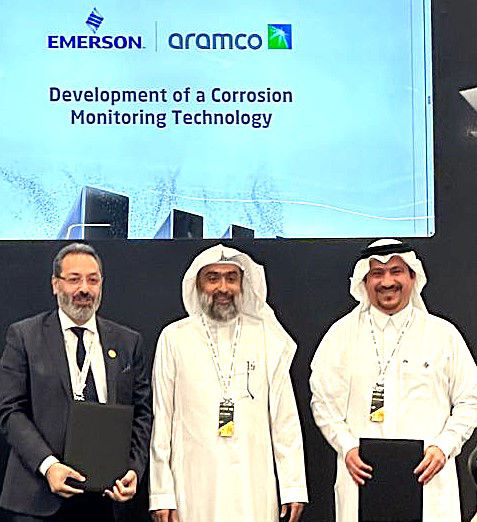
Emerson announced it will co-develop next-generation corrosion management solutions for the Saudi Arabian Oil Company (Aramco), one of the world’s leading integrated energy and chemicals companies.
For Aramco, corrosion management is a strategic priority tied directly to operational performance, safety and environmental responsibility. Continuous corrosion monitoring eliminates difficult, inefficient and dangerous manual corrosion measurements and provides a reliable digital data stream for improved decision-making.
Wall thickness monitoring with continuous data collection
As part of the corrosion research and development collaboration, Aramco will combine its expertise and intellectual property with Emerson’s advanced corrosion solutions to digitalise and transform corrosion management. Emerson will provide its technology leadership in ultrasonic online corrosion monitoring technology; seamless wireless connectivity for corrosion wall thickness monitors, and real-time and continuous data collection to develop a fit-for-purpose corrosion management solution for Aramco processes.
“Emerson, with our complete technology stack, is uniquely positioned to co-innovate the next-generation corrosion monitoring solutions that are cost-effective, scalable and customised for Aramco,” said Ram Krishnan, chief operating officer for Emerson. “We look forward to working with Aramco to develop not only a corrosion solution for its vast operations, but one that will also be a valuable tool for many other industries.”

Thermal Imaging Helps Reveal Hidden Text in Ancient Herculaneum Papyri
Flir thermal imaging technology is helping researchers in Italy unlock hidden text from the Herculaneum papyri, a unique collection of ancient manuscripts carbonized during the eruption of Mount Vesuvius in 79 AD. Using pulsed thermography that leverages the 2.775 MHz fast analogue lock-in input port offered by advanced Flir thermal imaging cameras, scientists are recovering writing previously invisible to the naked eye while also gaining new insight into the fragile internal structure of the documents.
Vision & Identification

The vital project is being led by researchers at the Institute of Heritage Science, part of the National Research Council of Italy (CNR), who are exploring non-destructive ways to study and preserve what remains the only surviving library from the ancient Greco-Roman world.
Discovered during excavations in the 18th century at the Villa dei Papiri in Herculaneum, the scrolls survived the volcanic eruption through carbonization caused by intense heat and burial beneath volcanic material. While this extraordinary process preserved the manuscripts, it also created major challenges for historians and conservators attempting to read and protect them.
Many of the papyri were mechanically unrolled centuries ago and mounted to supporting boards. However, the resulting fragments are extremely fragile, often heavily layered, and in many cases almost unreadable.
Conventional Imaging Falls Short
One of the principal challenges facing researchers is that both the carbonized papyrus substrate and the ink are black, making differentiation extremely difficult using conventional imaging methods as the contrast in the visible range is lost. Other more sophisticated techniques like X-ray can work, particularly in combination with artificial intelligence, but are more complex and expensive, requiring transportation of the papyri to special labs where these techniques are available.
To address these challenges, conservators turned to pulsed thermography, a technique that combines controlled light excitation with high-speed thermal imaging. The method works by illuminating the papyrus with a short pulse of light and recording the resulting thermal response over time.
Surface inscriptions become visible almost immediately in the first few infrared frames after excitation because the ink absorbs light differently to the surrounding papyrus material. As heat propagates through the sample over the following seconds, deeper structural details and underlying features begin to emerge. This time-based thermal behaviour provides researchers with a way to distinguish writing from substrate material.
Advanced Thermal Imaging
Central to the project is the use of Flir X-Series thermal imaging cameras. Combining high-speed, high-sensitivity infrared imaging with advanced thermal management capabilities, the cameras are ideal for scientific and research environments where precision and data integrity are vital.
Operating in the mid-wave infrared spectrum, Flir X-Series cameras enabled researchers to capture rapid thermal events with exceptional sensitivity, allowing subtle temperature differences between inked and non-inked areas of the papyri to become visible during pulsed thermography analysis. The X-Series features a fast analogue lock-in input port designed to receive external reference signals, enabling high-speed thermal analysis at a sampling rate of 2.775 MHz This capability allows researchers to detect faint signals or minute temperature differences in materials.
The researchers used dual flash lamps to generate controlled excitation while limiting temperature increases within the papyri to 2-3°C, well below any level considered harmful to the ancient material. Special filtering systems also prevented ultraviolet exposure and minimized unwanted infrared reflections.
According to the project team, the high sensitivity, spatial resolution, and advanced recording capabilities of the Flir X-Series proved particularly important when identifying fine thermal contrasts and preserving image clarity throughout the acquisition process.
The ability to stream and record thermal data continuously without dropped frames also supported detailed post-processing and analysis using Flir Research Studio software.
Notably, the method remains entirely non-contact and non-destructive, a critical requirement when working with fragile cultural heritage artefacts that cannot be physically manipulated or removed from their historical supports.
Beyond Text Recovery
While the primary objective of the project involves revealing hidden text, pulsed thermography also provides valuable structural information for conservation specialists.
As heat diffuses through the papyrus over longer timescales, the thermal data begins to reveal features such as fiber patterns, overlapping layers, and adhesion points between the papyrus and its supporting board. These details help conservators better understand the physical condition of the manuscripts and identify areas where deterioration or detachment may be occurring.
The ability to investigate both writing and substrate morphology from the same thermal dataset provides significant advantages for restoration planning and long-term preservation strategies. The technique is particularly useful because some regions of the manuscripts contain multiple compressed layers created during the historical unrolling process. In these areas, underlying sections remained attached rather than separating cleanly, creating a complex structure that is difficult to analyze using traditional imaging methods.
The researchers also noted that some competing technologies can involve bulkier equipment, more restrictive positioning requirements, or lower image definition when examining layered material.
Future Potential
One of the remaining challenges involves identifying text located on the reverse side of the papyri or buried within heavily layered sections where only limited excitation light can penetrate. Although possible to detect residual thermal information from deeper layers, the resulting signals become increasingly weak and blurred as heat diffuses through the material.
To help overcome these limitations, the CNR team is now exploring the use of AI-based processing techniques. AI-assisted analysis could further enhance differentiation between the ink and the papyrus substrate, potentially improving readability and supporting future interpretation of the texts.
Whatever the future holds, the team is confident that pulsed thermography is set to become an increasingly valuable complementary tool alongside other advanced heritage science techniques. This exciting project has demonstrated the growing role of Flir thermal imaging technology in scientific research and preservation. By combining high-speed thermal acquisition with advanced analysis methods, researchers are now able to study some of the world´s most fragile historical artefacts in ways that were previously impossible.
Intrinsically Safe Liquid Level Sensors and Switches
Designed for applications with direct contact to fuel and explosive liquids
Sensor Technology
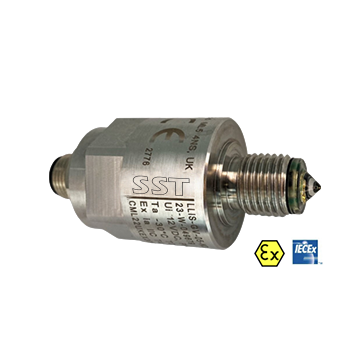
SST Sensing Ltd, a DwyerOmega brand introduces a range of intrinsically safe optical liquid level switches approved for hazardous areas. They are designed for use in demanding applications where direct contact with hydrocarbons, fuels, and flammable or explosive liquids is required.
Using innovative infrared technology and the principle of total internal reflection, these hazardous approved switches are suitable for a wide range of applications, including presence or absence of any liquid, petrochemicals/oil and gas, tank/container level-control, and downstream analyzer protection. The switches offer an almost instantaneous response time and switch point repeatability of +/- 1 mm, providing highly accurate readings, and require no calibration.
Wide range of operating temperatures
These liquid level switches are highly robust and resistant to chemical attack, with an operating temperature range between -30 and +80°C. The switches are housed in 316 stainless steel and come with a choice of sensing tip materials, making them ideal for use in challenging environments. Certified to meet stringent ATEX and IECEx safety standards, this sensor is suitable for use in hazardous area zones 0, 1 & 2 and ensures intrinsic safety by maintaining energy levels low enough to avoid ignition risks, even in faulty conditions, making it ideal for a wide range of applications and is designed for Equipment Groups IIA, IIB, and IIC with a temperature classification of T4 as defined by EN/IEC standards 60079-0, and 60079-11 (latest versions).
Inductive IO-Link Ring Sensors
Flexibly configurable sensors provide process and diagnostic data for feeding and counting tasks
Sensor Technology

The new TURCK inductive IO-Link ring sensors reliably detect small metal parts. The highly configurable BIxR-W20 sensors address typical tasks in feeding systems, conveyor systems, and machining centers, replacing conventional variants with fixed functionality with a standardized, IO-Link-capable device concept. Users benefit from a reduction in the number of variants as well as additional diagnostic and process data, which is available directly via IO-Link.
Comprehensive condition monitoring data
A key feature of the sensors which are available in eight ring diameters ranging from 6 to 50 mm, is their flexible configurability: sensitivity, switching logic, output type, and static or dynamic operating mode can be set via both IO-Link and a teach adapter. In addition to process data, the devices provide comprehensive diagnostic information—such as operating hours, switching cycles, and temperatures—that supports condition monitoring and predictive maintenance.
Typical applications include feeding systems for automatic screwdriving machines, part counting and sorting in conveyor systems, as well as wire breakage and jam detection. In dynamic mode, the ring sensors detect even very small and fast-moving parts with an adjustable pulse length and high repeatability.
Level Monitoring in Closed Melting Furnaces
Radar system measures contact-free, with accuracy of up to 0.3 mm – even with significant fluctuations in fill level
Sensor Technology

OndoSense has developed a measurement system for the level monitoring of molten aluminum, steel or copper inside closed furnaces: The new OndoSense FurnaceProtect radar solution measures the fill level in closed melting, casting and holding furnaces from the outside through a small opening in the furnace lid of only ~50 mm. The radar system offers a measurement accuracy of up to 0.3 mm, even in the presence of dust, steam, smoke, vibrations and metal temperatures of up to 1600 °C.
Significant fluctuations in fill levels during the melting process do not affect the measurement precision or reliability. This is due to the unique combination of a high measurement rate (500 Hz) and smart filter algorithms inherent in OndoSense radar technology. The level monitoring system therefore consistently delivers error-free, highly accurate and rapid measurements, even in the presence of wave motion, bubble formation or other abrupt fill level fluctuations.
Easy integration & highest performance
Based on the OndoSense apex Level Line, the new OndoSense FurnaceProtect radar system not only enables higher productivity in the operation of melting, casting and holding furnaces: It also reduces energy costs, optimizes raw material usage and prevents furnace overfilling.
The new radar-based level measurement solution meets the highest requirements for heat, temperature or pressure resistance and can be integrated into melting or holding furnaces very easily. Thus, the OndoSense FurnaceProtect housing is simply mounted on the furnace lid, with the housing’s protective tube inserted through an opening in the lid measuring just ~50 mm.
The OndoSense FurnaceProtect radar solution is equipped with either an advanced Profinet interface or a proven analog current interface (4–20 mA). It also offers three digital switching outputs (PNP/NPN). The measurement range extends from 0.1 meters to 30 meters. The radar system features a webserver-based configuration software with pre-installed application profiles, ensuring simple and rapid sensor commissioning.
No calibration or radiation protection required
Until now, non-contact level measurement of molten aluminum or steel in closed melting furnaces was only possible using radiometric methods – which come with several drawbacks: Measurements involving radioactive isotopes are subject to strict regulatory approvals, extensive safety training, and rigorous radiation protection requirements. Furthermore, radiometric systems require frequent recalibration based on furnace wall thickness as well as the specific metal or alloy to ensure reliable readings. The new OndoSense FurnaceProtect radar solution eliminates these shortcomings.
Savings costs through determination of energy requirements
The OndoSense FurnaceProtect radar solution enables a more accurate measurement of the energy required for melting metal: "Precise level measurement within the melting furnace allows for a better estimate of the amount of metal inside. Consequently, the energy required to melt the metal can be determined more accurately. This saves energy costs and enables better planning of the melting process. It also helps avoid furnace overfilling – which leads to unnecessary raw material consumption, unplanned downtime, potential accidents, and high additional costs," explains Co-CEO Waltersbacher.
The level control in melting furnaces is required in particular for the recycling of scrap metal such as aluminum, steel or copper to determine exactly when the metal has fully melted. At the start of the melting process, the still solid metal scrap typically forms a pile in the center of the furnace, resulting in a lower level at the furnace rim. As the melting progresses, the level at the rim rises. Once the metal has completely melted, the level readings are uniform throughout.
Flexible Analogue Mixing Module
For precise data acquisition in applications with mixed sensor requirements
Automation, Sensor Technology, Test & Measurement, Expo Channel: Sps 2026

The AM 821 analogue mixing module from the SIGMATEK S-DIAS series combines eight analogue differential inputs with 16-bit resolution and two analogue outputs, each in the range of 0–10 volts. It enables the precise and high-speed acquisition of analogue sensor signals with a sampling rate of ≥ 500 μs for all channels. A key feature is its high flexibility: Each input and output can be individually switched between current and voltage signals, supporting 0–20 mA, 4–20 mA, and 0–10 V.
Software-configurable input filters
Thanks to its high resolution and freely configurable signal types, the compact DIN rail module is ideal for applications with mixed sensor requirements – such as in measurement technology, laboratory and analytical equipment, and test and evaluation systems. In addition, the analogue mixing module features integrated short-circuit detection. Software-configurable input filters help suppress signal noise. Status LEDs located directly on the module enable channel-specific diagnostics and simplify commissioning and maintenance. For easy cabinet integration, a corresponding EPLAN macro is available for the AM 821.

Award-Winning Data Center Cooling Solution
Unitronics has redefined what data center cooling controller can be — voted Gold, Control Engineering Product of the Year by automation engineers worldwide
Automation
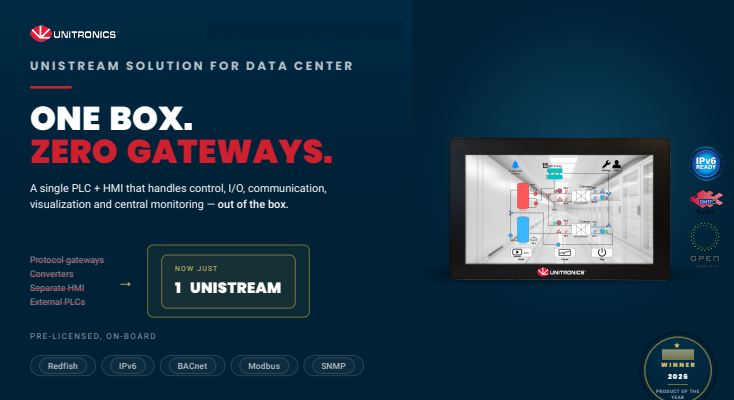
For years, building a reliable cooling control system for a data center meant assembling a patchwork of PLCs, gateways, and HMI panels: each one a potential failure point, each one adding weeks of deployment. Unitronics set out to change that with the UniStream Solution for Data Center. A single PLC+HMI that handles everything: control, I/O, communication, visualization, diagnostics, and central monitoring, out of the box.
Automation engineers who specify, design, and build data center cooling solutions have now voted UniStream the Gold Winner in the Control Engineering Product of the Year Award. The votes came from qualified engineers and automation professionals who are involved in industrial control systems every day.
The Architecture
The UniStream Solution for Data Center cooling was designed from the ground up for the unique demands of data center environments. Every component, protocol, and certification was chosen to meet the requirements OEM’s engineers actually face. It is equipped with native Redfish and IPv6 support for direct integration with data center management systems and full OCP profile compliance. The system is pre-licensed with BACnet, Modbus, SNMP, REST API, and OPC-UA. No add-ons, external gateways or custom developments outside the controller are necessary.
The Data Centre solution provides built-in N+1 redundancy support and master-slave group functionality, ensuring continuous cooling for mission-critical failover without the need for operator intervention. It comes with ISO 27001 certified cybersecurity and built-in remote access via integrated Web Server and VNC and is perfectly designed for in-rack and In-raw CDUs, CRAC/CRAH, RDHx, chillers, immersion cooling, and air handling units.
Availability
The UniStream Solution for Data Center is available now in two configurations — DCB-CDU-US7-01 and DCB-CDU-USC-01 — each integrated and ready for deployment, with all required hardware, communication modules, and software licenses included. Full specifications can be found on the website: www.unitronicsplc.com/data-center-solutions
Amit Harari, CEO of Unitronics commented on the award: "This Gold win is not just an award — it is market confirmation that data center engineers are choosing a new standard. One controller, complete control, built for the complexity of modern data centers."
Compact Code Reader with Multiple Functions
With Integrated error image memory, for 1-D, 2-D, DPM, and High-Speed Reading
Automation, Vision & Identification

The Pepperl+Fuchs CleverReader stationary 1-D/2-D code reader detects codes with maximum reliability, allows flexible configuration, and offers an excellent price-performance ratio. It is capable of high-speed reading and DPM code reading. Simple integration and intuitive operation make it the ideal solution in areas such as packaging, logistics, and microelectronics.
The sensor technology reliably reads all common 1-D and 2-D codes, even on reflective surfaces and displays. With its compact design (24.3 × 41.5 × 49.5 mm), an RS-232 interface, and a 24 V/5 V converter cable with trigger connection, it is easy and flexible to integrate. Parameterization is performed conveniently using control codes on the device or on the intuitive graphical user interface.
The output string can be adapted to feed the reading result directly into the ERP system. Additional functions such as automatic error image memory, match code, and various reading modes extend the range of applications. The high-performance version VOI1100 recognizes codes in motion up to 3.5 m/s as well as directly applied codes (Direct Part Marking, DPM); the basic version VOI1000 reads reliably in static applications. Its unique price-performance ratio makes the CleverReader a particularly cost-effective solution in its class.
Solution for Central Monitoring of PROFIBUS and PROFINET Networks
Monitoring of hybrid communication structures in industrial environments in a single application
Automation

Softing Industrial Automation announces the official availability of plantPerfect Monitor 2.00. In addition to PROFIBUS, plantPerfect Monitor now also supports PROFINET, expanding its range of applications to Ethernet-based communication infrastructures. With this enhancement, Softing addresses the increasing adoption of hybrid communication structures in industrial environments. Users can now centrally monitor and analyse both traditional fieldbus and Ethernet-based networks within a single application.
The new PROFINET support expands the existing PROFIBUS functionality with additional diagnostic, topology, and device data. As a result, plantPerfect Monitor evolves into a centralized platform for monitoring hybrid communication networks.
Users benefit from enhanced analysis capabilities and end-to-end transparency across mixed network structures within a single application.
Detect issues early
plantPerfect Monitor continuously collects condition, diagnostic, and statistical data from communication networks and provides it centrally. Changes within the network, such as increasing error rates or unstable connections, become visible at an early stage. This enables users to detect issues before they result in unplanned downtime. The solution thus supports the transition from reactive troubleshooting to condition-based maintenance.
Transparency across networks and devices
With its web-based user interface, the software provides a centralized overview of all monitored networks and components. A live inventory that is automatically updated displays connected devices, their status, and relevant diagnostic data. This simplifies troubleshooting and reduces downtime.
Supporting cybersecurity and compliance
By continuously storing all network and device data in an integrated database, plantPerfect Monitor transforms raw data into actionable insights. Historical analyses and trend information help maintenance teams plan service activities more effectively and identify weak points within the network infrastructure.
Through continuous inventory management of devices and network structures, plantPerfect Monitor creates transparency for security concepts and audits. This makes the solution an important building block for implementing modern cybersecurity strategies in production environments.
Interaction with smartLink
plantPerfect Monitor works together with Softing’s smartLink components, which act as the central data interface between the field network and the monitoring application. These devices collect diagnostic and device data directly from PROFIBUS and PROFINET systems and transfer it to the monitoring software via a dedicated MQTT interface.
Flexible architecture for different deployment scenarios
Thanks to its container-based architecture, plantPerfect Monitor can be flexibly integrated into existing IT and OT environments. The solution can be deployed both locally and in virtualized or Docker-based infrastructures. A scalable licensing model allows the solution to be adapted to different plant sizes and requirements.
Enhanced AI-Based Label Recognition for Reliable Goods-In Processes
Goods-in operations in the electronics industry are under increasing pressure. Countless components from a wide range of manufacturers arrive with constantly changing label layouts, multilingual markings and ever shorter throughput times. What could once be managed manually has now become a bottleneck. Damaged barcodes or reflective packaging further increase effort and make processes more error-prone.
Automation, Vision & Identification

The Vision AI Label Reader from collective mind GmbH (COMI) demonstrates how this complexity can be managed. The AI-based image processing system automates the capture and interpretation of item information in goods-in and logistics – regardless of layout, language or code type. Designed for industrial use, the solution improves process reliability, enhances data quality and streamlines workflows. A uEye CP industrial camera from IDS Imaging Development Systems GmbH provides the image data required for analysis.
Fully automated capture instead of manual inspection
The Vision AI Label Reader is designed for applications where a wide variety of items, labels and packaging are processed on a daily basis. This makes it particularly suitable for electronics manufacturing service providers as well as companies with complex logistics processes and extensive inventories. One concrete example is Rutronik Elektronische Bauelemente GmbH, a globally leading broad-line distributor of electronic components, where the system is already in successful operation. The goal is to automatically capture all relevant item information and make it available in a structured format.
To achieve this, the system recognises all labels on an object, reads printed text as well as 1D and 2D codes, and then interprets the content using artificial intelligence. Handwritten entries can also be processed if required. Crucially, recognition does not rely on predefined label standards. New layouts, languages or code formats can be handled without retraining – a key factor for scalability and long-term viability.
Camera and AI working together
A central component of the solution is the industrial camera from the uEye CP family by IDS. It captures labels and packaging surfaces at high resolution and supplies the image data for AI analysis, reliably detecting fine details even under challenging conditions. In practice, reflective packaging such as dry packs, damaged codes or fluctuating lighting conditions place high demands on image acquisition. In combination with a coordinated lighting concept, however, the system achieves consistently stable recognition performance. The use of a standard vision interface (USB3 Vision) also simplifies connection to industrial PCs and ensures easy integration into existing systems.
The compact magnesium housing of the uEye CP (29 × 29 × 29 mm) is both lightweight and robust, weighing around 50 g. COMI uses a model equipped with the light-sensitive IMX183 rolling shutter CMOS sensor from Sony’s STARVIS series. Thanks to back-side illumination (BSI) technology, it delivers reliable image quality even in low-light conditions. “With a resolution of 20.44 megapixels and a frame rate of almost 20 frames per second, the camera provides exactly the level of detail we need to reliably capture even very small label information,” explains Tobias Husemann, Senior Consultant at COMI.
Improved data quality and end-to-end traceability
Following image acquisition, the AI analyses the data in several stages: Labels are localised, contents extracted and then semantically interpreted, for example to clearly assign part numbers, batches or manufacturer information. The results are transferred directly to connected ERP systems such as SAP or proALPHA, including real-time comparison and validation.
For users, this means a significant reduction in manual inspection steps and sources of error. At the same time, data quality improves and complete documentation of all item movements is created. The resulting 100 per cent traceability is increasingly becoming a decisive differentiator, particularly in view of stricter regulatory requirements in downstream industries such as medical technology.
Improved efficiency in goods receipt
Compared with conventional multi-label readers, practical use shows an efficiency gain of around 30 per cent in item capture. Processes can be accelerated, personnel resources deployed more effectively and bottlenecks in goods-in reduced. Automated plausibility checks of label content also increase process reliability and help identify errors at an early stage.
Outlook: From tabletop scanner to fully automated system
The market is clearly moving towards highly automated item capture. In future, the Vision AI Label Reader is set to move beyond use as a tabletop scanner and become fully integrated into automated warehouse and material flow solutions. This is already being planned in collaboration with system integrators. According to Husemann, this also increases the demands placed on camera technology: “It has to cope with changing and sometimes unfavourable lighting conditions and work reliably on reflective surfaces. At the same time, a large depth of field is required, as labels and packaging are presented at different heights and distances and still need to be captured reliably.”
In addition, the functional scope of the ‘Label Reader’ is to be expanded gradually. Alongside pure item capture, topics such as anomaly and defect detection are coming into focus – for example identifying damaged labels, adhesive residues or defective items. This transforms AI-based image processing from a capture system into a central quality and inspection tool in goods-in. After all, tidiness is half the battle...
AI-Vision Software to Accelerate Scaling of AI-Inspection
Faster deployment, improved throughput and new levels of collaboration have been reported by customers
Automation, Industry 4.0, Vision & Identification

Cognex announced the general availability of OneVision™, its collaborative AI vision development environment designed to simplify and scale AI-powered inspection across manufacturing operations.
Since its beta launch in June 2025, more than 100 customers worldwide have used OneVision to accelerate AI-powered vision development and deployment, with many progressing from single-line applications to multi-site rollouts in days instead of months. This momentum reflects a broader shift as manufacturers move beyond isolated AI pilots toward connected, enterprise-wide inspection strategies.
"AI vision has long delivered value, but scaling it across operations has remained a barrier,” said Matt Moschner, President and CEO of Cognex. "Manufacturers encounter recurring challenges—from fragmented workflows to models that don’t adapt across environments. OneVision addresses this by unifying the simplicity of the edge with the scalability of the cloud, helping organizations move from isolated pilots to consistent, enterprise-wide deployment."
Cloud-to-Edge Architecture for Scalable AI Vision
OneVision addresses a persistent challenge in industrial AI: deploying advanced vision applications at enterprise scale without adding complexity or slowing production. This introduces a cloud-to-edge architecture, where AI models are trained, managed, and governed in the cloud, while inspection runs at the edge on Cognex vision systems for real-time, reliable execution. Customers can now manage the entire AI lifecycle centrally, from collecting and labelling production images to refining models and deploying consistent updates across global fleets of devices. OneVision is optimized to work with Cognex’s latest systems, including the In-Sight® 3900 and In-Sight® 6900.
While OneVision leverages the cloud for development and management, runtime inspection remains fully edge-based. Once a model is deployed, no connectivity to the cloud is required. Production images stay local and latency is a non-issue.
By centralizing model development and management, OneVision helps manufacturers:
- Standardize inspection processes across sites.
- Reduce duplication of work across teams.
- Reduce scaling costs by up to 50%.
- Maintain version control and consistency across deployments.
Customer Success: From Pilots to Global Scale
Across industries including automotive, electronics, food and beverage, and healthcare, customers are seeing faster AI application development, improved throughput, and more consistent inspection results—while reducing reliance on specialized expertise and scaling deployments globally.
Essity – AI inspection development: from one year to one day
“With our previous approach, developing a reliable sealing inspection application took more than a year of iteration and tuning, and quality issues could lead to full batch returns and significant material waste,” said Amin Tajeddine, Operational Technology and Digitization Manager. “Using OneVision, we were able to build and demonstrate a viable solution in less than a day. OneVision’s simplicity and ease of use significantly reduced development effort and gives us confidence in how quickly AI vision applications can be scaled across our operations.”
Schneider Electric – Standardizing AI inspection for global scale
“OneVision allowed us to develop and validate AI inspection standards centrally and then deploy those same models across our worldwide operations,” said Christophe Ernis, Smart Operation Manager, Product Power Division. “That approach helped us double yield, dramatically reduce false rejects, and reduce our dependence on specialized vision expertise. Most importantly, it gives us a repeatable way to scale best practices reliably across our factories.”
3M – Improving speed and collaboration in AI vision development
“With OneVision, our engineers can quickly label real production images, build models, and deploy them to cameras with far less effort,” said Scott Daniels, Senior Manufacturing Technology Engineer.
Open Safety Architecture for Robot Kinematics
Compliant with the latest requirements of the robotics safety standard ISO 10218:2025
Automation, Motors & Drives, Expo Channel: Sps 2026

The updated ISO 10218:2025 standard expands the scope of robotics safety to include the secure integration into applications and robotic cell environments. In addition to position and speed, force monitoring, dynamic safety zones, and safety functions for collaborative and partially collaborative applications are receiving greater focus.
The Kendrion Safety Architecture for Robotics combines a SIL3/PLe certified Safety PLC with a robotics library for kinematic safety functions. The Safety PLC performs kinematic safety monitoring of the entire robot's movement and processes safety-relevant data from all connected axes and drives in real time. The system tracks the position and speed of industrial robots and cobots, along with forces, torques, and customizable safety zones. Kinematic safety functions are processed with a minimum cycle time of 2 ms. With suitable FSoE drives (Fail Safe over EtherCAT), safety functions such as STO and SS1, as well as application-specific speed and zone monitoring, can be implemented.
Scalable for different robotics applications
Kendrion provides its safety architecture in the versions: Motion, Force, and Zone. The Motion version covers position and speed monitoring for traditional industrial robot applications. The Force version broadens its capabilities by including model-based and optional sensor-based monitoring of force and torque, making it particularly suitable for human-robot collaboration (HRC). The Zone version supports monitoring of up to 20 safety zones, allowing flexible protection of work areas and efficient implementation of modern HRC applications. The architecture accommodates serial robotic structures with two to nine axes, which can be either linear or rotary.
Compatible with existing robotics platforms
The EtherCAT master communicates directly with safe FSoE servo drives through the Kendrion Safety PLC, enabling continuous safety communication for robot systems with up to nine axes. The Kendrion safety architecture can be incorporated into existing EtherCAT-based robotics systems and works with standard FSoE drives. There is no requirement to rely on proprietary robot controllers. Manufacturers have the flexibility to incorporate their own functions, kinematics, and additional I/O systems. This facilitates the easy integration of laser scanners, encoders, and other safety-relevant sensors into the safety architecture. The open system architecture creates a high degree of flexibility for future robotics platforms and supports the implementation of new safety requirements.
Is it Time to Go Digital?
Many vacuum systems still rely on analog gauges because they are simple and reliable. But digital gauges offer advantages in communication, diagnostics, and system integration. Find out when switching to digital vacuum measurement makes sense.
Automation, Hydraulics & Pneumatics

Wherever vacuum is used as an active part of production, knowing the pressure level in the process is essential for monitoring, controlling, and optimizing performance. Vacuum gauges help keep processes stable, product quality consistent, and system performance under control. This is exactly why vacuum measurement remains such a relevant topic — even in applications where the gauges themselves often receive little attention.
In many existing systems, analog gauges continue to fulfill this role reliably. The technology is well established, widely supported by controllers and PLCs, and familiar to engineering and maintenance teams.
At the same time, vacuum instrumentation is gradually becoming more connected. Digital gauges offer new possibilities such as network communication, remote configuration, and additional diagnostic information. This raises an important question for many users: Does it make sense to stay with analog gauges — or is it time to consider a digital upgrade? In practice, the answer depends less on measurement performance and more on how the gauge fits into the overall system architecture.
1. Is the measurement performance different between analog and digital gauges?
In many cases, analog and digital gauges use the same sensor technology. Measurement principles such as Pirani, capacitive, or cold cathode gauges remain identical regardless of the communication interface. This means the accuracy, repeatability, and measurement range are typically unchanged between analog and digital versions. The main difference lies in how the pressure value is transmitted: analog gauges output electrical signals such as 0–10 V or 4–20 mA, while digital gauges transmit pressure data through communication protocols. As a result, switching to digital does not improve the measurement itself. The benefits appear in communication and system integration.
2. How does digital communication improve signal reliability?
Analog signals can be affected by electrical noise, voltage drops, or electromagnetic interference, particularly in installations with long cable runs. These effects can introduce deviations in the transmitted pressure signal. Digital gauges transmit pressure values as data packets rather than voltage levels. This approach makes communication less sensitive to signal degradation and helps maintain consistent readings even over longer distances. For industrial systems with distributed components or extensive wiring, this improved communication reliability can be an important advantage.
3. Can digital networks reduce cabling complexity?
Analog systems typically require one cable per gauge, each connecting directly to a controller. In larger vacuum systems with multiple gauges, this can quickly lead to extensive wiring. Digital gauges often allow multiple devices to share a single communication line in a bus or daisy-chain configuration. This architecture can significantly reduce the amount of cabling required. The benefits become particularly noticeable in large industrial machines like coating systems where gauges are distributed across a wide area.
4. What additional information do digital gauges provide?
Analog gauges usually provide only the pressure value. Digital gauges, by contrast, can transmit additional information in two directions through the communication interface. Examples include error codes, device identification, or configuration parameters. This information type can support troubleshooting, documentation, and system monitoring in automated installations. Such extended data can help maintenance teams identify issues more quickly and better track the status of installed gauges.
5. How does remote configuration simplify maintenance?
Many analog gauges require manual interaction for adjustments or configuration. If a gauge is installed in a difficult-to-access position, this can complicate routine maintenance. Digital gauges allow certain commands — such as adjustment procedures or parameter changes — to be sent directly through the communication interface. This enables configuration or adjustment steps to be performed remotely from a controller or computer. For systems with multiple gauges or complex installations, this capability can reduce maintenance effort and improve operational efficiency.
When does it make sense to switch from analog to digital gauges?
Analog gauges remain a practical solution for many simple systems. Digital gauges, however, offer advantages in communication reliability, cabling, and device functionality. As vacuum systems become increasingly networked, these features are often the main reason users consider transitioning to digital instrumentation.
Industrial Computers and Boards with Intel Core Series 3 Processors
For lightweight Edge AI Inference with industrial reliability and long-term availability
Automation

Advantech announced the integration of Intel Core Series 3 processors into its next-generation portfolio of industrial-grade embedded boards and Edge AI systems. This collaboration strengthens the long-standing partnership between Advantech and Intel, enabling efficient and balanced boards and edge systems designed for lightweight edge AI inference applications.
Built on Intel 18A process technology, Intel Core Series 3 introduces a hybrid CPU design with up to 6 cores (2 Performance-cores and 4 Efficient-cores), delivering up to 1.2x higher single-thread performance compared to previous-generation processors. With a new Xe3 graphics engine and integrated Intel NPU 5.0, the architecture enables distributed AI acceleration across CPU, GPU, and NPU, achieving up to 40 TOPS of total AI performance.
Industrial reliability and long-term availability
The addition of a dedicated NPU in a mainstream Intel Core Series 3 provides power-efficient AI inference optimized for always-on edge workloads. Combined with CPU and GPU compute capabilities, the solution is well suited for lightweight edge AI inference applications such as smart retail kiosks, self-checkout systems, healthcare assistance devices, and industrial robotics, where responsiveness, efficiency, and reliability are essential. In addition to AI performance, the architecture is designed for long-term industrial use, offering up to 10 years of product availability. It also supports real-time computing capabilities through Intel Time Coordinated Computing (TCC) and Time-Sensitive Networking (TSN), enabling deterministic performance for automation and control applications.
Advantech plans to introduce multiple Intel Core Series 3-based systems, including the MIO-5356 embedded single-board computer, the ARK-1252 DIN-rail edge computer, and the ARK-2233 fanless edge computer. These systems are designed to deliver efficient and balanced computing for lightweight edge AI inference across diverse industrial applications.
Unlocking Billions in the Industry with 0.2 Percent Higher Motor Efficiency
A report analysing a decade of data for over 1,000 large motors and generators delivered globally by ABB’s Västerås facility in Sweden shows that not aiming for the highest efficiency could be costing global operators up to $12 billion over a 25-year asset life. To mark the release of the report, we spoke with Gunnar Porsby, R&D Manager, High-Speed Synchronous Machines, ABB and David Bjerhag, Global Business Line Manager, High Speed Synchronous Motors, Generators and Condensers within ABB Motion’s High Power division.
Energy Efficiency, Motors & Drives

Motors rated above 375 kW currently use about 10,4% of global electricity, a share expected to double by 2040. Analysis of over 1.000 ABB large synchronous motors and generators delivered worldwide from ABB’s Västerås manufacturing facility in Sweden between 2015 and 2025 shows a persistent efficiency gap between standard specifications and what ABB’s Top Industrial Efficiency (TIE) approach can achieve using proven technology. This roughly 0.2% gap leads to $9,5 – 12 billion in unnecessary electricity costs and 60 – 75 million tons of avoidable CO₂ over a 25-year lifetime, despite payback periods of months to three years.
As energy demand grows, driven by AI and data centers, industrial efficiency is becoming critical. The TIE initiative is ABB’s contractual commitment to deliver large synchronous motors and generators with the highest possible energy efficiency, without compromising reliability or specification compliance. Open to OEMs, EPCs and end users, it enables solutions optimized for lifecycle performance rather than upfront cost.
TIE systems of large synchronous motors and generators with the highest possible energy efficiency reach about 98,7 – 98,8% efficiency versus 98,5% standard, with higher gains possible in some applications. Applying even the 0,2% improvement globally could save 4 – 6 TWh annually (powering up to 1 million households) and 100 – 150 TWh over 25 years, cutting emissions by 60 – 75 million tons, equivalent to removing 13 - 16 million cars from the road. Gains of 1 to 1,5 percentage points can be achieved in in some applications, particularly replacing induction-based systems.
To turn potential into impact, the report sets out a clear set of actions to accelerate adoption. It calls on industry to move beyond upfront cost and embed energy efficiency into procurement decisions, including specifying minimum performance levels and requesting optimized designs.
The full report is available at the ABB website here.
IEN Europe: You started the “Top Industrial Efficiency” Program for Large Motors and Generators. How big is the actual gap and what can be gained by customers choosing to go that way?
David Bjerhag: Launching the program the idea behind “Top Industrial Efficiency” (TIE) was not to make it ABB specific, but to make it kind of open for everyone. Because large motors and generators do have an impact. Based on the data about the units we delivered from our Västerås plant between 2015 and 2025 we found that if they had been specified under TIE, 11 terawatt hours could have been saved. And these motors are already efficient.
But what I wanted to do is actually to expand it further to make TIE accessible for other manufacturers of generators and motors, but also for turbines or compressors.
So I've been traveling around a lot to customers, trying to introduce this option to them. To change the system users and potential customers need to know what the best performance of a product can be and what they should ask for, be it electric motors, generators, turbines or compressors.
IEN Europe: But how big is the effect customers can have? How much efficiency can they gain? The cost and time you need to achieve a return is always interesting if you're thinking about investments?
David Bjerhag: I mean, if we simplify it, I would say the main step, for example in a compressor application, would be to go from a combustion driven application - take a gas turbine driven compressor - to electric. So, there you go from about 35% efficiency on a gas turbine to an electric motor that would have at least 97 or 98%, right?
That's the big step when you go electric and that's why it is done. But if we look at the big compressors, most of them are actually now electric driven.
If you talk about an efficiency increasing from 35% to 98%, then we're talking about a lot of money. And you also have less maintenance on an electric motor compared to a gas turbine, etc. The savings can simply be calculated taking the number of megawatts, 8,000 hours a year, 25 years, and then making 60% efficiency gain. So that's very, very fast payback.
But even if you have a synchronous motor already and then think about upgrading for “Top Industrial Efficiency” with more premium thin materials, more copper, et cetera, the payback is somewhere half a year to three years in all the cases we looked at.
And in addition, you get other advantages as the cooling system gets smaller and the piping gets less and also the engineering is reduced.
So positive effects from different sides are coming together.
IEN Europe: What are the typical industries that can benefit from your offering the most?
David Bjerhag: If you take power generation, there are a lot of opportunities. The generators typically produce power 24-7, and there is quite a big market for generator.
Also in data centers, their main focus is on speed currently and if they go for higher efficiency, that will achieve quite big savings.
Another one is of course the oil and gas sector with LNG. So, power followed by oil and gas would be the main two markets as I see it, just because of size of the market, but also that the opportunity for higher efficiency is bigger there currently.
IEN Europe: Can you tell us in general terms how you achieve the efficiency gain in your TIE products and for your customers?
Gunnar Porsby: We work with a lot of calculation tools and software, purchased and developed in-house helping us to design the machines right. And depending on the customer’s priority you can go in different directions of optimization, e.g. cost optimization to create the most cost-effective machine possible to meet the defined requirements. Then we also have customers like air separation industry that want high efficiency. So, we know how to design for efficiency as well.
To optimize for efficiency, we look at the electrical steel in the stator having a higher grade. We look on how much copper we have in the winding.
So, with a bit of premium thinner or higher qualitative materials, we can get upsides on efficiency. Of course, you need also to design for it, but those are the cost drivers and efficiency drivers.
The good thing as electrical designer for customized machines is, you do this in parallel. Basically, you have all the specifications in front of you and make the nominal base design as required. Then it's very easy to adopt an alternative high efficiency solution that meets all customer requirements. Doing this simultaneously basically in our engineering tools that this gives a very clear way for decision making and customizing to the needs and expectations of customers.
IEN Europe: When somebody asks you about end-of-life replacement versus instant replacement and recycling of old equipment. What is your answer from an efficiency point of view?
David Bjerhag: Yes, we actually did a very serious work on this. We kind of knew the answer, but we had PhD students, both from Chalmers University of Technology in Gothenburg and from Linköping University. Doing studies on good practice in efficiency. Is it to extend lifetime or optimize efficiency? When should you replace? So, there are independent studies now done by university that clearly show that efficiency kind of trumps everything.
If you lose on efficiency, you should redo, replace the unit very fast. It's not worthwhile keeping a unit longer because that's also a LCI perspective, right? So, there are university-based studies on that, because we wanted to have this clarified.
IEN Europe: Thank you for these insights!
The Printer for the Smallest Details
Three compact, high-performance motors from FAULHABER ensure the correct position in a 3D printer for miniature components. They help align the substrate with the utmost precision for the production of the finest details.
Industry 4.0, Motors & Drives

Although the ancient Greek "nano" means "dwarf", in the nano sector the dwarf would be a giant. In the technical realm, "nano" means ten to the power of negative nine, or one billionth. In addition, parts even smaller than this are possible - for example, the intricate shapes that come out of the NanoOne 3D printer from UpNano. To produce these, light particles are fired at the starting material. This is a process that plays out over a range of thousandths of a millimeter.
The structures that UpNano produces in the 3D printer are so small that they are recognizable neither with the naked eye nor with a strong optical microscope. Only under a scanning electron microscope do the smallest printed structures become visible. They are a sort of "tiny sphere" or dust particle with a total diameter of just a fraction of a millimeter. The bars that make up the construct are 100 times thinner than a human hair. These structures are used, for example, in medical experiments as, among other things, a framework for living cells, or as microfilters, microneedles or microlenses.
A castle on the tip of a pencil
UpNano is a spin-off of the Vienna University of Technology. Before the founders switched to free economy more than five years ago, they conducted research at the university in the field of 3D printing with high resolution. To demonstrate what is possible, they printed the model of a castle complete with multiple levels, oriels, ledges, archways, two spires and elegant columns - on the tip of a pencil. The columns were just 950 nanometers thick. The printer, which UpNano has since developed to market readiness and sells worldwide, goes even a step further: structures smaller than 200 nanometers can be realized horizontally and smaller than 550 nanometers vertically.
The production of such miniaturized objects is possible thanks to so-called 2-photon lithography, which is based on a quantum effect between two light particles. They thereby trigger the solidification of the material, resulting in the formation of stable chains in the plastic molecules. "To get the decisive photon pairs across the finish line, we need to fire a massive number of light particles," explains Peter Gruber, co-founder and CTO of UpNano. "This is because we need an enormous photon density with respect to both time and space to bring about the controlled polymerization."
An accurate laser makes it possible
The laser that supplies the photons operates with extremely short, high-intensity pulses. Moreover, the method allows for high accuracy, as Peter Gruber explains: "With other light-based 3D-printing methods, polymerization is triggered along the entire beam path. As a result, production can only be performed in layers. With 2-photon lithography, we can focus them on a tiny point. This point can be moved freely through the material by our printer's high-performance optics. This allows us to produce nearly any geometric structure."
In addition to channels and other elements for microfluidics, such structures can also be used to create lenses that are printed on the end of individual glass fibers. Printing can even take place in existing microfluidic chips to add additional structures there. A special additional module also enables printing with biomaterial, which contains living cells. Polymerization of the three-dimensional structures transpires only at the intended locations; the cells in the spaces in between remain intact. The constructs can be formed like a cell cluster in human tissue. In such an arrangement, they are used today for pharmaceutical tests without animal experiments.
Micro-endoscopes and artificial insemination
The customers of UpNano are, however, generally reticent to answer the question of exactly what they are producing with the devices. Many use them under strict secrecy. "We are aware of only a few concrete applications, such as in in-vitro fertilization, where work is performed with individual egg cells, or for lenses in micro-endoscopes," reports Peter Gruber." Our customers are mainly in medical technology, the pharmaceutical industry and in telecommunication. There are also more and more industries that are discovering the possibilities of miniaturized 3D printing for their own uses."
The size scale of the objects that can be produced with a NanoOne printer spans from less than 150 nanometers to more than 40 millimeters. Four lenses with different resolution ensure maximum flexibility. The throughput of more than 450 cubic millimeters per hour is the basis for high productivity. Precision of the printing process is ensured not only by the high-quality laser optics but also by the precise alignment of the substrate. This is secured on a moveable support.
FAULHABER drives in the NanoOne devices
The name "Automatic Tilt Correction Insert" describes the function of this support: It corrects the tipping that is nearly impossible to avoid when inserting the print substrate in the printer. The alignment of the substrate can be changed on three axes (x, y and z) and thereby optimally positioned." We achieve a flatness in the sub-micrometer range," emphasizes Peter Gruber. "This ensures that the precision of the laser optics actually finds its way into the print material. Furthermore, the relevant components are decoupled from the surrounding technology and the housing. As a result, the printer can simply stand on any stable table."
The mechanical force for the precise positioning of the support is supplied by three precious metal commutated DC-gearmotors with integrated encoder of the 1512 ... SR IE2-8 series from Faulhaber. The uniquely flat winding technology with three flat, self-supporting copper windings enables an extremely compact design with a diameter of 15 millimeters and a length of just 14.3 millimeters. Thanks to the high-performance rare earth magnets, the motor delivers an especially high drive torque.
In addition to the gearhead, an optical encoder is also integrated in the drive. "We selected the gearmotors as the optimum solution for our needs," recalls Peter Gruber. "The suggestion to select the version with encoder came from FAULHABER. Alignment thereby functions even more precisely and more smoothly. In relation to its small dimensions, the drive delivers enormous power. With its high precision, it contributes to the quality of the printing process of our NanoOne devices at a key point."
AC/DC Power Supplies for DIN Rails
Compact and energy-efficient designs for modern industrial plants
Automation, Electronics & Electricity

In industrial applications, a stable and reliable power supply is crucial to the availability of entire systems. AC/DC power supplies for DIN rail mounting have become the industry standard. They power control systems, sensors and communication units, thereby forming the foundation of automation technology.
The demands placed on these power supplies have increased significantly in recent years. More compact designs, higher power densities and an extended temperature range are just as much in demand as high efficiency during continuous operation. At the same time, developers expect easy integration into existing control cabinets as well as reliable operation even under demanding environmental conditions.
Optimised thermal designs
A key consideration is space saving. Space in control cabinets is expensive and often limited. Modern AC/DC power supplies for DIN rails are therefore characterised by a slim design, without compromising on performance. Optimised circuit topologies and thermal design enable high power outputs to be achieved in a confined space.
In addition to size, energy efficiency plays a key role. Losses in the power supply not only lead to higher operating costs but also to additional heat generation within the control cabinet. High-quality power supplies achieve efficiencies of over 90 per cent, thereby contributing to an energy-efficient overall system. At the same time, cooling requirements are reduced, which further enhances system reliability.
Reliable and easy to integrate
Another key focus is robustness. Industrial applications place high demands on electrical and mechanical resilience. Power supplies must reliably withstand voltage fluctuations, transients and electromagnetic interference. Extended input voltage ranges and integrated protection functions such as overcurrent, overvoltage and short-circuit protection ensure stable operation even under difficult conditions.
For electrical engineers, ease of commissioning is also crucial. Clear connection concepts, easily accessible terminals and reliable DIN rail mounting facilitate integration into new or existing systems. Additional functions such as DC OK signals or adjustable output voltages aid diagnostics and increase flexibility in use.
International approvals also play an important role, particularly for machinery and systems used worldwide. Certifications to current standards enable trouble-free use in different markets and reduce the effort involved in the approval process. In this context, TRACO POWER offers a wide range of AC/DC power supplies for DIN rails, specifically designed to meet the requirements of industrial applications. The units combine compact designs with high efficiency and reliability, and cover a range of power ratings. This provides developers and system integrators with a flexible basis for sophisticated power supply concepts in industry.
AC/DC power supplies for DIN rails are therefore far more than mere power sources. They are an integral part of modern automation solutions and contribute significantly to the efficiency and reliability of industrial systems.
Size 15 Circular Connector
Efficient interface with robust plastic housing for decentralised drive systems
Electronics & Electricity, Motors & Drives

The ongoing digitalisation and decentralisation of industrial plants is placing new demands on the electrical interface of modern drives and their control systems. With the Size 15 variant, the HARTING Technology Group offers a standardised, compact and high-performance circular connector solution for asynchronous motors and decentralised control systems.
Size 15 connectors are primarily used in asynchronous motors where frequency control is not required. This eliminates the need for complex EMC shielding via a metal housing. HARTING consistently opts for robust plastic housings, which reduce weight, simplify installation and offer cost-effective benefits at the same time. Furthermore, this circular connector is ideally suited for connecting multiple devices with low power consumption in a daisy-chain configuration.
Standardised, safe, high-performance
The Size 15 interface is internationally standardised in accordance with IEC 61076-2-115, thereby guaranteeing cross-manufacturer compatibility and second-source capability – a decisive factor for users in industrial automation.
The standard describes the three clearly defined configurations:
- 630 V / 16 A with 3 power contacts, earth conductor and two signal contacts,
- 48 V / 20 A with 2 power contacts, earth conductor and three signal contacts,
- 24 V / 20 A as a further variant for special applications.
HARTING offers solutions for the 630 V and 48 V variants in its portfolio. Depending on the version, this allows devices to be connected securely in a daisy-chain structure up to a total power of 16 kW, or an asynchronous motor with up to 7.5 kW, ideal for many of the upcoming decentralised drive components.
Bayonet lock
To ensure a secure connection, Size 15 utilises a bayonet lock throughout. This enables a quick, vibration-resistant connection and is optimally tailored to the demands of industrial environments.
With Size 15, HARTING is offering, for the first time, a standardised alternative to the Han® 3A series, thereby bridging the gap between high-performance but heavy M23 metal connectors and very compact M12 power solutions. Users benefit from an interface that is precisely tailored to the performance requirements of modern asynchronous drives.
Electrical Protection Solutions For Data Centers, Renewable Energy and Charging
Combining AC and DC fuses for applications up to 1000 V/1000 A in one housing
Electronics & Electricity

DC power systems are experiencing rapid growth. The need for efficient and simplified electrical protection solutions has become increasingly important. Applications such as energy storage, electric vehicle charging infrastructure, data centers and renewable energy systems require optimized AC/DC performance and flexible integration.
At PCIM 2026 Mersen is presenting its latest generation of high-performance fuses. The products offer optimized AC/DC performance and were specifically designed for the rapidly growing DC power systems market, while maintaining the fast-acting performance of Mersen AC legacy fuses. The high-performance fuses were developed in close collaboration with leading companies in the fields of energy storage, electric vehicle charging infrastructure and data centers.
The high-performance fuses combine the best AC/DC electrical characteristics in a single compact housing. This design not only saves space for equipment manufacturers and offers great flexibility in installation – it also significantly simplifies their procurement process. Whereas they previously needed two different fuse types for AC and DC applications, only one is now required. The product range covers a very wide range of rated currents, and the fuses can be used as standard AC fuses, aR fuses or fast-acting fuses.
Designed for Power Conversion and Key Applications
Developed in close collaboration with leading companies, these high-performance fuses are fully aligned with real-world application requirements. The primary application area for Mersen’s new high-performance fuses is power electronics, power conversion systems like but not limited to inverters, SST, CS and MCS. These systems convert direct current – e.g., from PV and wind energy plants – into grid-compatible alternating current. All high-performance fuses undergo rigorous quality testing, most of which is conducted in Mersen’s own UL recognized test laboratory and external specialized institutes. The new high-performance fuses are manufactured on fully automated production lines in accordance with the latest technical standards (IEC, UL, CCC, RoHS, REACH, WEEE).
Mersen’s latest design was developed with a focus on improving quality while streamlining manufacturing and strengthening supply chain efficiency. Mersen also provides users with a range of data from simulation processes that demonstrate the fuse’s behavior in a customer-specific application. This allows the products to be optimally selected to match requirements of the users.
Industrial CPU Cooling with Heat Pipes
As CPUs grow more powerful, high-density cooling becomes increasingly important. Heat pipes are a sought-after solution in this area, their performance can only be increased by keeping an eye on the overall system.
Automation, Electronics & Electricity

In industry, PCs have become important pillars of automation. In addition to high clock speeds, they require robust performance from their CPUs (Central Processing Units). They must be durable enough to last ten to twenty years, function in ambient temperatures of -40 to +85 °C, and withstand stresses exerted on them by, for instance, vibrations. The quick dissipation of the power losses, which can reach between 35 and 65 W, is therefore of vital importance. CTX Thermal Solutions manufactures heat pipes for cooling CPUs used in industrial PCs. When given the right design, their performance can be optimally exploited in the tightest of installation spaces.
Why heat pipes are in demand for industrial CPUs
Heat pipes are an well-established heat conductor, especially in industry. They dissipate high power losses from the hotspot at a very fast rate. They are low-maintenance and work as a passive cooling solution in a dust-proof closed IPC housing. These properties are derived from their principle of operation. A heat pipe is a closed system consisting of a copper tube holding a cooling medium. Where this medium heats up, evaporative heat is generated, lowering the pressure inside the tube. The pressure gradient causes the steam to flow to the colder part of the heat pipe, where it condenses and releases the heat to a heat sink. The inner capillary structure of the tube transports the liquid back to the CPU against the force of gravity. Working independently, the passive cooling system does not require external water pumps, piping or fans.
Why more pipes do not automatically translate to more power
Heat pipes offer a high degree of design freedom. This makes them ideal for the tight installation spaces commonly found in PCs. More powerful CPUs do not necessarily require additional heat pipes. It is an interplay of several factors which CTX tailors precisely to the available space. The first decisive factor is how much heat a single heat pipe can transport. This is largely determined by their diameter, length, and capillary structure as well as by their design for unhindered heat transport. CTX names the installation position of the heat pipe as the second decisive factor. A vertical arrangement can improve the performance of a heat pipe: If its evaporator is seated below the condenser, it supports the return flow of the operating fluid through gravity. Regardless of this, the crucial factor in minimizing thermal resistance is to achieve the best possible thermal contact between the heat pipe, heat source, and heat sink.
More pipes usually also mean an increase in the number of heat transfers and a rise in thermal resistance. Consequently, such an expansion always requires an adjustment of the heat sink and the routing of the airflow. In this way, evaporation, heat transport, condensation and return flow remain in balance.
CTX takes charge of the application-specific design of heat sinks according to heat dissipation requirements, installation space, and ambient conditions. In a thermal simulation, the manufacturer reviews the performance data and, if necessary, optimizes the cooling performance by tweaking the design or material. Aside from these heat pipes, the manufacturer makes all other standard heat sinks such as extruded profile and liquid-cooled heat sinks. What is more, CTX also develops and manufactures customized cooling solutions.
Cost-Effective DIN-Rail Power Supplies
12, 48, and 72 V output models for a broad range of applications
Electronics & Electricity

The TDK -Lambda D1SE series of cost-effective DIN-rail mount power supplies now offers 12, 48, and 72 V output models. Initially launched with 120, 240 and 480 W 24 V versions, the series offering has now been broadened to better support the needs of various applications, such as PLCs, sensors, robotic arms and security applications for the 12 V model. The 48 V output option was also designed to aid engineers in the industrial networking and power over Ethernet (PoE) markets, with the 72 V model for DC motors and drives.
Available with AC and DC input
With efficiencies of over 95%, internal losses are reduced, lowering the temperature of heat sensitive components like electrolytic capacitors to enhance long-term product reliability, and lessen energy consumption. These new models can operate within a wide range of 85 – 264 Vac, as well as DC input ranges of 93 – 300 V. Safety certification to the international standards have been obtained for both input voltage types, providing a high degree of flexibility to the user for operating from an AC source, a DC bus, or a battery.
The D1SE series is equipped with reliable push-in wire terminations, shortening installation times and facilitating automated robotic insertion of wiring harnesses. A protective board coating option (A5) has now been made available and includes a DC OK closed contact relay. Its compact size may benefit engineers designing applications such as powering control cabinets, machinery, and a wide variety of production systems. The space saving rugged metal enclosure has a width of 38 mm for the 120 W models, 44 mm for the 240 W, and 60 mm for the 480 W, allowing additional components to be fitted on the DIN-rail.
Temperature range from -25 to 70 °C
Input-to-output isolation is 5000 Vdc, input-to-ground 3100 Vdc, and output-to-ground is 750 Vdc. The D1SE models are convection-cooled and rated for operation in -25 to +70 °C ambient temperatures, with derating above 55 °C.
The D1SE series is certified to IEC/EN/UL/CSA 61010-1, 61010-2-201, 62368-1 (Ed.3) and IS 13252-1 standards and is CE and UKCA marked to the Low Voltage, EMC and RoHS Directives. It also meets EN 55011-B and CISPR11-B radiated and conducted emissions with a very large margin compared to many industrial power supplies. The series complies with EN 61000-3-2 (Class A) harmonic currents and IEC/EN 61000-6-2 immunity standards. The IEC/EN 61000-4-5 asymmetrical surge voltage rating (L-PE) is 4 k Vac.
Stainless-Steel Flange Enclosure for Flexibility and Protection
Enclosures in high-quality materials with extensive customisation and expansion options and Ex-certified version
Electronics & Electricity

For its new flange enclosures, ROSE Systemtechnik exclusively uses stainless steel grades 1.4301 and 1.4404. This means that, in addition to the stainless steel Ex enclosures, the stainless steel industrial enclosures are now also available as standard in the highest material quality. Compared to previous stainless steel enclosure series, the new models also offer numerous further innovations.
The enclosures can now be easily expanded with side-mounted flanges or adapted to specific installation requirements without compromising the protection rating. Previously, enclosures with different connection configurations required a dedicated version for each variant. Now, only a single enclosure model is needed, which can simply be combined with the appropriate flange to meet a wide range of requirements.
Optimised external earthing
With the new stainless steel flange enclosures, ROSE Systemtechnik is also introducing a new captive nut technology that provides users with maximum flexibility. Design engineers are no longer restricted to a predefined mounting grid and can now position mounting points freely. This makes the installation of electrical and electronic components considerably easier than before. Existing accessories from previous stainless steel series remain fully compatible, ensuring that older enclosures can be replaced seamlessly. The external earthing system has been optimised. Weld studs for ring cable lugs are now used, guaranteeing a secure, low-resistance connection. Customers benefit from maximum flexibility here as well, as they can specify the exact position of the studs on the enclosure. With the new stainless steel flange enclosures, ROSE offers external earthing as a standard feature for industrial applications.
Maintenance of the new stainless steel flange enclosures is even simpler than with previous versions. ROSE Systemtechnik has replaced Phillips-head screws with high-quality stainless steel hexagon cover screws. These can be loosened effortlessly even in freezing temperatures, wet conditions or heavy contamination, while also preventing screw head damage caused by overtightening.
A practical new feature of the hinged enclosure versions is the drainage openings on both the upper and lower sides. These allow standing water inside the door to drain away easily. As a result, installation in either orientation is possible without any issues.
A
ABB Automation 16 ADVANTECH Europe BV 15C
COGNEX Germany Inc 14 CTX Thermal Solutions GmbH 19D
DwyerOmega | Sensor Business Unit 8F
FLIR SYSTEMS TRADING BELGIUM 7H
HARTING KGaA 18I
IDS Imaging Development Systems GmbH 13J
K
Kendrion 14L
Labfacility Ltd 10M
Mersen 19O
OndoSense GmbH 9P
Pepperl + Fuchs SE 12R
ROSE Systemtechnik GmbH 20S
Sigmatek GmbH & Co. KG 9 Softing Industrial Automation GmbH 12T
TDK-LAMBDA Germany GmbH 20U
TIMGlobal Media BV
177 Chaussée de La Hulpe, Bte 20, 1170 Brussels, Belgium
o.erenberk@tim-europe.com - www.ien.eu
- Editorial Director:Orhan Erenberko.erenberk@tim-europe.com
- Editor:Kay Petermannk.Petermann@tim-europe.com
- Editorial Support / Energy Efficiency:Flavio Steinbachf.steinbach@tim-europe.com
- Associate Publisher:Marco Marangonim.marangoni@tim-europe.com
- Production & Order Administration:Francesca Lorinif.lorini@tim-europe.com
- Website & Newsletter:Marco Prinarim.prinari@tim-europe.com
- Marketing Manager:Marco Prinarim.prinari@tim-europe.com
- President:Orhan Erenberko.erenberk@tim-europe.com
Advertising Sales
Tel: +41 41 850 44 24
Tel: +32-(0)11-224397
Fax: +32-(0)11-224397
Tel: +32 (0) 2 318 67 37
Tel: +49-(0)9771-1779007
Tel: +39-02-7030 0088
Turkey
Tel: +90 (0) 212 366 02 76
Tel: +44 (0)7594 239 182
John Murphy
Tel: +1 616 682 4790
Fax: +1 616 682 4791
Incom Co. Ltd
Tel: +81-(0)3-3260-7871
Fax: +81-(0)3-3260-7833
Tel: +39(0)2-7030631
- IEN Europe WebMag August 2026 IEN Europe presents Industry News, Products and Solutions for industrial decision makers in the pan-European B2B market.
- IEN July 2026 WebMag IEN Europe presents Industry News, Products and Solutions for industrial decision makers in the pan-European B2B market.
- IEN WebMag May 2026 IEN Europe presents Industry News, Products and Solutions for industrial decision makers in the pan-European B2B market.
- IEN Europe WebMag February 2026 IEN Europe presents Industry News, Products and Solutions for industrial decision makers in the pan-European B2B market.
- IEN Europe WebMag January 2026 IEN Europe presents Industry News, Products and Solutions for industrial decision makers in the pan-European B2B market.
- WebMag IEN Europe December 2025 IEN Europe presents Industry News, Products and Solutions for industrial decision makers in the pan-European B2B market.
- WebMag August 2025 IEN Europe presents Industry News, Products and Solutions for industrial decision makers in the pan-European B2B market.
- WebMag July 2025 IEN Europe presents Industry News, Products and Solutions for industrial decision makers in the pan-European B2B market.
- WebMag May 2025 IEN Europe presents Industry News, Products and Solutions for industrial decision makers in the pan-European B2B market.
- WebMag February 2025 IEN Europe presents Industry News, Products and Solutions for industrial decision makers in the pan-European B2B market.
- WebMag January 2025 IEN Europe presents Industry News, Products and Solutions for industrial decision makers in the pan-European B2B market.
- WebMag December 2024 IEN Europe presents Industry News, Products and Solutions for industrial decision makers in the pan-European B2B market.
- IEN Europe SPS WebMag 2024 IEN Europe special issue for sps 2024 in Nuremberg, November 12 to 14.
- IEN Europe WebMag August 2024 IEN Europe presents Industry News, Products and Solutions for industrial decision makers in the pan-European B2B market.
- WebMag IEN Europe July 2024 IEN Europe presents Industry News, Products and Solutions for industrial decision makers in the pan-European B2B market.
- IEN Europe May 2024 IEN Europe presents Industry News, Products and Solutions for industrial decision makers in the pan-European B2B market.
- WebMag HANNOVER MESSE 2024 Special issue for Hannover Messe 2024, April 21 - 26
- WebMag January/February 2024 IEN Europe presents Industry News, Products and solutions for industrial decision makers in the pan-European B2B market.
- WebMag December 2023 Highlights Products and Solutions sps and from 2023
- IEN Europe November Webmag Special SPS As the industrial world gears up for the 2023 SPS Show in Nuremberg, attendees and exhibitors alike are eagerly awaiting the opportunity to delve into the latest trends and innovations that promise to reshape the future of industrial automation and techno
- IEN Europe April WebMag Throw an eye to this web magazine dedicated to the coming Hannover Messe 2023! We wish to see you there as well. Have a nice and interesting reading
- IEN Europe Jan/Feb 2023 Webmag Dear readers, Happy New Year to you! IEN Europe is coming back this new year with a special focus on robotics and digital automation.
- #6 AI IEN - December 2020 Discover our latest edition of our digital magazine: AI IEN!
- IEN Europe December Last issue of 2020, IEN Europe December highlights the key trends in the IoT & e-mobility, Automotive, and Identification & Vision Systems fields.
- IEN Europe November - SPS Webmag Discover in this digital issue the best technology showcased at the upcoming SPS virtual exhibition!
- #5 AI IEN - October 2020 We are delighted to release the fifth issue of AI IEN! With a specific focus on Artificial Intelligence (AI) applied to the industrial field, AI IEN aims to become a point of reference for all AI professionals.
- Covid-19 Special e-magazine Don't miss our new issue on Covid-19 to discover the most innovative Industrial answers to the pandemic.
- #4 AI IEN - June 2020 Don’t miss the fourth issue of AI IEN! With a specific focus on Artificial Intelligence (AI) applied to the industrial field, AI IEN aims to become a point of reference for all AI professionals.
- #3 AI IEN - April 2020 Don’t miss the third issue of AI IEN! With a specific focus on Artificial Intelligence (AI) applied to the industrial field, AI IEN aims to become a point of reference for all AI professionals.
- #2 AI IEN - February 2020 Don’t miss this new issue of AI IEN! With a specific focus on Artificial Intelligence (AI) applied to the industrial field, AI IEN aims to become a point of reference for all AI professionals.
- SPS Webmag November Discover in this digital issue the best technology showcased at the upcoming SPS - Smart Production Solutions 2019!
- #1 AI IEN - September 2019 We are delighted to announce the launch of our new digital magazine AI IEN. With a specific focus on Artificial Intelligence (AI) applied to the industrial field, AI IEN aims to become a point of reference for all AI professionals.