


IEN Europe: Ignition is often described as more than a traditional SCADA platform. How would you define its role today within modern industrial architectures?
Travis Cox: Ignition has evolved well beyond traditional SCADA into what we describe as a universal industrial integration platform – one that unifies data across the entire OT/IT stack on a single codebase, from PLCs and field devices all the way to enterprise systems and the cloud. Asking whether Ignition is HMI, SCADA, or MES is a bit like asking what a smartphone is: it's all of those things and fundamentally more.
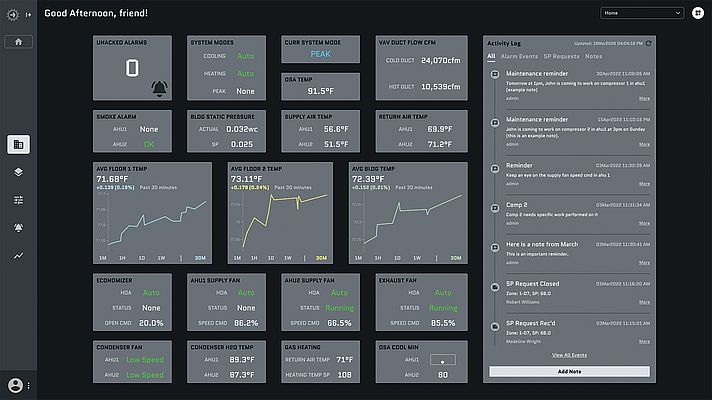
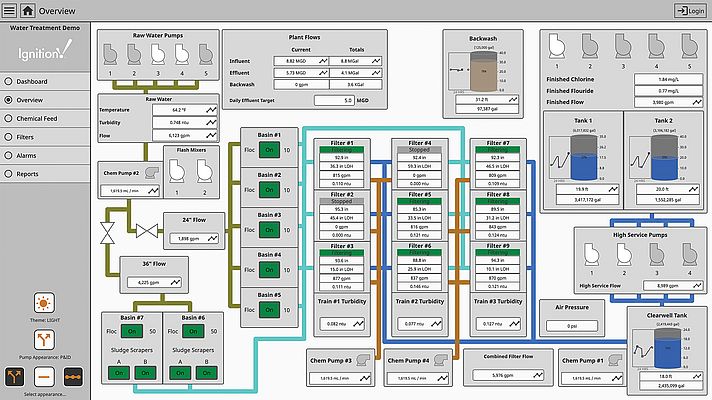
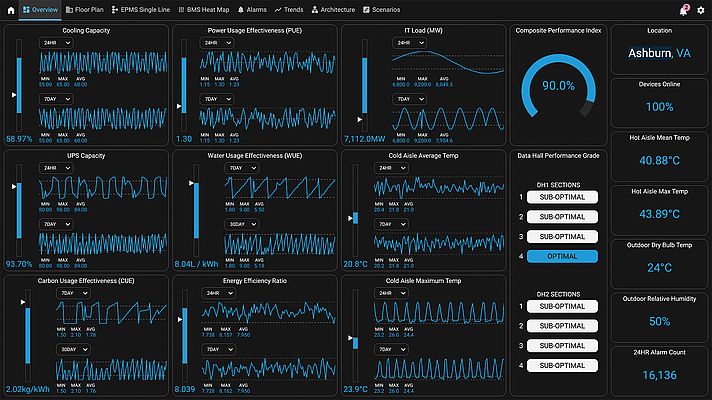
Its real role today is serving as the foundational integration platform for the entire industrial enterprise. Through its server-centric web-deployment model, Ignition can instantly deliver industrial applications to an unlimited number of users on virtually any device – whether that's a desktop workstation, an industrial display on the plant floor, or a mobile device in the field – without requiring separate builds or deployments for each. It acts as the Unified Namespace of the plant floor, providing a single, organized, real-time data layer where all systems – from field devices to business applications – can publish and consume a common source of truth. This removes data silos that have historically plagued industrial organizations and replaces them with a live, contextualized view of operations that gets into the right people's hands, wherever they are. For companies pursuing digital transformation, Ignition isn't just a tool in the stack – it's the foundation the stack is built on.
IEN Europe: Many manufacturers are moving toward unified IT/OT data environments. How does Ignition facilitate this convergence in practice?
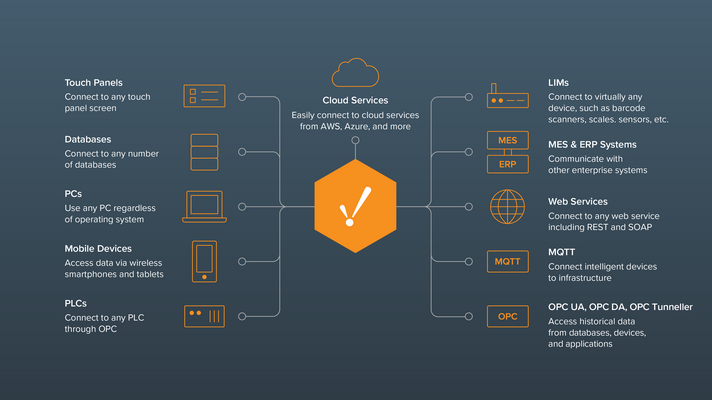
Travis Cox: Ignition bridges the IT/OT gap by speaking both languages natively and without compromise. On the OT side, it connects to virtually any PLC, field device, or industrial protocol – including native device drivers, OPC UA, MQTT, and CESMII i3X – regardless of brand, model, or vendor. On the IT side, it integrates seamlessly with SQL databases, Kafka, REST APIs, and line-of-business applications, making it just as capable of connecting enterprise systems as it is plant floor equipment. This dual fluency means manufacturers don't have to choose between their operational infrastructure and their enterprise systems – Ignition ties them together into a single, contextualized data environment.
What makes this especially powerful in practice is that Ignition doesn't just move data – it contextualizes it. It provides history, alarms, and meaningful structure so that real-time production data becomes genuinely useful to the people and systems across the organization who need it. Engineers get visibility into process performance, IT teams get reliable data pipelines, and executives get dashboards that reflect what's actually happening on the floor. The result is that the traditional wall between production and IT doesn't just come down – it becomes irrelevant, because everyone is working from the same live, trusted data source.
IEN Europe: Ignition’s modular and open architecture is frequently highlighted as a key differentiator. What advantages does this bring for system integrators and industrial users?
Travis Cox: The modular architecture means integrators and end users can build exactly the system they need – and expand it incrementally over time without being locked into a rigid product structure or forced to pay for capabilities they don't use. Each module adds specific functionality, so organizations can start with a focused deployment and grow the platform as their needs evolve. But what truly sets Ignition apart as an iterative platform is how its unlimited licensing model reinforces this philosophy. With unlimited tags, clients, users, and device connections all included under a single flat-rate license, teams are never financially penalized for solving the next problem. There are no artificial ceilings that force a conversation about cost every time an engineer wants to add a new data source, extend visibility to another part of the plant, or bring a new group of users into the system. The platform actively encourages continuous improvement rather than constraining it.
Because Ignition is built on open, trusted technologies like Python, SQL, OPC UA, and MQTT, integrators can leverage existing skills and connect to virtually any system without proprietary constraints or vendor lock-in. The open module SDK and built-in REST API also makes it straightforward to integrate Ignition with new tools and technologies as they emerge – whether that's a new cloud analytics service, a new communication protocol, or an AI platform. This combination of modular flexibility, open architecture, and unlimited licensing creates a platform that organizations can keep coming back to as their needs evolve – iterating, expanding, and refining their systems over time without ever hitting a wall. For industrial users, that means the investment made on day one keeps compounding in value, because the platform grows with the organization rather than becoming a bottleneck the moment ambitions outpace the original deployment.
IEN Europe: Industrial companies are increasingly deploying applications at the edge while connecting to enterprise systems and the cloud. How does Ignition support this distributed architecture?
Travis Cox: Ignition was designed with exactly this kind of distributed, multi-tier architecture in mind, and it addresses each layer with a purpose-built edition that works seamlessly with the others. At the far edge, Ignition Edge extends the platform to field devices and OEM equipment, enabling local data collection, visualization, and data syncing – even in environments with limited connectivity or compute resources. This means intelligence and visibility can exist right where the data is generated, rather than depending on a constant connection back to a central system.
At the plant level, standard Ignition serves as the central hub, aggregating data from all edge nodes, providing context and history, and making that data available to operators and applications across the facility. Then, Ignition Cloud Edition extends the architecture further, leveraging elastic infrastructure on platforms like AWS and Azure to provide enterprise-wide dashboards, long-term data storage, and integration with advanced analytics and machine learning services – all on a flexible, pay-as-you-go model. What makes this architecture particularly compelling is that all three tiers – edge, plant, and cloud – run on the same Ignition platform with a consistent development experience and a unified data model. There's no fragmentation, no translation layers, and no separate tools to maintain at each level.
IEN Europe: Cybersecurity and scalability are key concerns for industrial operators. What design principles within Ignition help address these challenges?
Travis Cox: On the security side, Ignition is built on a unified, industrial-grade security architecture that takes a defense-in-depth approach. It supports TLS 1.2 and 1.3 encryption for all communications – the same standard trusted by financial institutions worldwide – along with federated identity, MFA, SSO, SAML, and OpenID Connect integration. Role-based access control and security zones give operators granular control over who can access what and from where, whether they're on the plant floor or connecting remotely. Secrets management removes passwords and encryption keys from gateway configuration, adding another layer of protection for sensitive credentials. Built-in user auditing provides administrators with detailed visibility into system activity, helping teams quickly identify and respond to anomalies before they become costly incidents. Inductive Automation also backs this up at the organizational level, holding ISA/IEC 62443-4-1 certification for their secure software development lifecycle and maintaining ISO 9001 compliance.
On scalability, Ignition takes an equally principled approach – one that starts with the licensing model itself. Rather than charging per tag, per client, or per user, Ignition uses a flat-rate server license that removes the artificial constraints that typically limit growth in traditional SCADA systems. Organizations can add unlimited tags, connect unlimited devices, and deploy to unlimited clients without triggering additional licensing costs. This aligns the platform's economics with the organization's ambitions rather than working against them. Combined with the ability to deploy on-premise, at the edge, or in the cloud – and to scale cloud instances elastically up or down as demand changes – Ignition gives industrial operators a platform that grows with them without financial penalty or architectural rework.
IEN Europe: Looking ahead, how do you see SCADA and industrial software platforms evolving over the next five years, particularly with the rise of AI and data-driven manufacturing?
Travis Cox: The next five years will be defined by two parallel and reinforcing trends: deeper integration and intelligent automation. On the integration side, we'll see organizations move decisively toward Unified Namespace architectures – building rich, contextualized data models from the edge up, standardizing how data is structured and published, and connecting those data environments across plants, business units, and entire enterprises. The days of siloed SCADA systems that only talk to themselves are numbered. The organizations that move fastest on this integration foundation will be the ones best positioned to take advantage of what comes next.
What comes next is AI – and it will reshape industrial operations in two meaningful ways. The first is AI-assisted development, where engineers use AI tools to build, configure, and maintain Ignition applications faster and with fewer resources. The second, and arguably more transformative, is AI agents operating directly on live industrial data to perform tasks that today require significant human expertise: anomaly detection, predictive maintenance, root cause analysis, alarm rationalization, energy optimization, and process improvement. Inductive Automation is already moving in this direction, having released an early-preview MCP module for AI integration, with an ambition toward building full agent workflows directly into the platform. The industrial software platforms that win over the next five years won't just be the ones with the most features – they'll be the ones that serve as the trusted, open, and well-structured foundation on which Industrial AI can be reliably built and adopted.
IEN Europe: Thank you for these insights!