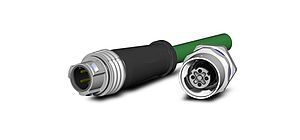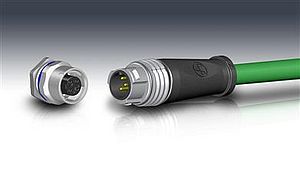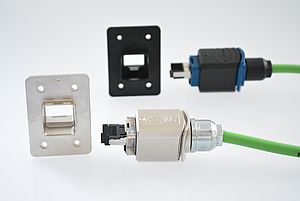



TE Connectivity (TE) is introducing a breakthrough connector contact plating technology: The ECONIDUR surface plating is designed to reduce traditional precious metal layers in contact surfaces and helps to significantly lower CO2 emissions while maintaining uncompromised quality standards. The name ECONIDUR mirrors the advantages of this nickel-phosphorous based plating: the contact finish is more ECOlogically friendly due to having a lower product carbon footprint, based on the NIckel-phosporous plating stack excellent performance in DURability is conserved. The high-performance ECONIDUR plated contacts solution supports engineers with superior vibration resistance and reliability for demanding applications. Recently developed measurement methods help to ensure high quality in process and product reliability.
Meeting increasing customer requirements
Whether it is high signal integrity or high vibration resistance, customer expectations have risen significantly. In most industrial applications, improved protection against vibration, fretting and corrosion is essential. This is why choosing the right plating is so important today. ECONIDUR plated connectors will function reliably in many industrial applications over a long period of time, e.g. in automation control applications and motor control systems. They support reliable signal transmission up to several Gbit/s and feature withstand capabilities in terms of vibration in the long-term, gas influences and micro friction.
Sophisticated stack configuration
The key to this high quality and outstanding performance is the layer structure: ECONIDUR contacts are plated with a skillfully engineered Nickel-Phosphorus plating (NiP) that utilizes a sophisticated stack configuration.
Overall, ECONIDUR plating reaches in minimum the same characteristics as a precious metal plating layer. For fretting and vibration resistance, ECONIDUR plated products are a reliable choice. According to TE internal analysis and calculations in alignment with ISO standards (14067/14040/44), CO2 emissions decrease heavily for over 44% compared to a precious metal plating, depending on layer thicknesses, performance level and connector type – thus contributing to greener manufacturing and supply chains. This decarbonized product helps customers meet their sustainability goals.