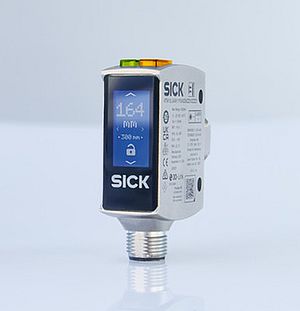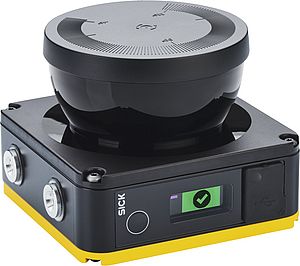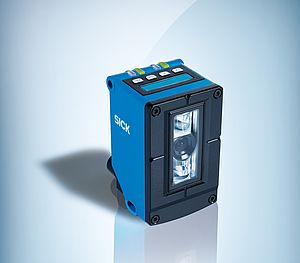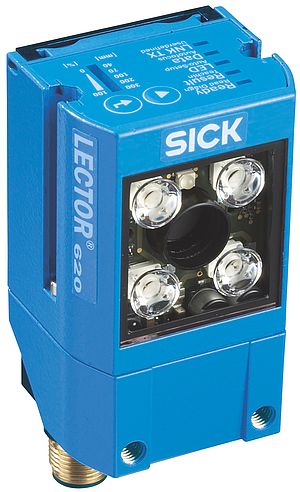


SICK's SensingCam SEC200 is an image-based code reader designed to simplify the identification of 1D and 2D codes in logistics and industrial environments. The device combines barcode reading functionality with straightforward installation, browser-based configuration and industrial communications interfaces to support identification tasks in manufacturing, assembly and material handling processes. At the core of the system is a 1.3-megapixel camera module capable of reliably reading 1D and 2D codes at distances from 100 mm to 300 mm. The reader captures codes independently of their alignment or rotational position, helping maintain consistent identification performance in manual and semi-automated applications.
Optical and acoustic scan confirmation
The device is intended for applications where operators require immediate confirmation of successful reads. A green LED indicator and integrated acoustic signal provide direct feedback during scanning operations. According to the manufacturer, these features can support operator acceptance and reduce training requirements, particularly at manual picking stations and assembly workstations where scanning tasks are performed frequently.
To ensure suitability for industrial environments, the code reader is housed in an IP65-rated enclosure. The protective housing is designed to withstand exposure to dust, water spray and mechanical stresses commonly encountered in production and logistics facilities. Commissioning is supported through an integrated web server that enables configuration directly via a standard web browser without requiring additional software installation. An LED alignment aid assists device positioning during setup, while standardized mounting accessories are intended to simplify installation procedures. Ethernet and USB interfaces facilitate integration into existing automation and IT infrastructures.
For larger deployments, the sensingCam SEC200 includes cloning functionality that allows established configurations to be transferred to additional units. This capability helps standardize device settings across multiple installations and can reduce engineering effort during rollouts and maintenance activities.