We use cookies to provide you with personalized services and improve our website. More info Ok
The AX-1 robot from Norwegian start-up Kilter applies herbicides to weeds with such precision that the use of chemicals is reduced by up to 95% thanks to AI and sensor technology. To ensure that the autonomous helper is also gentle on the soil, the developers rely on lightweight and lubricationfree linear technology from the igus drylin series.
October marks the 50th year since ABB’s Low Voltage Variable Speed Drive was first brought to market. Developed by Finnish company Strömberg, which went on to become part of ABB, VSD have revolutionized industrial energy consumption and decarbonization
Advanced performance in small sizes
Dynamic drive solutions for machinery and systems
Industrial-rated processors with optimized cooling and pre-loaded software to simplify advanced computing and integration
ACE Miniature Shock Absorbers for Lasting Safety
In order to save costs and time, more and more industrial companies are focussing on the possibility of monitoring and controlling devices and systems remotely. Web and cloud-based services are ideal for this: an internet connection makes it possible to control and operate industrial systems as if you were on site and long journeys by service personnel are no longer necessary.
Flexible, modular workpiece transport can bring valuable extra speed to automated assembly with free pallets. Scalability is also enhanced, while built-in tracking provides traceability data to meet the requirements of demanding industries such as automotive.
Ensure accurate measurements and safe processes by overcoming the challenges of precision flow metering
Upgrades with new CPUs, I/O modules, and couplers for enhanced control and flexibility
Easy to handle and operate with Supercap technology
This paper includes a summary review of three phase power systems, the characteristics of common three phase heating loads, and a comprehensive discussion of three phase SSRs and their application relative to such loads.
Siemens and leading machine builders agree on groundbreaking data alliance
Structured Data for faster workflows and better decision making
The deployment of robots in factories worldwide reached and passed 4 million last year, representing a doubling of robot density over the past seven years. Author: Amy Taylor, Director, Marketing – Industrial, SiTime
Körber is expanding its portfolio with AI-based pick-and-place technology from Sereact. The partnership focuses on integrating robotic solutions for single item picking into automated production and distribution solutions. An initial joint project with a German mechanical engineering company is already in progress.
Enabling SIL2 designs with pre-built templates for reliable performance in demanding, safety-critical applications
The largest oil producer in the Caribbean used Cogent DataHubTM software in a recent project to modernize their SCADA systems and integrate new IoT-enabled well-monitoring devices
Scalable technology for quantum computers through spatial light modulators
Efficient data recording and process visualization in PLC and I/O modules
For Metering and Other Applications, with multiple communications options, capacitive touch interface and dual-bank flash for software updates
Real-time handling of process data at its point of production is an integral aspect of tomorrow’s automation system, enabling a more resilient operating environment for plant owners. ABB’s Kim Fenrich, Global Product Marketing Manager - DCS Platform, explains how edge computing complements the functional separation of core operations from a parallel layer of digital applications for monitoring and performance optimization.
To improve efficiency of its stamping processes for future production runs, Ford Mexico worked with Altair to explore the possibility of using Altair's machine learning and predictive analytics solution to support its business objectives. Authors: John Fisher, Senior Sales Director EMEA, Altair & Alberto Ochoa Frías, D&R and Stamping Process Engineer, Ford
Maintaining wind turbines and identifying potential vulnerabilities is expensive and time-consuming, especially when they are located offshore. As a result, rotor blades are often simply replaced, a costly process, when damage is merely suspected. The Fraunhofer Institute for Integrated Circuits IIS, working in concert with the Fraunhofer Institute for Wind Energy Systems IWES, has developed a solution that can be used to identify cracks and breakages inside the blades remotely at an early stage.
Predictive maintenance prevents unplanned downtime. Fixed maintenance intervals, however, are preventive in nature, as true prediction requires real-time system status information and intelligent data evaluation. The Digital Twin Starter Kit from Bosch Digital Twin Industries and Pepperl+Fuchs offers an easy way to get started.
The companies are collaborating to seamlessly integrate collaborative 7th axis technology
The I/O module controls stepper motors with Modbus/TCP, Ethernet/IP, or PROFINET interface to host PC, PLC or PAC
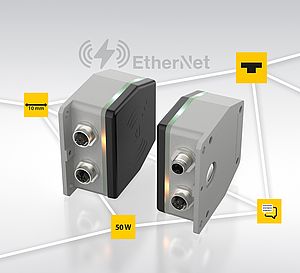
Contactless transmission of up to 50 W power and data rates of up to 100 Mbit/s
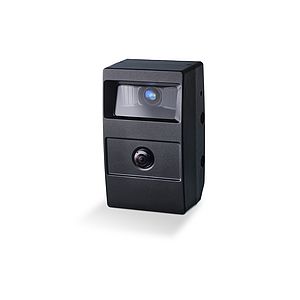
Enhanced driving safety with AI camera for person detection
Optimised performance and increased torque in the same size
For industrial temperature measurement versatile applications up to 1100°C
Variable speed motor platform to upgrade inefficient direct online induction motors
Differential mode filtering for switching power supplies with high input current requirements
Innovative design for wireless, embedded and instrumentation systems
For precision positioning of heavy loads
Extension of high density modular and minimodular connector range
From Pasture to Pot: Preserving Nature’s Goodness
Addition to the Siemens Xcelerator portfolio mainly in the range of 24 and 48 V motors for intelligent, battery-powered drive solutions.
Event-based cameras optimise flow analysis in science and industry
By leveraging a digital twin and the AI-powered, fully automated software solution from Factor4Solutions, Stadtwerke Karlsruhe were able to reduce the annual energy consumption of the existing refrigeration system at the GartenCarée complex by 20 percent within just the first six months of operation – significantly increasing its efficiency. And the full potential is far from reached: for an entire year of operation, the utility expects energy savings of up to 40 percent.
Digital Edition Download PDF