We use cookies to provide you with personalized services and improve our website. More info Ok
IEN Europe’s editor, Kay Petermann, and Rick De Vries, Advantech’s IIoT Sales Director Central Europe, talk about some of the trends and challenges for the European industrial sector.
Secure and fast locking mechanism for use in harsh environments
Reliable measurement for high concentrations or low trace concentrations
10 billion dollar acquisition of Altair Engineering Inc. to strengthen Siemens’ position in industrial software and AI
Visit us at SPS from November 12 to 14, 2024 in Nuremberg (Hall 7A, Booth 440)
High-precision motion control for up to 128 axes
The European Conference on Optical Communication honors Yokogawa for innovative test equipment
Pre-certified all-in one bus nodes with ARM processor technology
With two independent signal inputs for encoders
Versatile and robust design to meet the needs of field workers
Components for the electric safety and energy efficiency of industrial equipment
For low torque and high band width measurements
Making tried-and-tested machines IIot-ready
Integrated certified motion function blocks safe space on the rail
Studying neutrinos is very difficult as they typically pass through most normal matter unimpeded and undetected. Specialist detectors have to be built to hunt for them. The latest one is called JUNO, located 750m below ground in Jiangmen, China. The project is made possible by 17 different countries with 730 scientists working in 74 Universities and national laboratories. To develop the core part of the detector, the liquid scintillator, ultrafast digitizer cards by Spectrum Instrumentation are used.
The climate crisis is driving demand for the electrification of transportation and energy infrastructure, which in turn is accelerating the need for more powerful and safer rechargeable batteries, including li-ion, sodium-ion, and solid-state. However, one of the key issues affecting battery quality is accurate humidity monitoring and dry control during manufacture.
High-power output of up to 3kVA in a 1U chassis
The transformation to e-mobility requires powerful automation technology. The companies in the Pepperl+Fuchs Group are offering the right solutions—based on constant technological innovation and decades of experience in the automotive industry.
Seamless automation from data to AI model
Precise control of inert gases
With air purge and cooling function for harsh industrial environments
Satelite communication allows solving remote connectivity challenges
For transport of loads up to 2000 kg
Acquisition of German communications specialist strengthens position in the industrial information and communications technology (ICT) sector
Power and ergonomics for industrial applications
Web-based management for intuitive configuration
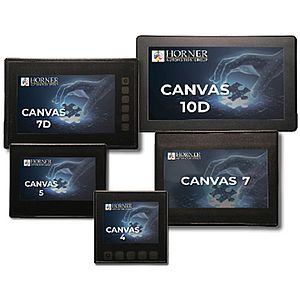
Horner Automation, a global leader in industrial automation solutions, continues to push the boundaries of innovation with the release of its latest products. With a long-standing commitment to integrating simplicity and performance into automation technology, Horner has recently launched its highly anticipated Canvas Series Controllers and Cscape 10 software, while also teasing exciting upcoming products like the OCS CPU and OCS 360.
PROFINET Certification for Virtual Controller and Device Instances
Integrated angle measurement for enhanced path following
Line Scan Camera with 1-Megahertz Line Rate
6x Non-Browning Zoom Lens design-optimised for 1-inch sensor format
Compact footprint with low power consumption
Ensuring optimal one-way Data Flow
With constant voltage and constant current operation and single or three-phase inputs
Simple set-up and configuration with USB-C interface
Integration of SSI & BISS Encoders into Ethernet networks
Siemens named one of the global preferred suppliers for Merck's next-level automation, boosting global smart manufacturing with Siemens Xcelerator platform
Wide range of CPU and I/O configurations with screens from 12" to 24"
Condition monitoring - a wide-ranging area of ever-increasing importance. An increasing number of machines and systems are being equipped with measurement technology to keep a constant eye on their current status and all important operating parameters. To save time and costs during maintenance, condition-based monitoring is increasingly being installed on smaller assets.
The degree of automation can vary greatly within the same plant – from very high in the core processes to almost nonexistent in the peripherals. The effort required to wire all circulating containers, external silos, manual valves, safety – critical doors, and manhole covers to the control room would be too great. The WILSEN autonomous IoT wireless sensor node establishes a connection to isolated assets – without any cables – and closes such information gaps.
Digital Edition Download PDF