We use cookies to provide you with personalized services and improve our website. More info Ok
Event-based cameras optimise flow analysis in science and industry
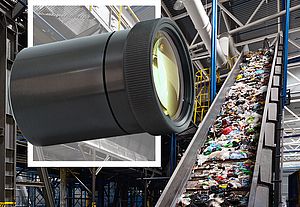
The integration of optimized short-wavelength infrared (SWIR) lenses enables the recovery of more recyclable plastics from waste streams.
Da Ros Srl, an Italian company, specializes in manufacturing agricultural machinery for nursery and vertical farms. One of their tools, a transplanter, provides assistance in day-to-day operations, as do the FAULHABER drive systems that are incorporated in this machine.
Video streaming with 5 MP resolution and highest ingress protection
A white paper & case study from Resolve Optics address this commonly asked question!
For fast detection of smaller air leaks
Designed to capture high-quality images in space environments
Projected Image, specialists in projected safety signage, have launched an innovative virtual warehouse model to help companies visualise their safety planning.
Multispectral image enhancement offers faster and easier measurements and diagnoses
Non browning lens for 2/3-inch format sensors
Laser triangulation sensors measure variables such as displacement, distance and position on a non-contact, wear-free basis. The most important sensor features are high performance, a compact design and the ability to stabilize the signal with changing surfaces. Micro-Epsilon has now equipped its sensors with the advanced IO-Link interface to network multiple sensors in the factory.
In this IEN Europe interview with Rob Watkinson, Sales Manager at Resolve Optics, we discuss the advantages of bespoke lenses for scientific applications and the company's experience and expertise in this area
Polaron’s AI model explores thousands of material designs for next-generation batteries in under a day - a task that takes current state-of-the-art simulations around 50 years. This achievement wins the annual multi-million-pound Manchester Prize from the Department for Science, Innovation and Technology in the United Kingdom.
USB3 cameras for precise capture of fast-moving objects with less data
Today, vision sensors can be used to implement first-class solutions for many sensor tasks in production, quality assurance, logistics, packaging, and beyond. Raw data sensors offer the greatest possible flexibility in terms of adaptation to special requirements and customer wishes. On the customer side, however, this is associated with a comparatively high programming effort. The SmartRunner Explorer 2-D and 3-D device family from Pepperl+Fuchs shows that this does not have to be the case.
We spoke to Torsten Czech, Head of Marketing at Optris, about the history of more than 20 years of temperature measurement.
An IEN Europe interview with Jan Hartmann - Managing Partner IDS Imaging Development Systems GmbH
For high-quality monitoring and event recording
View, analyse, document and share oscilloscope measurements more easily and effectively
Optimized lenses for higher image intensifier efficiency
Configurable without programming skills, the MELSOFT VIXIO AI-powered visual inspection software is revolutionising quality assurance across industries.
The Application Park will be one of the highlights of HANNOVER MESSE this year and present new and exciting robotics applications. Visitors can have a look there at intelligent robot systems, autonomous driving devices in operation, the latest AI applications in robotics, image recognition tools and virtual platforms.
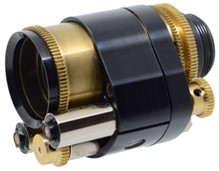
The Model 207 is the smallest motorised 3x zoom lens with focus tracking commercially available. This high quality f/2.8 lens produces high resolution images suitable for broadcast and machine vision applications.
The Model 357 radiation resistant zoom lens is available in a motorised format for use with radiation tolerant cameras.
Non browning lens for small sensor cameras
Industrial cameras with Sony's Starvis 2 sensors help unlock the potential of planetary imaging
Automatic object detection is growing ever more sophisticated, yet the accurate detection of humans still poses unique challenges. This article explores what it is that makes humans so difficult to reliably detect, and how successfully navigating these obstacles could usher in a new era of productivity.
Detect issues early, cut downtime, and save costs.
Easy-to-operate sensor allows inline print quality assessment
Versatile and robust design to meet the needs of field workers
The transformation to e-mobility requires powerful automation technology. The companies in the Pepperl+Fuchs Group are offering the right solutions—based on constant technological innovation and decades of experience in the automotive industry.
Seamless automation from data to AI model
Line Scan Camera with 1-Megahertz Line Rate
6x Non-Browning Zoom Lens design-optimised for 1-inch sensor format
Three aspects of sensor technology are particularly important in image processing for industrial automation: performance, flexibility and usability. Simple Vision sensors meet these requirements. They are as easy to operate as optical sensors, plus they are as powerful as camera systems. Leuze offers this concept as a quick and straightforward introduction to vision technology.
Combination of short working distance, large field of view and high depth of field
More information and a longer battery life for mobile devices
For the highest requirements on measurement precision
Wire Arc Additive Manufacturing (WAAM) is an additive manufacturing process that has become increasingly important in the 3D printing of metals in recent years. High build rates, wire as an inexpensive and easily available starting material and a highly controllable process are the main advantages. To optimize 3D printing, the Berlin-based 3D printing specialist GEFERTEC records the temperatures in the workpiece using infrared measurement technology from Optris.
Machines and systems are becoming more and more intelligent – and in many cases more complex as a result. This makes it all the more important that the processes in production are transparent and comprehensible at all times so that the teams in production and maintenance can make the right decisions. This is the only way to exploit the full potential of networked manufacturing environments.
Digital Edition Download PDF