

As automation systems become more capable and more closely integrated with human activity, there is growing interest in ‘functional safety’ – concepts that allow controlled operation rather than complete shutdown. These work by defining how machines should behave under fault conditions or when people are present, rather than treating safety as an all-or-nothing state.
Functional safety as engineered behavior
Traditional safety measures such as fences, interlocks, and emergency stops are simple, effective, and easy to audit. By removing motion entirely, they eliminate risk. However, in many modern production environments, stopping a machine every time an operator needs access can significantly reduce efficiency.
Functional safety takes a different approach. Rather than asking whether a machine should run or stop, it focuses on how the machine can continue operating safely under changing conditions. For example, an axis may slow to a safe speed, movement may be restricted to a defined range, or a motor may be held safely at standstill while remaining energized and controllable.
Standards such as IEC 61508 provide the framework for this approach. Through structured risk assessments, hazards are identified and evaluated, leading to the definition of a required Safety Integrity Level (SIL). Safety functions must then be designed, tested, and validated to meet that level with predictable and verifiable performance.
In practice, functional safety enables machines to reduce speed, limit motion, or maintain controlled standstill instead of coming to a complete stop. Functions such as Safe Limited Speed, Safe Operating Stop, and Safe Position Monitoring allow operators to perform tasks such as loading, inspection, adjustment, or maintenance while equipment remains active within tightly controlled limits. The result is improved productivity, reduced downtime, and safe human-machine interaction without relying on full shutdowns as the default response.
Over time, these small differences begin to matter. Reduced downtime, smoother workflows, and fewer full restarts can all add up to tangible performance gains. Safety remains non-negotiable, of course, but with the right planning, equipment, and software, it no longer has to come at the expense of output.
Why feedback matters more than ever
Achieving this balance depends on how reliably a system can monitor and control motion. Many safe motion functions require precise information about an axis’s position and speed. If that data is inaccurate, the safety function can fail, potentially creating serious risks.
Safety-rated feedback devices are therefore essential. Unlike standard encoders, they incorporate continuous diagnostics to detect faults and trigger a defined safe state when problems occur, preventing operation based on unreliable data.
As machine performance increases, the importance of accurate feedback grows. Applications such as linear motors, direct drives, and precision printing systems demand highly accurate motion control, even while operating within strict safety constraints.
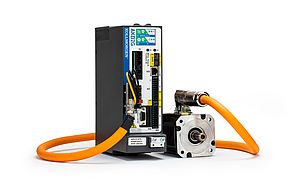
Recent updates to Kollmorgen’s Safe Motion Monitor (SMM) software platforms reflect this reality. The company has expanded support for additional safety-rated encoder protocols, including high-accuracy and linear feedback systems, allowing engineers to apply functional safety principles in applications that were previously difficult to cover without compromise.
Matching safety integrity to real risk
A key principle of functional safety is that not every machine requires the highest safety rating. In many industrial applications, SIL 2 provides the right balance between risk reduction and system complexity. Higher levels such as SIL 3 are typically reserved for high-risk scenarios, such as stage lifting systems, where heavy loads move above people and every component must meet the same integrity requirements. Engineers therefore need flexible solutions that match safety performance to actual risk without overengineering.
Advances in safe motion technology support this proportional approach. As a result, functional safety has evolved from a regulatory requirement into a global industry standard, driven not only by legislation but also by growing customer demand for consistent, standards-based safety solutions that reduce human, legal, financial, and reputational risks.
Designing safety in, not adding it on
The most effective functional safety solutions are designed into machines from the start. Drives with integrated safe motion functions reduce the need for additional hardware, simplify validation, and improve transparency of system behavior. Platforms such as Kollmorgen’s SMM software implement safety directly at the drive level rather than adding it later.
Modern configuration tools further streamline development by enabling safety functions to be configured, tested, and documented within the overall machine design process. New capabilities, including support for advanced feedback technologies or higher safety integrity levels, can often be added through software updates instead of major hardware changes.
Recent advances in safe motion software are less about radical innovation and more about addressing practical machine design needs. By extending proven functional safety concepts to a wider range of applications, they enhance flexibility while maintaining established engineering workflows.
A practical view of safe automation
Safety is often seen as a barrier to productivity, but functional safety increasingly enables it. By allowing machines to operate safely rather than simply stop, it supports closer collaboration between people and automation while maintaining compliance and protection. As automation becomes more advanced and widespread, managing risk through controlled machine behavior is becoming essential.
The goal for engineers is not to maximize safety features, but to apply the right ones for the actual risk. This requires selecting appropriate safety functions and integrating them effectively into the motion system. Software-based safe motion solutions, such as those within Kollmorgen’s automation platforms, support this approach by embedding functional safety directly into drive and control architectures.
Recent updates to Kollmorgen’s SMM software reflect this industry trend. Rather than introducing new concepts, the latest version expands existing safe motion capabilities to better meet the performance, precision, and integrity demands of modern machinery, delivering greater flexibility without unnecessary complexity.