


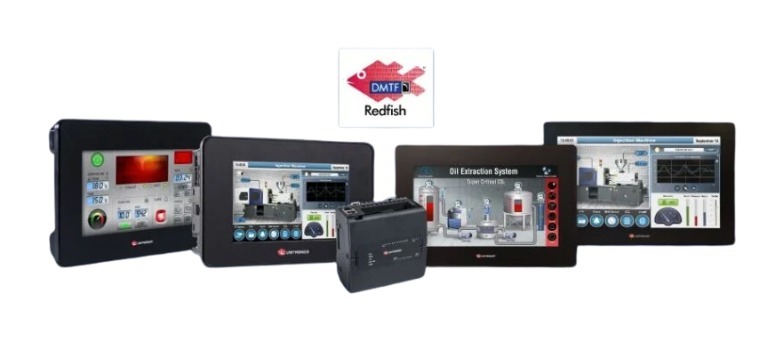
The data-center industry is approaching a structural inflection point. AI workloads, hyperscale expansion, and liquid-cooled architectures are pushing thermal density, energy consumption, and operational complexity well beyond what legacy control stacks were designed to handle.
Data Centers Are Hitting Their Thermal Limits
The signs are clear:
- Goldman Sachs Research projects U.S. data centers will consume ~8% of national electricity by 2030, up from ~3% in 2022.
- Frost & Sullivan estimates the data-center cooling market will exceed $18.5B by 2030, driven by high-density racks, AI accelerators, and liquid cooling.
Heat is no longer a facilities problem—it is a compute availability problem. Cooling already accounts for ~40% of total data-center energy spends, and the margin for error is shrinking as rack densities climb past 30–60 kW.
Industry trends indicate that the data centers that perform best will be those where cooling control systems are natively integrated with IT management through a common management stack such as DCIM, eliminating the inefficiencies of gateways, protocol translation, or middleware delays
Cooling Has Become an IT Responsibility
For years, data center architecture treated cooling as a separate domain.
IT infrastructure exposed health, status, and fault information through standardized management interfaces. Cooling systems—the chillers, CDUs, pumps, fans, valves, sensors that require deterministic, safety-critical, and fast-loop operation—were controlled locally, commonly by PLCs which provided limited visibility outside the control layer.
That approach worked when thermal demand was stable and predictable.
It breaks down in environments where cooling must react dynamically to changing workloads, liquid cooling loops, and fast-moving power conditions. In modern facilities, cooling systems are expected to behave like infrastructure, not isolated machines.
They must:
- provide real-time visibility into system health
- integrate directly with DCIM and management platforms
- support redundancy and rapid fault detection
- scale consistently across sites
Most cooling control architectures cannot meet these requirements without the external gateways or custom integrations that increase complexity, cybersecurity risks, and slow alarm propagation
The solution is to better enable cooling systems to be represented and managed as an integral part of the data center infrastructure via a common, shared communication language.
The Need for a Common Management Language
IT systems already operate using a shared management model.
Servers, power equipment, and racks describe health, availability, and energy usage in a standardized way that DCIM platforms understand. Cooling systems largely do not.
Without a common language, cooling remains disconnected from the systems responsible for orchestration, optimization, and operational decisions. This gap is becoming a limiting factor as facilities scale.
What Is Redfish—and Why It’s Becoming Mandatory
Redfish, developed by the Distributed Management Task Force, is a REST-based, JSON-formatted management standard designed for modern data centers.
It provides a consistent model for:
- system health and status
- power and energy telemetry
- thermal zones, fans, and pumps
- alarms and fault reporting
Redfish is stateless, web-native, and aligned with IPv6 and hyperscale architectures. It is already widely used to manage servers and power systems.
Until recently, Redfish stopped at the IT boundary. The PLCs controlling pumps, valves, and CDUs required protocol translation or external gateways. That boundary is disappearing.
Why Redfish Must Exist Inside the Controller
Cooling systems are active control systems, not passive assets. They regulate flow, pressure, and thermal response in real time.
For Redfish to be effective in cooling applications, it cannot sit behind translation layers or middleware. It must be part of the control platform itself.
When Redfish is embedded directly into the controller:
- cooling systems become first-class infrastructure assets
- DCIM platforms gain direct access to health and status
- alarms propagate without unnecessary delays
- overall system architecture becomes simpler and more resilient
Industrial control logic continues to operate deterministically, while Redfish provides management-level visibility.
A Practical Example: Liquid Cooling CDUs
Consider a liquid cooling CDU supporting high-density AI racks.
The controller must regulate flow and pressure, manage redundancy, and monitor temperatures and component health, while also exposing system availability to DCIM.
Traditionally, this requires PLC-level control and additional gateways to translate data for IT systems.
With Redfish native to the controller, the same CDU can:
- maintain deterministic real-time control
- expose health and telemetry directly through Redfish
- eliminate translation delays and failure points
- reduce integration complexity
Cooling becomes visible and manageable without additional layers.
Why 2026 Is the Tipping Point
As data centers scale, cooling systems can no longer operate outside the management plane.
If cooling is expected to protect compute availability, it must speak the same language as the infrastructure it supports. By 2026, Redfish is no longer optional for systems that participate in data center operations.
This is not a feature shift. It is an architectural one.
Redfish is becoming the management language of the modern data center. Embedding it directly into control platforms is the logical next step.
By the end of 2026, Redfish will be everywhere.
The only question is where it lives.
Is Redfish-based cooling visibility part of your roadmap?
Leave your details to receive a short, no-obligation discussion with a Unitronics specialist.
The Bottom Line:
This is not just another PLC feature.
It is a fundamental shift in how data-center infrastructure is controlled.
If Redfish is the protocol of the modern data center, then embedding it directly inside the controller is the logical—and inevitable—next step.
By the end of 2026, Redfish will be everywhere.