We use cookies to provide you with personalized services and improve our website. More info Ok
Satelite communication allows solving remote connectivity challenges
Web-based management for intuitive configuration
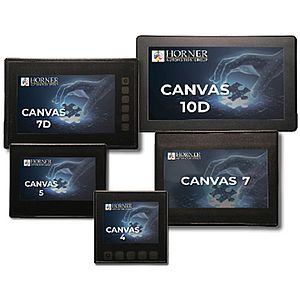
Horner Automation, a global leader in industrial automation solutions, continues to push the boundaries of innovation with the release of its latest products. With a long-standing commitment to integrating simplicity and performance into automation technology, Horner has recently launched its highly anticipated Canvas Series Controllers and Cscape 10 software, while also teasing exciting upcoming products like the OCS CPU and OCS 360.
Integrated angle measurement for enhanced path following
EN50155-compliant Ethernet switch with modular design concept, with Precision Time Protocol (PTP) and Power over Ethernet (PoE)
Ensuring optimal one-way Data Flow
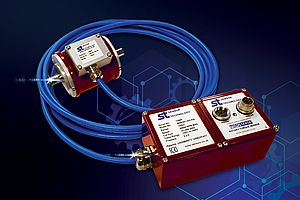
Integration of SSI & BISS Encoders into Ethernet networks
The history of electrolysers begins with the discovery of the basic principles in the late 18th and early 19th century by the British scientists William Nicholson and Michael Faraday. Specifically, that water can be split into hydrogen and oxygen using electrical currents.
Condition monitoring - a wide-ranging area of ever-increasing importance. An increasing number of machines and systems are being equipped with measurement technology to keep a constant eye on their current status and all important operating parameters. To save time and costs during maintenance, condition-based monitoring is increasingly being installed on smaller assets.
The degree of automation can vary greatly within the same plant – from very high in the core processes to almost nonexistent in the peripherals. The effort required to wire all circulating containers, external silos, manual valves, safety – critical doors, and manhole covers to the control room would be too great. The WILSEN autonomous IoT wireless sensor node establishes a connection to isolated assets – without any cables – and closes such information gaps.
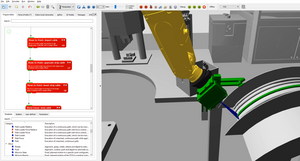
Setting milestones in software for automation
For the highest requirements on measurement precision
Converts standard pulse output flow meters to give linearised analog and NPN/PNP outputs
Wire Arc Additive Manufacturing (WAAM) is an additive manufacturing process that has become increasingly important in the 3D printing of metals in recent years. High build rates, wire as an inexpensive and easily available starting material and a highly controllable process are the main advantages. To optimize 3D printing, the Berlin-based 3D printing specialist GEFERTEC records the temperatures in the workpiece using infrared measurement technology from Optris.
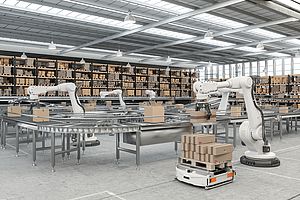
RODE, the acronym for RObotic DEpalletiser, is a pioneering product from AWL in the intralogistics market. The robotic solution is able to efficiently process packages randomly arranged on a pallet, setting it apart from conventional systems.
CRP USA, a leading 3D printing service bureau, has partnered with eight-time Paralympics Gold Medallist Tatyana McFadden to create groundbreaking 3D printed wheelchair racing gloves using the Selective Laser Sintering process and Windform XT 2.0 composite material. This collaboration addresses significant manufacturing challenges and sets a new standard for elite athletic gear.
Independent sealing concepts for screw and push-pull connector systems in one connector
High performance combined with hygienic design
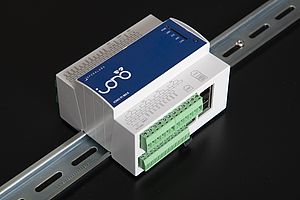
DIN-Rail devices for improved system safety and power distribution
Compact device series with enhanced functionalities and adaptability
Innovative fluid property detection for precise media detection and comprehensive monitoring of fluid properties
The growth opportunities for AI and robotics in manufacturing are vast and projected to reach $182 billion globally by 2027. Companies that fail to adopt these exponentially advancing technologies as part of their process risk falling behind, as smart factories powered by intelligent machines become the norm.
We spoke to Michael Mayer-Rosa, Senior Director Industrial Automation Business Group, Delta Electronics EMEA region about the newly introduced Delta Electronics collaborative robots.
The pressure towards sustainability is pushing the oil, gas and energy sectors to evolve innovative and diverse solutions in a move to create an energy efficient future. Major transformations within the oil and gas industry in the form of adopting sustainable practices, developing new revenue streams and pushing the boundaries of technology, are being trialled and delivering success. Expanding into...
Researchers at the Massachusetts Institute of Technology (MIT) have recently developed a temperature sensor that can harvest and store the energy from the magnetic field that exists in the open air around a wire. As a result, this could allow sensors to operate in the most remote settings and — importantly — without batteries.
While automating processes using robots is a reliable way to increase production throughput and productivity, the savings in floorspace can vary depending on the type of robot chosen. Where space is at a premium, a ceiling-mounted orbital robot can offer a suitable solution.
Eight cores unlock advanced virtualization potential
Compact design with full graphic TFT display
Liquid-cooled heat sinks are used in applications where passive or fan-based cooling solutions are insufficient, but effective cooling is indispensable. However, there are major differences between liquid-cooled heat sinks. The optimal production process for the particular application depends on various factors, such as the desired material and coolant, the specified cooling capacity, and the required number of heat sinks.
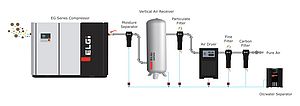
It is not a revelation to anyone in the industry that energy is the largest operating expense, accounting for the majority of utility costs. In manufacturing processes using compressed air, air compressors consume approximately 12% of the total electrical energy, and over the lifespan of an air compressor, 80% of the cost is energy use, and 20% is the cost of the unit including maintenance. Energy...
For lightweight robots, modular designs are increasingly popular thanks to the flexible deployment they enable for specialised tasks. Modular robots also enhancing the potential for system integrators and end users to develop their own designs. As part of an in-house robot build, optimising the drive train that powers and controls each joint is vital to the robot’s performance. The most effective way of achieving this is by developing the drive train as a complete module. This approach can also improve the efficiency of robot development overall.
In the realm of embedded computing solutions, Raspberry Pi has emerged as a pioneering force, offering a diverse range of compact modules tailored for industrial and commercial applications. Here we take a look at the differences between the foundation’s Compute Module 4 (CM4) and Compute Module 3+ when it comes to developing embedded projects.
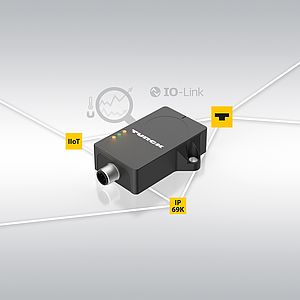
Condition monitoring sensor detects magnetic field changes on three axes and opens new application fields
Measuring in confined spaces without danger of damage to the electronics
Optimised solution for a surveillance camera manufacturer
Intelligent energy recovery for maximum efficiency
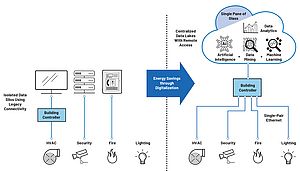
To meet net zero CO2 emission goals, the building sector needs to modernize its communication infrastructure. This article shows how single-pair Ethernet, specifically 10BASE-T1L, enables the easy retrofitting of buildings using legacy links like RS-485 to improve digitization, enable automation, improve security, and substantially lower energy consumption to achieve greater sustainability. Author: Meghan Kaiserman, Strategic Marketing Director for Sustainable Buildings at Analog Devices
Grasping and plugging cables is child's play! For us humans, yes. However, automated processing of such flexible parts presents robots with considerable challenges. Nevertheless, the potential is huge; in terms of efficiency and quality as well as in terms of relieving employees, for instance when it comes to handling large, heavy cables.
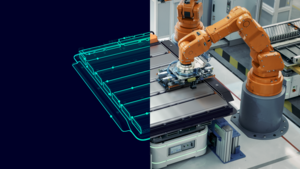
With the rapid advancements in technology, there is increasing consumer demand for innovative, smart, and connected products that need to get to market more quickly, cost effectively and sustainably. Today, manufacturers must deliver on these expectations as they deal with increasing design and production complexity, as well as global supply-chain issues that impact time-to-market.
Digital Edition Download PDF