


IEN Europe: Mr. Sheehan, why did Mersen develop the new 2,000 VDC fuses for PV systems?
JT Sheehan: We received customer requests for these high voltage fuses in the US and Europe. Until lately, there were only fuses available for PV applications with max. 1,500 VDC Voltage but we see an increase in the interest in 2,000 VDC PV fuses and solutions in general.
IEN Europe: Why does a growing number of customers ask for PV fuses with 2,000 VDC?
JT Sheehan: It’s all about efficiency and cost: PV panel builders are trying to achieve greater efficiency in photovoltaic fields using longer runs of cabling at a higher voltage. This also helps minimize the number of components in the system which leads to a cost savings. Running at the higher voltage also allows for the potential to operate with less heat loss and greater efficiency while maintaining the same output.
IEN Europe: And these kinds of fuses are completely new to the European market?
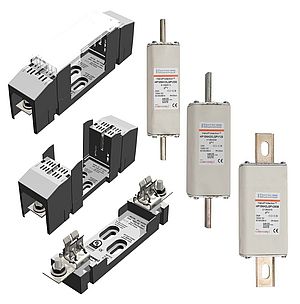
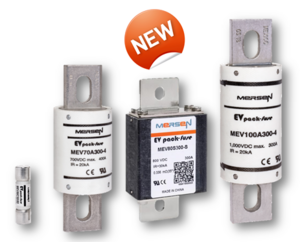
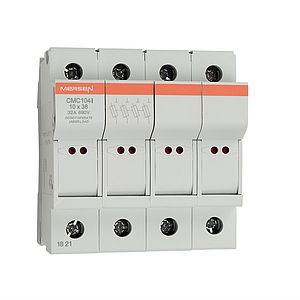
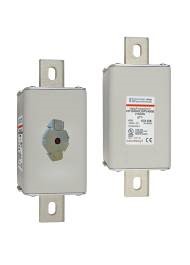
JT Sheehan: Yes, they are even new in general. Mersen was the first to market with these 2,000 VDC fuses. Our fuses are very small, they only measure 22 mm x 85 mm. We tried to reduce more to save additional space, but we couldn’t get it any smaller than that. The HP20P fuses are designed for low minimum breaking capacity capabilities of 1.35 times the fuse rated current value, which allows for safe circuit interruption under typical low fault current conditions.
IEN Europe: Sounds as if it was difficult to develop these fuses? How long did it take?
JT Sheehan: It took us about two years and several Design Iterations. The reason was, that 2,000 VDC is a very high voltage for a fuse. This breaks all boundaries in terms of fuse technology and performance. It was particularly demanding, but our testing facility gives us every opportunity to identify the best design, supported by close cooperation between the marketing and R&D teams. Mersen Test Lab in Newburyport is one of the very few test labs where fuses with 2,000 VDC can be tested on the globe. That is a big advantage for us compared to our competitors.
IEN Europe: Are there already solar fields in which PV modules with 2,000 VDC fuses are in use?
JT Sheehan: These are mostly pilot projects or early-stage deployments — not yet a widespread global adoption. The main obstacles remain standardization and local installation regulations. Today, a lot of our customers are qualifying their PV equipment for the use with 2,000 VDC rated voltage. We developed the HP20P so that our customers receive the most powerful fuse available once they have completed their qualification process. So, we are kind of ahead of the market.
IEN Europe: That is really interesting. Now, what approval do the fuses already have?
JT Sheehan: We already got the UL 248-19 and the UKCA. The approvals for
IEC 60269-6 and CSA C22.2 are pending.
IEN Europe: Mersen is not only ahead of the market. The company also played an important role in rewriting the UL standard to upgrade it to 2,000 VDC. Is that correct?
JT Sheehan: Yes, I chaired the task group to help develop the new standard for
2,000 VDC PV fuses. Mersen was deeply involved in this process and this new market since the very beginning. We had a large influence on the development of the “new” UL standard for PV fuses. And that absolutely makes sense as we produce fuses for PV systems since 2009 and have a great level of expertise there.
IEN Europe: So, to get it right: the HP20P fuses are especially made for string protection in larger PV systems such as solar farms?
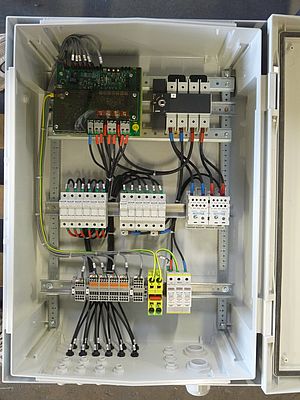
JT Sheehan: Not only, but they are also for use in combiner boxes. These boxes take several solar strings and bring them together to create a single source of power before it goes into the inverter.
IEN Europe: Ok. And when will the new fuses be available in Europe?
JT Sheehan: They are already available. Customers can order them right away.
IEN Europe: Mr. Sheehan, thank you very much for the interview.
About JT Sheehan
JT Sheehan graduated at BSME Wentworth Institute of Technology in Boston (USA), 2005. He has been with Mersen for over fifteen years in various technical, engineering, testing and product marketing positions. Today, Sheehan is responsible for the development of new products and works closely with Engineering and Marketing teams at Mersen. JT Sheehan is among other things voting member of NEMA Codes & Standards and member of NEMA Fuse Section 5FU, the IEC SC 32B Fuse Committee and the IEC TC 32 Fuse Committee.