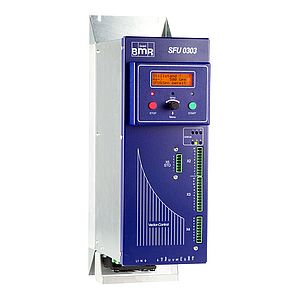
12 A three-phase servo drive and more
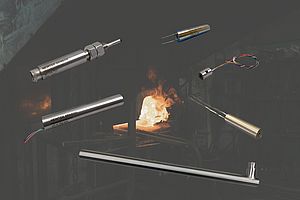
Continuous dew point measurement for industrial applications down to −70 °C Td
More and more mobile robots are finding their way into industry. According to the International Federation of Robotics (IFR), a total of 200,000 service robots were sold worldwide in 2024. 51% of this were robots for transport and logistics. Wherever human interaction, variable processes or frequent changes of location are required, humanoid robots are seen as a promising technology. In real life, however, their use often fails due to high investment costs and complex integration.
For stable, high-speed 3D data under changing light conditions or motion
Every maintenance manager eventually faces the critical decision of whether to repair an existing air compressor or to invest in a new unit. This choice impacts not only immediate operational capabilities but also long-term financial performance. Making the right decision requires careful analysis of multiple factors, from immediate costs to future operational needs. Author: Rodrigo Varela, Senior Director – Aftermarket, ElGi
Part 2: Selecting the Right Replacement Compressor. Author: Rodrigo Varela, Senior Director – Aftermarket, ElGi
Force measurement with vibration and gyroscope detection using vulcanised sensor technology. Author: Robin Ellinger, Product Manager Angst & Pfister
Hydrogen can be used in many ways as an energy source for industry and heavy goods transport, making it a key factor in transforming the energy supply. In addition to being produced from renewable energies, its availability is also crucial. IO-Link sensors from JUMO enable the rapid implementation and safe operation of a modular concept for hydrogen production. Author: Alexander Hof, Senior Product Manager Connectivity, JUMO
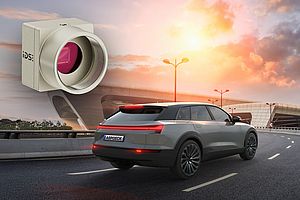
Danube Dynamics and Aspöck Systems automate complex lamp inspections using adaptive AI and IDS industrial cameras to ensure accuracy, flexibility and full traceability under real production conditions.
For reliable operation in environments up to 200°C
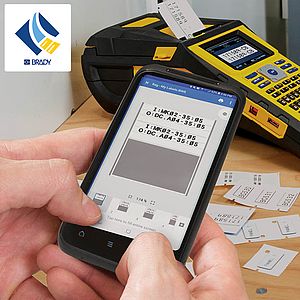
Go mobile and get more options with Express Labels App from Brady. It’s on-demand and always where you need it, on-site and off.
Designed for heavy-duty compressor applications
Digitally capturing environmental and machine data for proactive decision-making
Agricultural autonomy isn’t just about removing the driver; it’s about creating intelligent machines capable of locating themselves, interpreting their surroundings, and acting in real-time, even under challenging conditions.
Beyond the data-driven efficiencies of Industry 4.0, a new paradigm is emerging for manufacturers across every industry: Industry 5.0. This next evolution emphasizes a human-centric, resilient, and sustainable approach, calling for a more symbiotic relationship between human workers and intelligent machines.
October marks the 50th year since ABB’s Low Voltage Variable Speed Drive was first brought to market. Developed by Finnish company Strömberg, which went on to become part of ABB, VSD have revolutionized industrial energy consumption and decarbonization
For dimensional inspection even with strong vibrations
Ensure accurate measurements and safe processes by overcoming the challenges of precision flow metering
High power in compact, low-noise package
David Hawley, ABB’s Global Head of Sales for IEC Low Voltage Motors, notes that while superior performance, reliability & efficiency are essential factors influencing electric motor selection, availability is also key to achieving ambitious energy goals
Variable speed motor platform to upgrade inefficient direct online induction motors
Leuze SmartID-Edge controls a network of identification systems and sensors for track-and-trace requirements in production and the supply chain. Secure communication between 1D scanners or 2D camera systems takes place at edge level using OPC UA and full integration of the AutoID Companion Specification. The advantage: Each object to be identified is not only represented by its code but also mapped on a virtual tag in the edge system.
For pure compressed air with optimum energy efficiency
The supply of a 3,000 hp frequency inverter for large shredder plant at S. Norton Group in Manchester helps with significant reduction in energy consumption
Laser triangulation sensors measure variables such as displacement, distance and position on a non-contact, wear-free basis. The most important sensor features are high performance, a compact design and the ability to stabilize the signal with changing surfaces. Micro-Epsilon has now equipped its sensors with the advanced IO-Link interface to network multiple sensors in the factory.
Aerzen Adds Compressed Air Solutions to the Portfolio
For easier quality assurance during pressing, assembly and testing
All-in-one interface for control and visualization
Versatile Device with storage for up to 1 million measurements
Efficient inverter solution, also for use in retrofit of machining centers
Variable frequency drives available as one and two axis modules
USB-C charging to deliver deliver 240W from a single 1C port
Designed to maintain focus over a wide temperature range
For maximised safety in hydrogen storage and energy applications, including fuel cells
Combating climate change is a serious challenge, with a nearly overwhelming array of issues to overcome. Sustainability-minded people do their best to lessen their personal carbon footprint by using public transportation, driving an EV, cutting back on energy usage, etc. But the biggest culprit in carbon emissions is actually industry, representing an estimated 23% of all greenhouse gas emissions in the U.S as the U.S. Environmential Protection Agency published.
For low torque and high band width measurements
In course of Industry 4.0, Kübler has continued to expand its specially developed Industrial Ethernet portfolio in recent years in order to offer customers maximum functionality with protocols like Ethernet/IP, Profinet IO and PROFIsafe. The communication capability of a sensor plays a significant role in ensuring that network communication in the sense of Industry 4.0 is combined with real-time data exchange in the future.
Variable aluminium housing in various PCB formats
With constant voltage and constant current operation and single or three-phase inputs
The history of electrolysers begins with the discovery of the basic principles in the late 18th and early 19th century by the British scientists William Nicholson and Michael Faraday. Specifically, that water can be split into hydrogen and oxygen using electrical currents.
Digital Edition Download PDF