
More and more mobile robots are finding their way into industry. According to the International Federation of Robotics (IFR), a total of 200,000 service robots were sold worldwide in 2024. 51% of this were robots for transport and logistics. Wherever human interaction, variable processes or frequent changes of location are required, humanoid robots are seen as a promising technology. In real life, however, their use often fails due to high investment costs and complex integration.
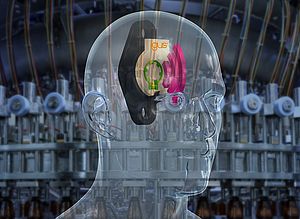
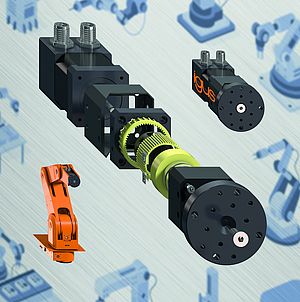
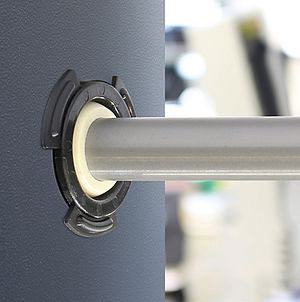
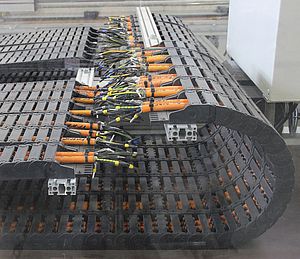
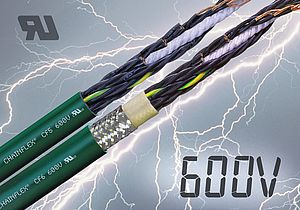
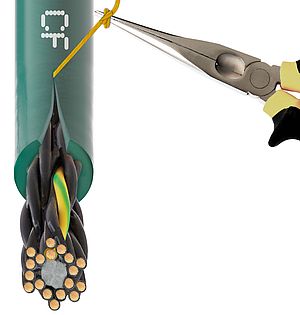
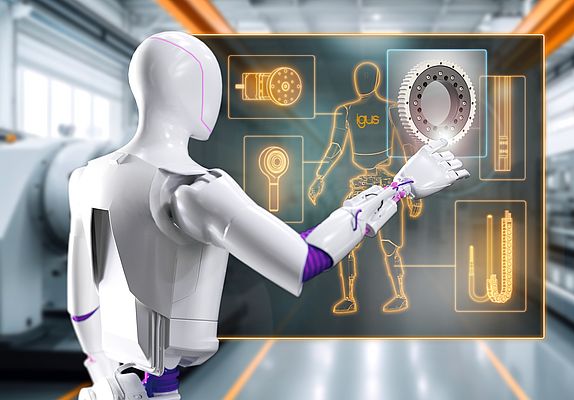
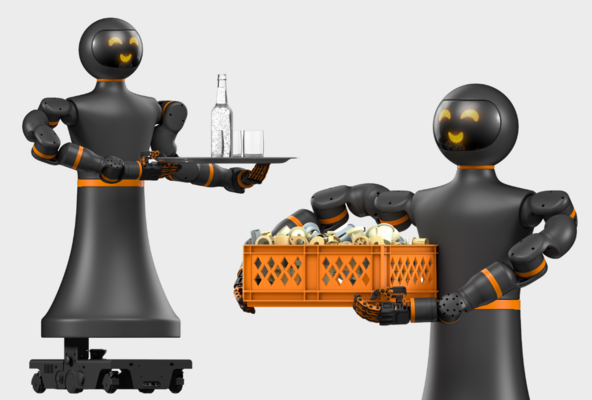
In view of the shortage of skilled labour, humanoid robots will be able to take on simple, monotonous tasks in future and offer a clear advantage: they can be used anywhere and provide flexible assistance where support is needed. With its motion plastics, igus offers lubrication-free components that make sure that humanoid robot systems run reliably: from maintenance-free spherical bearings in the fingers to highly flexible chainflex cables in the torso to linear actuators for moving the legs. "However, it is crucial that the integration of complex automation solutions becomes possible for users without expert knowledge or vast expenses," explains Alexander Mühlens, Head of the Low Cost Automation Business Unit at igus. "We are therefore currently working on new AI-based control systems, among other things, which we will be presenting at Hannover Messe 2026." The motto is: "Teaching by showing, speaking, everything but programming". A milestone last year was the launch of the first own humanoid "Iggy Rob", which is based on the ReBeL Move, has two ReBeL Cobot arms and is available for under 50.000 Euros, which is significantly lower than that of classic humanoids. New, proprietary humanoid robots will be ready for demonstration on the RBTX online platform at the Hannover Messe.
RBTX as a service hub for fast and easy automation
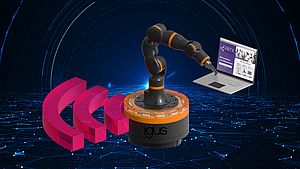
Around 260 manufacturers are now represented on the platform, whose robotic components are modular, so that they can be combined with each other. Supported by igus experts, hundreds of companies have since realised automation solutions there - 95% of them for under €18,000. By the time Hannover Messe 2026 starts, the online platform RBTX is expected to offer the largest range of humanoid robotics - with 95 robot models from 35 manufacturers. The aim of igus is to further expand the RBTX ecosystem and develop it into a service hub for complete automation solutions. In future, RBTX will not only bundle components with a compatibility guarantee as a one-stop shop, but also connect users with suitable integration partners - quickly, transparently and independently of the manufacturer. "Many companies are faced with the challenge of weighing up the quality and investment security of these offers. RBTX is the quickest and easiest way to a ready-to-use solution," emphasises Mühlens. "As the only provider in Europe with a consistent low-cost focus, we make robotics accessible to everyone and support the entire process as a central point of contact: from the initial enquiry to AI-based matching with certified integrators and implementation with tried-and-tested components to ongoing support."
Autonomous forklift for efficient logistics
In 2024, igus presented the first autonomous, mobile robot ReBeL Move for material handling, followed by the even more powerful version ReBeL Move Pro. The demand for mobile robotics solutions is not only increasing due to the acute shortage of skilled labour, but also because such systems are becoming more affordable and much easier to integrate. That's why igus now also offers the ReBeL Pallet Mover, an autonomous forklift that lends a hand where there is a lack of personnel. Depending on the application, igus offers the forklift for different payloads: 300kg, 1,400kg and 1,500kg. The company also customises the autonomous helper to meet specific requirements, offering it at a price that allows for a quick return on investment. "In combination with the new AI control systems we are working on, we are making great strides towards our goal of democratising robotics and making it available to everyone."
From Components to Humanoids: Making the Next Generation of Robots Accessible to Everyone
More and more mobile robots are finding their way into industry. According to the International Federation of Robotics (IFR), a total of 200,000 service robots were sold worldwide in 2024. 51% of this were robots for transport and logistics. Wherever human interaction, variable processes or frequent changes of location are required, humanoid robots are seen as a promising technology. In real life, however, their use often fails due to high investment costs and complex integration.
- by igus SE & Co. KG
- April 17, 2026
- 4093 views
 Picture: igus SE & Co. KG
 Picture: igus SE & Co. KG
Disclaimer: Content published by TIM Global Media, including text, images, and videos, is either created in-house or provided by Suppliers/Manufacturers with their approval. Suppliers/Manufactures warrant that their materials do not infringe third-party rights and agree to indemnify and hold TIM Global Media harmless from any related claims.