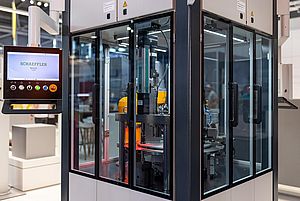
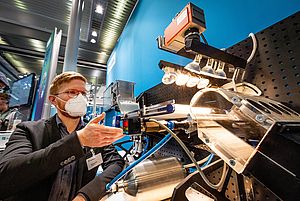
Monitored changeover is an opportunity to optimise machines, reduce sources for potential errors and making them intuitive and quick to operate.
Flexibly mountable multitouch HMI in four sizes
Researchers at the University of Dresden (Germany) choose Specialised Imaging Kirana ultra-high speed video camera following a head-to-head comparison against alternative commercially available cameras.
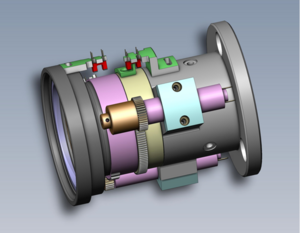
Design and manufacture service for radiation resistant lenses
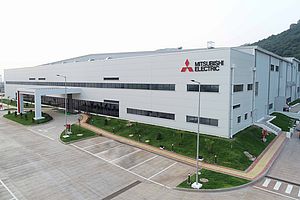
New facility for Factory Automation Systems in Maharashtra, Indiato support the growing local markets
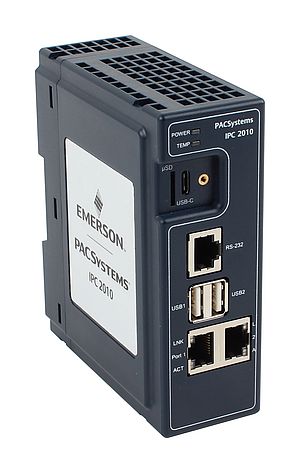
New application possibilities for real-time control with industrial PCs
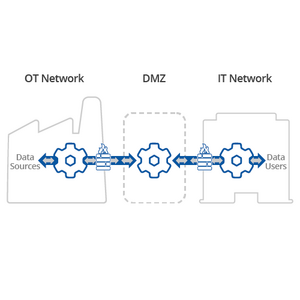
Best Practices: OT To IT Series - Why you need both Network and Data Security
For flexible backups in the energy transition
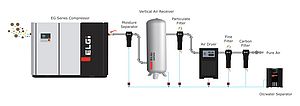
It is not a revelation to anyone in the industry that energy is the largest operating expense, accounting for the majority of utility costs. In manufacturing processes using compressed air, air compressors consume approximately 12% of the total electrical energy, and over the lifespan of an air compressor, 80% of the cost is energy use, and 20% is the cost of the unit including maintenance. Energy...
For lightweight robots, modular designs are increasingly popular thanks to the flexible deployment they enable for specialised tasks. Modular robots also enhancing the potential for system integrators and end users to develop their own designs. As part of an in-house robot build, optimising the drive train that powers and controls each joint is vital to the robot’s performance. The most effective way of achieving this is by developing the drive train as a complete module. This approach can also improve the efficiency of robot development overall.
In the realm of embedded computing solutions, Raspberry Pi has emerged as a pioneering force, offering a diverse range of compact modules tailored for industrial and commercial applications. Here we take a look at the differences between the foundation’s Compute Module 4 (CM4) and Compute Module 3+ when it comes to developing embedded projects.
Memorandum of understanding focuses on joint development of digital solutions for the shop floor and AI applications in the industrial sector
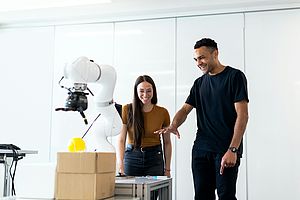
Smaller manufacturers are the fastest-growing area of industrial robotics today, driven by the need for new collaborative robotics systems.
At Hannover Messe 2024 the two German companies announced their colloboration for development of innovative solutions based on the PLCnext technology.
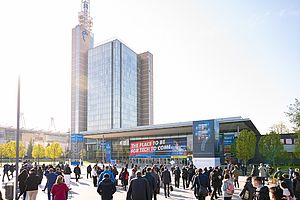
More than 130,000 visitors from 150 countries, 4,000 exhibiting companies, 300 startups and over 300 economic and political delegations from all over the world. These are the figures that emphasise the fair's position again after five successful days.
Optimised solution for a surveillance camera manufacturer
OMRON shows autonomous flexible production supported by digital twins
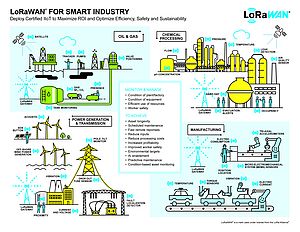
LoRa Alliance presents solutions for Industrial IoT in Hannover
For easier integration with third-party controllers
SCHURTER is pleased to welcome Steffen Lindner to its leadership team.
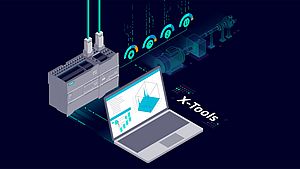
Siemens presents innovations for greater efficiency and sustainability from design to condition monitoring at Hannover Messe
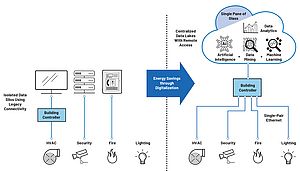
To meet net zero CO2 emission goals, the building sector needs to modernize its communication infrastructure. This article shows how single-pair Ethernet, specifically 10BASE-T1L, enables the easy retrofitting of buildings using legacy links like RS-485 to improve digitization, enable automation, improve security, and substantially lower energy consumption to achieve greater sustainability. Author: Meghan Kaiserman, Strategic Marketing Director for Sustainable Buildings at Analog Devices
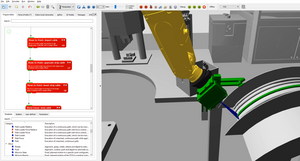
Grasping and plugging cables is child's play! For us humans, yes. However, automated processing of such flexible parts presents robots with considerable challenges. Nevertheless, the potential is huge; in terms of efficiency and quality as well as in terms of relieving employees, for instance when it comes to handling large, heavy cables.
5th Lightweighting Summit: Lightweight construction as a transformation technology for the resource turnaround
Expensive machine and vehicle breakdowns due to undetected faults in heavy-duty fixed flange bearings: these will soon be a thing of the past thanks to a new generation of two- and four-hole fixed flange bearings. Their special feature is that the bearings, which are made of lubrication-free high-performance plastic, are equipped with miniature wireless sensors, enabling condition monitoring and predictive maintenance.
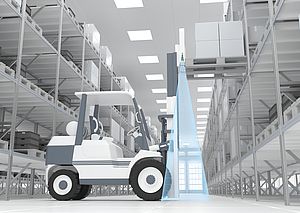
Air traffic and shipping are no longer conceivable without radar technology. Their electromagnetic waves provide extremely reliable signals for object detection and collision protection. What has proven itself over long distances at sea and in the air is just as useful at near range: radar also ensures precision and safety when controlling autonomous vehicles and machine booms. The new radar sensors from Pepperl+Fuchs are optimized for use in the intralogistics and material handling sections, among others.
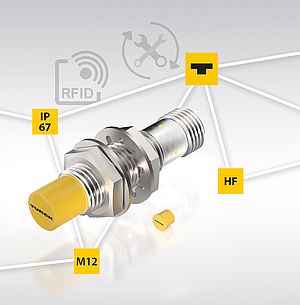
M12-Read/Write Heads and small tags for identification of miniature objects
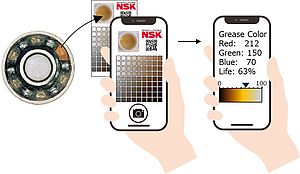
Mobile App for on-site analysis of lubricant condition in bearings and linear motion systems
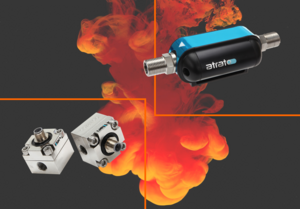
The measurement of low flow is becoming widely used in many industries. However, the smaller the flow, the trickier it is to control and measure, and finding a suitable flow measuring technology at reasonable cost can prove challenging for both users and flow sensor manufacturers.
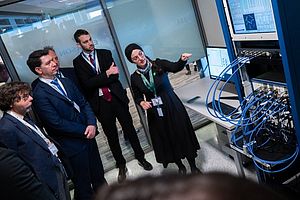
Emerson and the European Space Agency unveil new Open Innovation Space Laboratory
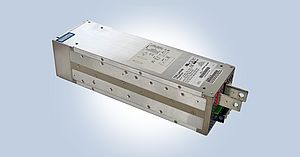
Operates with wide range of three-phase Delta and Wye inputs
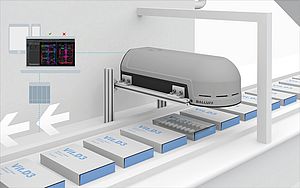
With its radar imager, Balluff scans through packages for completeness, integrity, and foreign objects. Customers can benefit from efficient, in-line quality control at the end of the line.
Collaborative robots, or cobots, are making their presence felt in ever more applications, working alongside humans wherever production requires the decision making and discrimination abilities of humans, combined with unceasing production, dexterity and precision of cobots.
An interview with Jonas Trautmann, Global Product Marketing Manager at ABB about the value of data and how to structure it.
Today, the majority of consumer goods and everyday items are made from petroleum-based plastics. In Germany alone, around six million tonnes of plastic waste is generated every year. About half of this is mechanically recycled into new materials; the rest is used for energy recovery. The incineration of this waste results in the release of CO2, a greenhouse gas. It is therefore important to keep more plastics in the material cycle for climate and environmental reasons. Eight Fraunhofer Institutes are developing new ideas and processes to significantly improve the mechanical recycling rate of plastics as part of the Waste4Future flagship project.
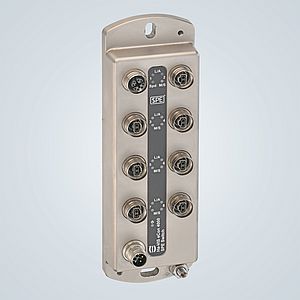
Robust metal housing with IP67protection for outdoor use
SSR output and relay output options for up to 4 bridges
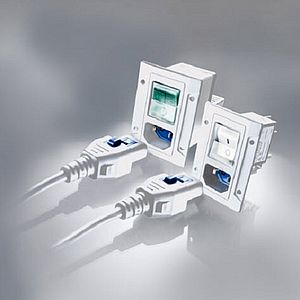
Now available with Protection Class II and white housing
High-performance computing for industrial edge data visualization applications
Digital Edition Download PDF