
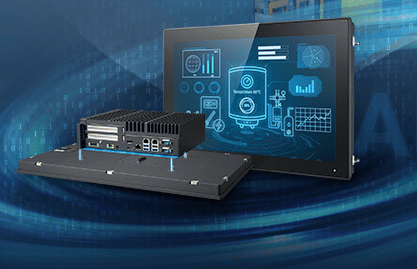
Advantech has expanded its modular HMI lineup with the introduction of TPC-B620, a new GPU-supported model designed to deploy Edge AI applications directly on the factory floor. As smart manufacturing grows, shifting processing workloads from remote clouds to the machine level has become a strategic necessity. By enabling localized computing at the edge, this new model ensures maximum data sovereignty by keeping proprietary production know-how on-site. TPC-B620 delivers ultra-low latency for instant decision-making, and significantly reduces bandwidth costs by eliminating the need to transmit massive amounts of raw data.
Scalable Hardware Architecture
To realize the full benefits of edge-level intelligence, the TPC-B620 modular AI HMI computing box is engineered with a robust hardware infrastructure purpose-built for harsh factory environments. The system features versatile GPU expansion capabilities, supporting dedicated graphics cards, including the NVIDIA RTX series, with up to 70W power delivery. This optional GPU support gives manufacturers flexibility to scale computing performance for demanding Edge AI applications. Furthermore, the TPC-B620 offers superior multi-port connectivity with up to 11 LAN ports (3 built-in as standard, with support for up to 8 additional ports via half-size add-on cards). This high-density connectivity enables the simultaneous integration of multiple industrial cameras, providing the high-bandwidth interface required to run localized AI vision workloads on-site without performance bottlenecks.
Engineered for reliability, the TPC-B620 combines a fanless design with advanced thermal management using proprietary aluminum alloy welding and heat pipe technology. This enables the CPU to operate continuously at its full 65W performance level while avoiding thermal throttling. An optional active cooling kit is available for GPU-intensive applications. The system can be paired with 12 modular display options from 15" to 24", including high-brightness and slim-bezel models.
The TPC-B620 is particularly suited for AI-driven inspection and error-proofing in manufacturing. In assembly processes such as server, automotive component, and electronics production, it can connect to high-resolution cameras to monitor tasks in real time. Localized AI models detect assembly errors, such as missing screws or incorrectly positioned components, and immediately alert operators via on-screen warnings. This helps reduce scrap, improve quality, and accelerate smart factory initiatives through real-time edge intelligence.