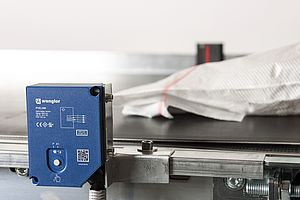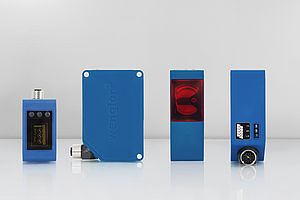



With the P1PF colour sensor, wenglor presents a powerful solution for reliable colour detection in demanding industrial applications. The sensor combines two views of colour: technical evaluation in the RGB colour space and a visually comprehensible setting in the HSL colour space. This makes the P1PF sensor suitable for both highly automated processes and intuitive use in daily operation. Thanks to white light illumination in combination with an RGB receiver, the P1PF sensor detects colours realistically and reproducibly – regardless of material, surface or changing ambient light conditions. Even at high speeds, the sensor delivers reliable results: With a switching frequency of 7 kHz, it detects precise colour changes even with moving objects and dynamic applications.
Up to eight colours with one sensor
Two colours can be learned directly on the device – quickly and easily, without any software. This makes the P1PF sensor the ideal solution for stand-alone applications or service work directly on the machine. Six additional digital outputs are available via IO-Link, so that up to eight colours can be distinguished with just one sensor. This saves space, reduces hardware requirements and conserves resources. Colour tolerances can be conveniently adjusted via IO-Link. The P1PF colour sensor offers the choice between a technical evaluation in the RGB colour space and a visually intuitive setting in the HSL colour space. This makes it suitable for automated processes for measuring value recording.
An integrated 9-LED bar graph displays the current detected colour and the learned references of all outputs in real time. The immediate visual feedback facilitates adjustment, teach-in and troubleshooting – without any additional tools. Direct colour matching allows the distance or inclination angle of the sensor to be adjusted in a targeted manner in order to achieve optimal measurement results. Users can choose between two display variants: the display of the reference values of the two physical switching outputs or the display of all eight outputs.