We use cookies to provide you with personalized services and improve our website. More info Ok
Where available space is at a premium
Areas subject to radiation
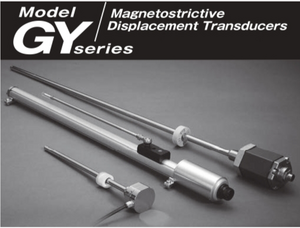
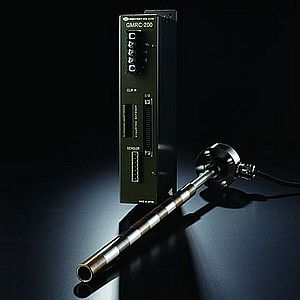
High accuracy, non-contact, absolute linear sensor
Using GMR element
Model GMR/GMR2 series
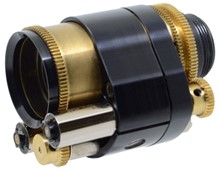
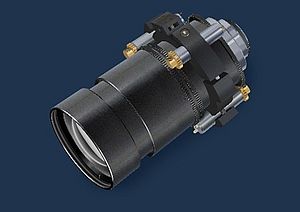
The Model 419 from Resolve Optics is a new fixed focus non-browning lens optimised for the latest generation of radiation resistant CMOS cameras.
Compliant with the latest requirements of the robotics safety standard ISO 10218:2025
Faster deployment, improved throughput and new levels of collaboration have been reported by customers
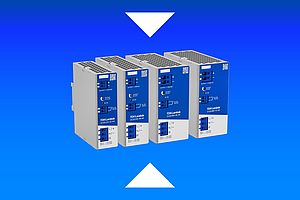
12, 48, and 72 V output models for a broad range of applications
Designed For Factory Automation
Monitoring of hybrid communication structures in industrial environments in a single application
Enclosures in high-quality materials with extensive customisation and expansion options and Ex-certified version
An IEN Europe interview with Laurent Liou, Product Marketing Manager, Moxa, specializing in OT network security and compliance with cybersecurity standards.
Smart automation is reshaping industrial production. Machines, control systems and service processes are becoming more connected, data-driven and flexible. To fully leverage these capabilities, manufacturers need secure and reliable access to OT across sites – for maintenance, troubleshooting and optimization. Yet in many factories, legacy systems, segmented networks and stringent security requirements still stand in the way of what has been a commodity in IT environments for many years.
Simplification through the reduction of external components
Fixed focus, High Definition non-browning lens with compact footprint
4K resolution with the option of complete in-unit data processing
Siemens to extend its design-to-source intelligence capabilities beyond electronics to standard and custom mechanical parts.
AI-based assistance system for moneo
Minimising cyber risks and ensuring firmware security throughout the entire product lifecycle.
IP65-protected solution for large machines and factory floors where operators need flexible visualization
More and more mobile robots are finding their way into industry. According to the International Federation of Robotics (IFR), a total of 200,000 service robots were sold worldwide in 2024. 51% of this were robots for transport and logistics. Wherever human interaction, variable processes or frequent changes of location are required, humanoid robots are seen as a promising technology. In real life, however, their use often fails due to high investment costs and complex integration.
We spoke to Travis Cox (Chief Technology Evangelist, Inductive Automation). He has been with the company since 2004, connecting industry experts, promoting innovation and open standards, and showcasing the capabilities of the Ignition platform.
Every maintenance manager eventually faces the critical decision of whether to repair an existing air compressor or to invest in a new unit. This choice impacts not only immediate operational capabilities but also long-term financial performance. Making the right decision requires careful analysis of multiple factors, from immediate costs to future operational needs. Author: Rodrigo Varela, Senior Director – Aftermarket, ElGi
Part 2: Selecting the Right Replacement Compressor. Author: Rodrigo Varela, Senior Director – Aftermarket, ElGi
The development of AI models in joint projects yields improved results because multiple companies contribute their data. The situation becomes critical, however, if a partner withdraws and requests the return of its data. With federated unlearning, Fraunhofer researchers and Fujitsu Research have developed a method for precisely removing data from decentralized AI models.
The integration of physical AI marks a paradigm shift in the manufacturing industry. It directly links AI models with deterministic control technology.
Brady Corporation, a worldwide specialist in industrial identification, launches a range of new industrial barcode readers that achieve 99.995% reading accuracy.
3D printing in companies is booming. Design engineers are printing special components and wear-resistant parts themselves without further ado. However, the projects stand or fall on the quality of the printing material, warns Jonas Burk, Head of Additive Manufacturing at igus. The fact that 3D printing with high-performance polymers from igus is worthwhile is not only proven by the service life tests. Customers can also manufacture their products more economically and faster than injection moulding.
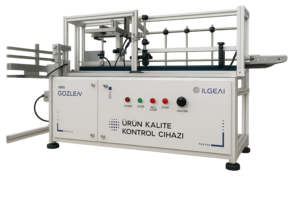
For industrial quality control and defect detection
A single namespace isn't a strategy - it's a risk
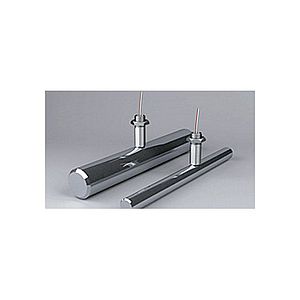
Fast and reliable measurement over wide temperature ranges
Why Redfish-Inside PLCs Are Reshaping Cooling, Control, and DCIM Integration
If you require a professional image processing system to meet specific needs it is essential that the lens also meets all the necessary criteria to ensure long-term functionality. We spoke to Rob Watkinson from Resolve Optics about overcoming the limitations of off-the-shelf products and achieving the best results.
Choose a licensing model that fits your OT lifecycle.
For four days, from March 30 to April 2, 2026, Global Industrie transforms the fairground in Paris Nord Villepinte into the largest factory in France.
With HANNOVER MESSE 2026, fron April 20 to 24, artificial intelligence (AI) in industry becomes tangible. In a practical and application-oriented way, the trade fair demonstrates how manufacturing companies can profitably use AI. With a consistent AI focus, the fair shows how today’s challenges can be transformed into concrete competitive advantages – while offering companies and visitors even greater orientation and value.
Danube Dynamics and Aspöck Systems automate complex lamp inspections using adaptive AI and IDS industrial cameras to ensure accuracy, flexibility and full traceability under real production conditions.
Fraunhofer project for better recycling processes of paper packaging
Reactive robotics has delivered enormous efficiency gains for industry. But the technology is reaching its economic limits: systems that only respond to the current state scale speed – but not stability. As process complexity grows, small misjudgements lead to costly downtime. Sereact is now introducing Cortex 2.0, a new generation of AI that evaluates the consequences of actions in advance and eliminates errors before they occur. The economic potential is immense.
Digital Edition Download PDF