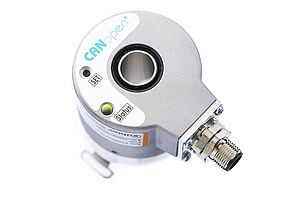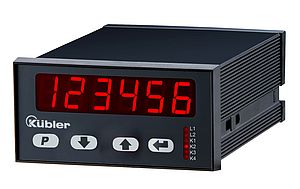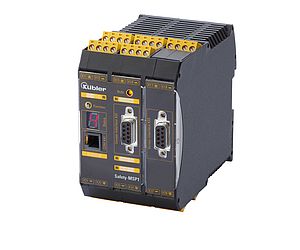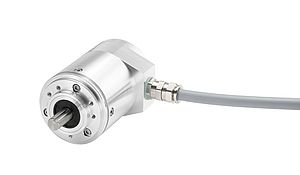


IEN Europe: Kübler’s product portfolio covers the areas of measurement, transmission, and evaluation in the field of automation. Which product areas and industries are the most important? Are safety-certified products also offered in any of these areas?
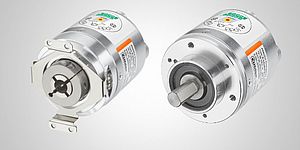
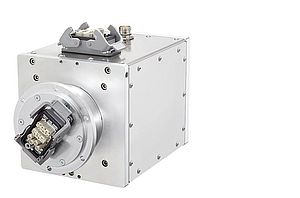
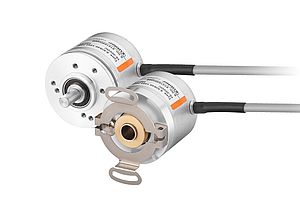
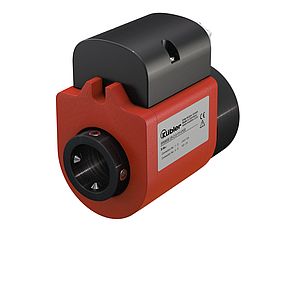
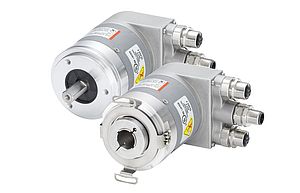
F. Sauter: Our established core markets include elevator technology, motors and drives, and the packaging, food and beverage industries. We are systematically expanding our position in these markets. At the same time, we are opening new core markets and sub-segments, such as mobile robotics as well as segments of intralogistics and mobile automation. Our current innovations show where our product focus lies: a new series of large hollow-shaft encoders that, for the first time in this size class, are also programmable, based on our latest, very robust Sendix platform; an extensive Industrial Ethernet absolute encoder portfolio including functional safety and cybersecurity for axis applications; new slip ring solutions, for example for filling and radar systems; and a comprehensive new range of inclination and radar sensors.
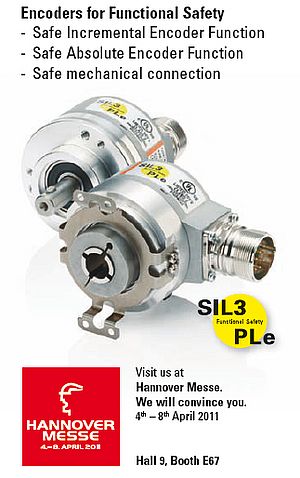
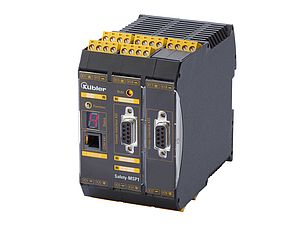
Safety-certified products are an important part of this portfolio. Our SIL encoders are used mainly in general automation, that is, in machine building. The most important industries here are foil wrapping, converting machines and logistics. Demand for SIL encoders is growing worldwide.
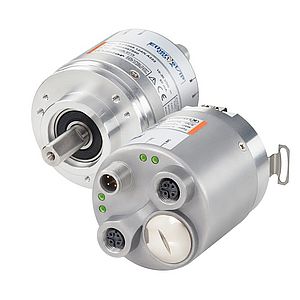
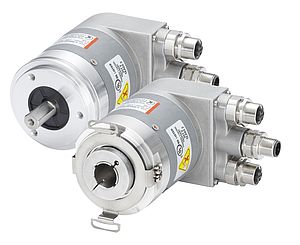
IEN Europe: Some time ago, Kübler launched a new series of Industrial Ethernet encoders. What was the user response, and what advantages does using such an encoder platform offer?
F. Sauter: There has been little direct feedback from users so far, but the indirect signals show a good market response. We see several reasons for this. The new encoders fit more applications, so more competitor products can be replaced with Kübler encoders. We receive fewer feature requests. Delivery issues have also decreased: we no longer face obsolete components as with the older versions, and we benefit from a faster time to market and faster production.
The main advantage is for customers with a dual-supplier strategy or flexible machine concepts. They can choose any protocol and always get the same set of encoder functions. In addition, the new encoders offer CRA conformity, easy-to-use functions and the latest protocol versions.
IEN Europe: Safety and security are currently key issues that no one can ignore. Nevertheless, their practical implementation remains complex and is not always easy to understand. A practical example of this can be seen in the classifications. From a security perspective, Kübler encoders are classified at the lowest formal security level, Level 1, in accordance with IEC 62443-4-2. Nevertheless, they meet the highest criteria in terms of personal safety. As a specialist, could you briefly outline the context and explain why this classification is sufficient?
F. Sauter: Our encoders are designed for the defense-in-depth concept. Under this concept, the integrator is responsible for designing the entire machine network in conformance with the IEC standards. The encoder typically sits at the bottom plant level, inside an existing security zone.
At this position, Security Level 1 is sufficient. It allows integrators to achieve security conformity for the machine, even if the targeted security level of the machine as a whole is higher. Going beyond SL1 at the encoder level would require considerable time and money on the manufacturer’s side. Our customers are not prepared to pay extra for this, and conformance to the standard meets their requirements. Higher measures such as encryption would also slow down process data output and make the product more complicated to use.
IEN Europe: How do you view the prospects for the further development of the product ranges in Kübler’s portfolio, once the major regulatory challenges in Europe posed by the CRA and the Machinery Directive have been overcome?
F. Sauter: Our main goal is to bring the products to market that our customers will be looking for in two to three years. That is why our development work is designed to stay ahead of time. New sensor technology will form the backbone of all Kübler’s new standard encoders. It will enable smaller designs, new housing concepts and additional hardware features.
On the software and firmware side, we aim to optimize functionality and streamline commissioning workflows. New multipurpose tools will support customers during interaction with the encoder and commissioning.
IEN Europe: Thank you for these insights.
ABOUT KÜBLER:
Headquartered in Villingen-Schwenningen, Germany, the Kübler Group develops and manufactures components and systems for the measurement, transmission and evaluation of data and signals. Founded in 1960, the family-owned company offers products including encoders, slip rings and counting technologies for industrial automation applications. With more than 600 employees and an international presence spanning over 50 countries, Kübler serves customers across a wide range of industries worldwide.